

6 Roof Ice Dam Removal Hacks 2026 (For Homeowners)
When winter storms hit, many homeowners start searching for fast and effective roof ice dam removal strategies to stop leaks and prevent costly damage. Ice dams form when melting snow refreezes along the roof’s edge, creating a ridge of ice that traps water behind it. If that water seeps under your shingles, it can damage insulation, ceilings, and wall structures. Understanding how ice dams form and how to remove them safely is key to protecting your home during winter.
In this guide, you’ll learn:
- What causes ice dams: Why temperature fluctuations lead to roof damage.
- Safe removal hacks: Practical ways to address ice dams quickly.
- Prevention tips: Steps to take before and during winter storms.
- Warning signs: How to know when it’s time to call a professional.
Why Ice Dams Form on Roofs
Ice dams develop when warm attic air melts snow on the upper roof, causing water to run downward before refreezing at the colder roof edge. This freeze-thaw cycle traps water behind the ice ridge, creating conditions that easily lead to leaks. Knowing these causes helps homeowners understand both prevention and removal strategies.
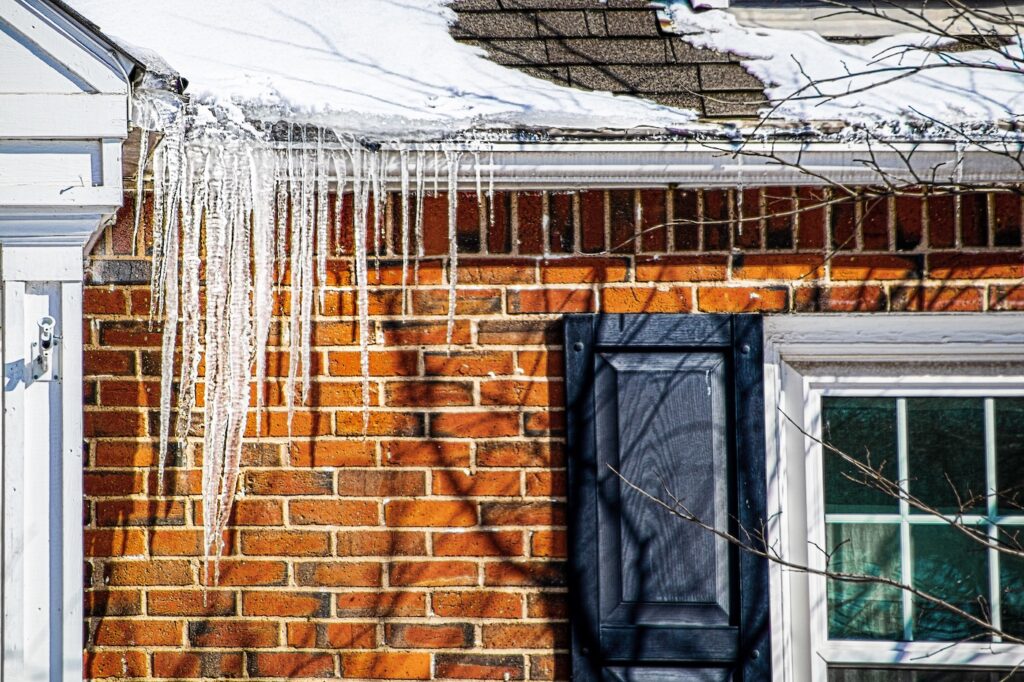
Homeowners in Evansville, IN, often see ice dam activity during freeze-thaw cycles that occur several times each winter. Temperatures swing above and below freezing, melting and refreezing snow repeatedly, which creates the perfect conditions for ice buildup.
- Uneven roof temperatures: Warm attic areas cause inconsistent melting.
- Poor insulation: Heat escapes into the attic and warms the roof deck.
- Ventilation issues: Stagnant attic air raises surface temperatures.
- Weather conditions: Heavy snowfall followed by rapid drops in temperature.
5 Signs an Ice Dam Is Forming
Ice dams show early warning signs before major leaks begin, giving you time to intervene before damage spreads. Recognizing these visual clues can help you act quickly and minimize interior or structural harm.
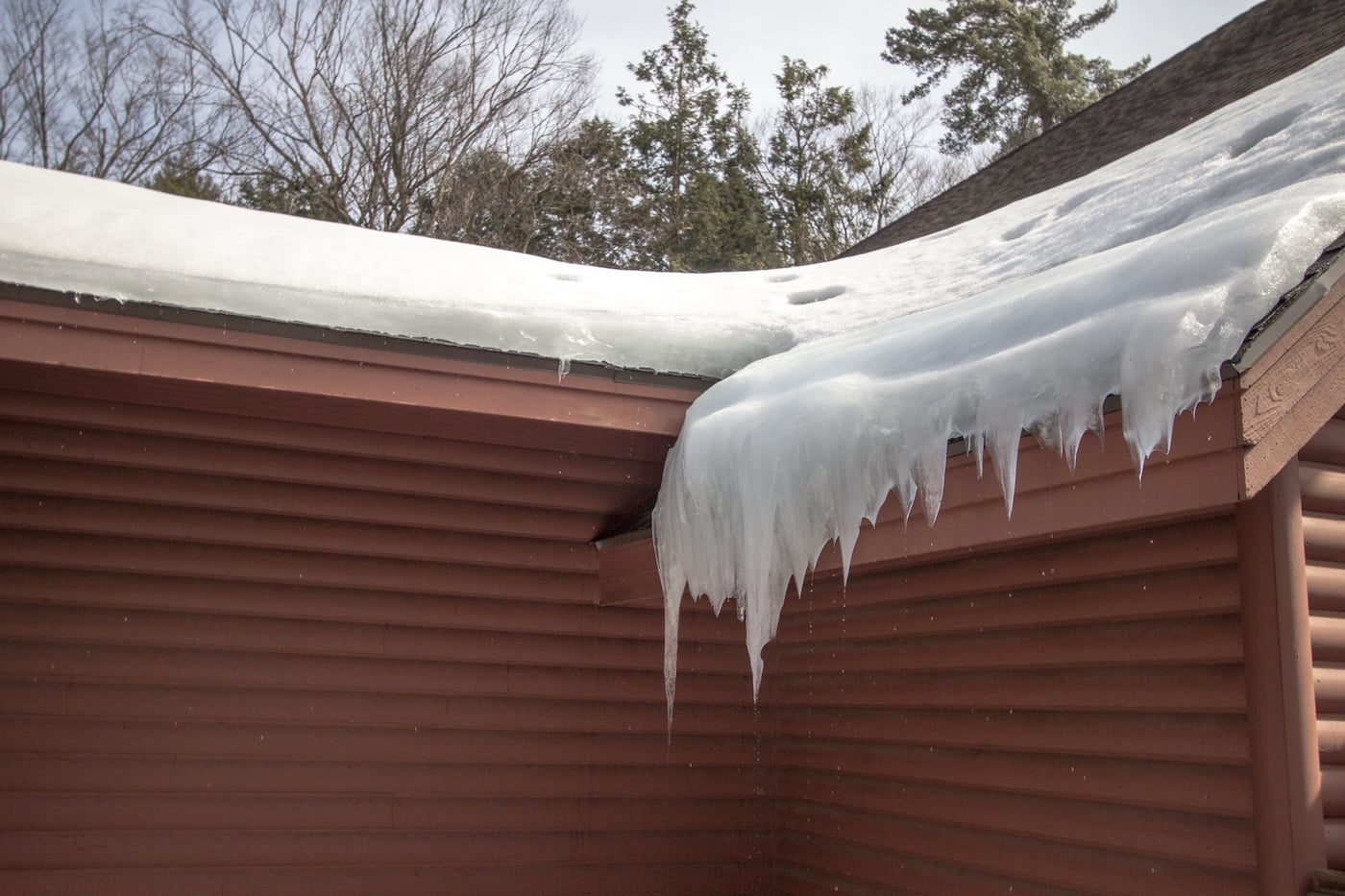
Icicles forming along the roof edge
- Indicator: Excessive icicle formation suggests warm attic air is melting snow.
- Risk: Icicles add weight and can pull gutters away from the roof.
Water stains on interior ceilings
- Indicator: Brown or yellow spots suggest trapped water is leaking inside.
- Risk: Moisture damage to insulation, drywall, and framing.
Ice ridges visible at gutter line
- Indicator: A thick band of ice creates a dam that traps melting snow.
- Risk: Water backs up beneath shingles and underlayment.
Attic frost buildup
- Indicator: Frost inside indicates poor ventilation and high humidity.
- Risk: Moisture can weaken roof decking and cause mold.
Curling shingles near eaves
- Indicator: Trapped water can distort or loosen shingles.
- Risk: Shingles lose their watertight seal and become entry points for leaks.
Ice Dam Symptoms & Fixes (Quick Table)
This table helps you quickly identify early ice dam symptoms and choose the right solution. It also highlights which fixes offer immediate relief and which require long-term upgrades.
| Symptom | What It Means | Immediate Fix | Long-Term Solution |
| Large icicles | Warm attic melting snow too quickly | Break icicles safely from ground | Improve attic insulation |
| Ice ridge at eaves | Water is refreezing at the roof edge | Apply calcium chloride socks | Increase ventilation balance |
| Interior leaks | Water trapped behind the dam | Remove dam and tarp affected area | Seal attic air leaks |
| Frost in attic | Moisture condensing on cold surfaces | Improve airflow temporarily | Add ridgeline and soffit vents |
6 Roof Ice Dam Removal Hacks
Removing ice dams safely is critical, since the wrong method can damage shingles or gutters. These homeowner-friendly hacks prioritize safety while offering fast relief during winter storms.
1. Use Calcium Chloride Melt Socks
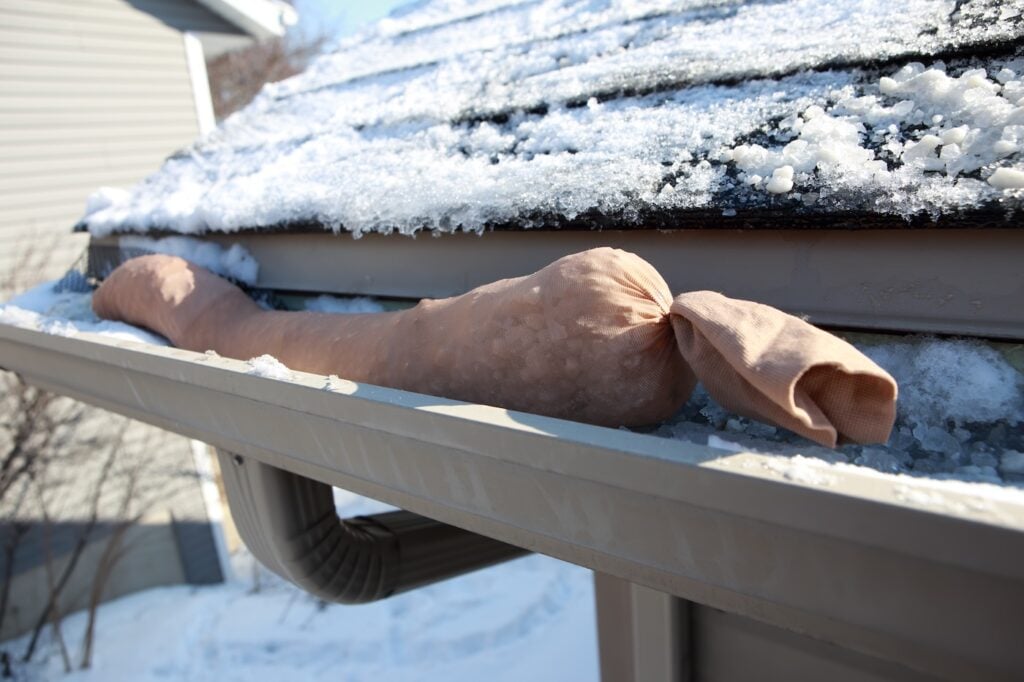
Fill fabric tubes with calcium chloride and place them perpendicular to the ice dam.
- Melting action: Slowly melts channels through the ice.
- Protection: Prevents aggressive scraping or roof damage.
2. Create Drain Paths for Trapped Water
Clearing pathways helps water escape instead of seeping beneath shingles.
- Warm water trick: Pour warm (not boiling) water along the ice ridge.
- Temporary relief: Reduces pooling until the dam can be fully addressed.
3. Apply Roof-Safe Ice Melt From the Ground
Roof-safe pellets can weaken the ice without hurting shingles.
- Ease of use: Apply with a long-handled spreader.
- Caution: Avoid rock salt as it corrodes metal components.
4. Use a Roof Rake After Snowfall
Removing snow before it melts is one of the best prevention hacks.
- Reach: Extended poles allow safe ground-level clearing.
- Effectiveness: Less snow means less meltwater behind the dam.
5. Improve Attic Airflow During Freeze Cycles
This minimizes heat escaping into the roof deck.
- Quick fix: Open soffit vents or add temporary fans.
- Benefit: Reduces uneven melting during storms.
6. Seal Attic Air Leaks Around Warm Areas
Warm household air reaching the attic speeds up ice dam formation.
- Common leak points: Light fixtures, chimneys, ductwork, and attic hatches.
- Long-term gain: Consistent attic temperatures reduce freeze-thaw stress.
Warning Signs Your Roof Needs Immediate Attention
Ice dams can cause damage suddenly, especially during rapid freeze-thaw cycles. Paying attention to early signs of trouble helps prevent leaks from spreading into insulation, ceilings, or wall cavities.
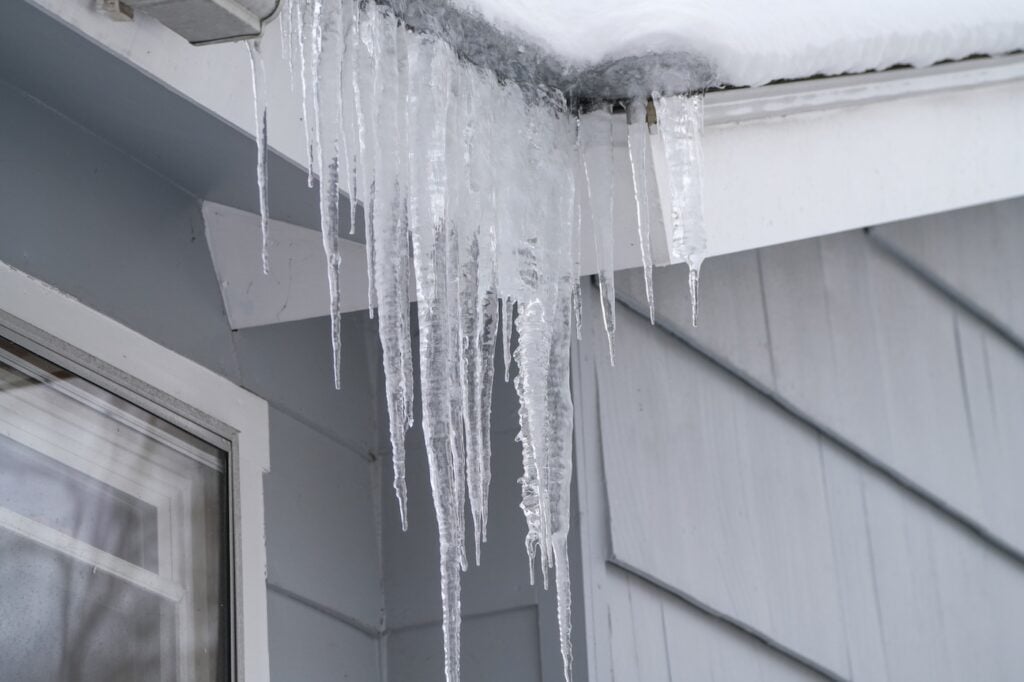
Icicles Forming Along the Roof Edge
Excessive icicle formation often means warm attic air is melting snow unevenly across the roof. This can create heavy ice buildup that strains gutters and increases the risk of ice dam development.
Water Stains on Interior Ceilings
Brown or yellow ceiling spots signal that moisture is leaking into your home from above. These stains often mean water has already penetrated the roofing layers and needs immediate attention.
Ice Ridges Visible at the Gutter Line
A thick ridge of ice along the eaves indicates melting snow is refreezing before it reaches the gutters. When this ridge grows, it traps additional meltwater and increases the chance of leaks under the shingles.
Attic Frost Buildup
Frost forming inside the attic points to poor ventilation and excessive humidity getting trapped against cold surfaces. Over time, this moisture can weaken your roof decking and encourage mold growth.
Curling Shingles Near Eaves
Shingles that curl or lift along the roof edge often show signs of moisture damage beneath the surface. This curling reduces their watertight seal and creates openings that allow further leaking during winter weather.
Prevention Tips to Reduce Ice Dam Risk
Preventing ice dams begins with creating a balanced roof environment where snow melts evenly. These simple upgrades improve roof performance during extreme winter conditions.
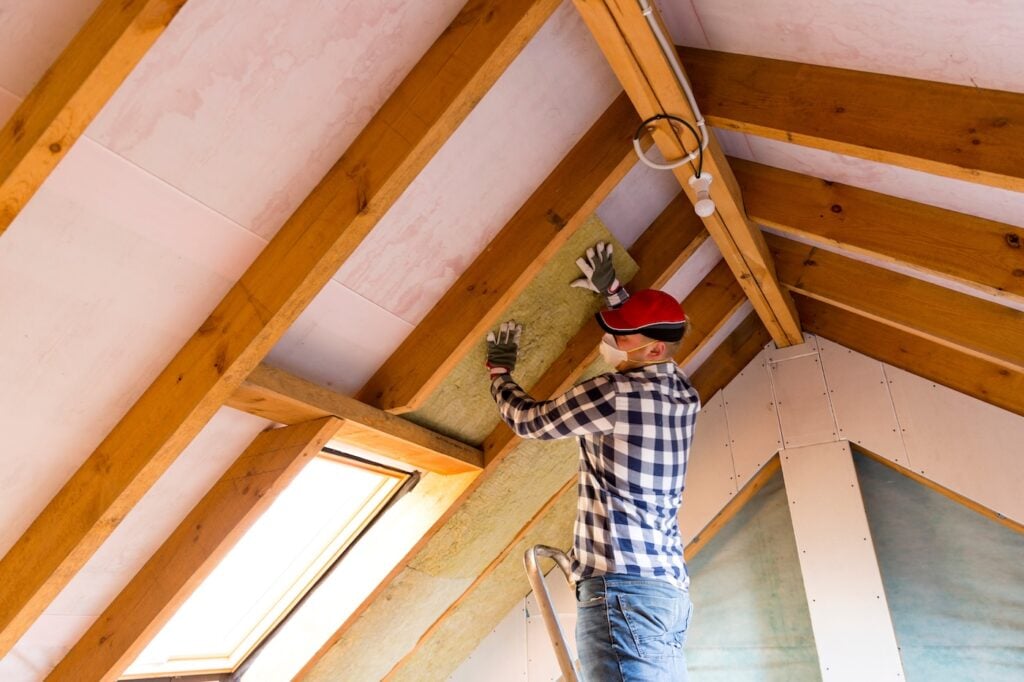
- Improve insulation: Attic insulation keeps heat inside the living space.
- Install ridge and soffit vents: Balanced airflow maintains stable roof temperatures.
- Check flashing: Loose or deteriorated flashing allows water intrusion during thaw cycles.
- Strengthen gutters: Secure gutters handle meltwater more safely without sagging.
Protect Your Home with Embry’s Roofing
Ice dams are one of winter’s biggest roofing threats, but fast action and the right techniques can prevent costly damage. Whether you need repairs, inspection, or help identifying why ice dams keep forming, Embry’s Roofing is here to help with reliable service and expert guidance.
We’re proud to serve home and business owners in Evansville, IN, and nearby cities with professional roof repair, winter preparation, and storm restoration services. Contact Embry’s Roofing today to schedule your free inspection and protect your home from ice dam damage all winter long.
CHECK OUT THE LATEST
FROM OUR BLOG