
Is a Roof Rake for Snow a Useful Tool? (2026 Pros & Cons)
When winter storms hit, many homeowners look for simple tools to protect their roofs from heavy snow buildup. One of the most popular options is the roof rake for snow—a long-handled device designed to pull snow off the roof from the ground. But is it really worth the effort? Used correctly, it can prevent costly roof damage, but used carelessly, it can also cause more harm than good.
In this guide, you’ll learn:
- What a roof rake does: How it works and when to use it.
- The main benefits: Why it’s recommended for heavy snow regions.
- Potential drawbacks: When a rake can actually damage your roof.
- Pro safety tips: How to use one the right way this winter.
What Is a Roof Rake for Snow?
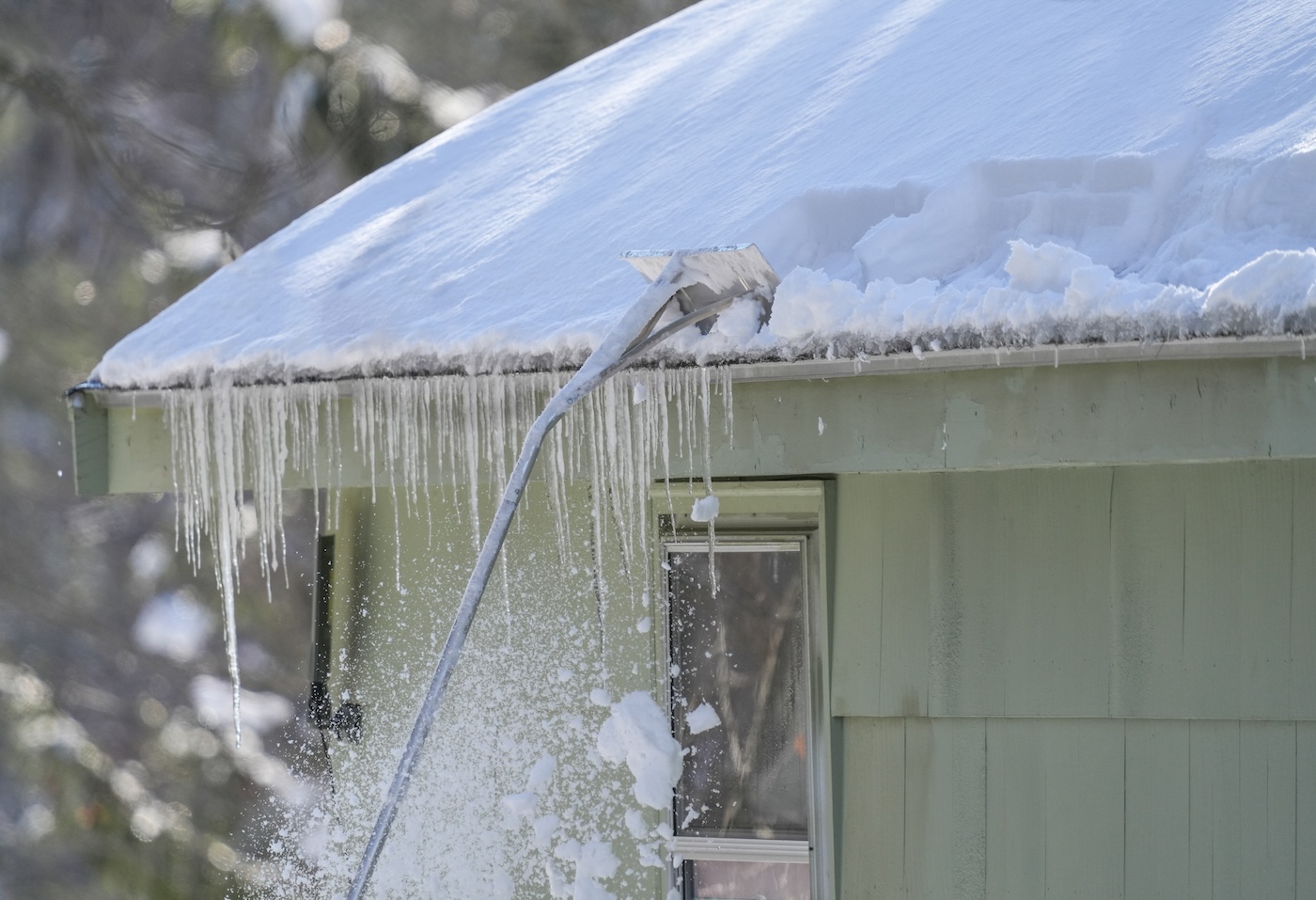
A roof rake for snow is a lightweight tool that allows homeowners to remove snow safely without climbing onto icy surfaces. It usually features an aluminum handle up to 20 feet long and a wide, flat blade designed to drag snow downward from the eaves.

In Evansville, IN, where snow accumulation can vary from light flurries to heavy wet snowfalls, using a roof rake helps reduce the overall roof snow load. By clearing snow before it compacts or refreezes, you can lower the risk of leaks, ice dams, and excess structural pressure.
Common Problems a Roof Rake Helps Prevent
Using a roof rake isn’t just about appearance—it’s about protecting your home from structural stress and water damage. Regular raking during winter storms can prevent several costly issues that often develop when snow sits too long on the roof.
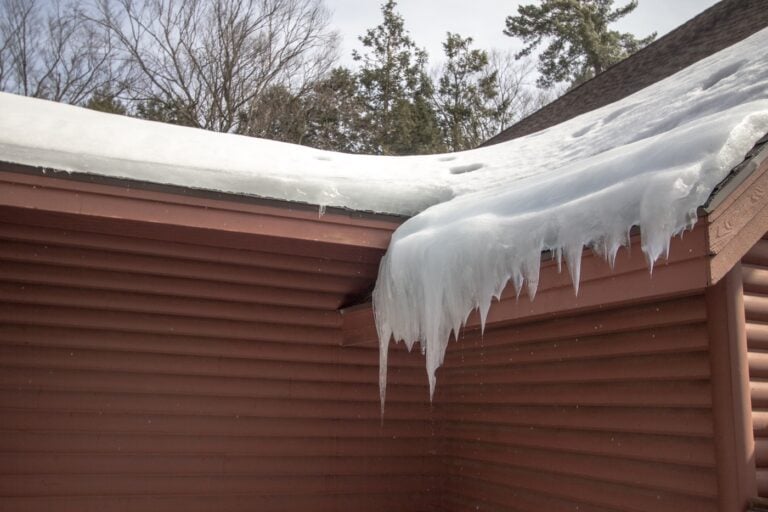
- Ice dams: Clearing snow near the eaves allows water to drain freely instead of freezing into solid ridges. This helps prevent meltwater from backing up under shingles and leaking into your attic.
- Roof leaks: When snow melts unevenly, trapped water can seep beneath shingles and cause interior stains or insulation damage. Removing snow early reduces the chance of moisture infiltration.
- Gutter strain: Heavy snow puts added pressure on gutters and downspouts. Removing buildup before it freezes solid prevents sagging, detachment, and water overflow during snowmelt.
- Uneven loading: Snow drifts caused by wind or shade can create unbalanced weight across your roof. A roof rake evens out these piles, reducing structural stress and extending the roof’s lifespan.
Roof Rake for Snow — Pros and Cons
| Pros | Cons |
| Reduces roof snow load before refreezing | Can damage shingles if used too aggressively |
| Prevents ice dams from forming at roof edges | Limited reach on multi-story homes |
| Improves roof drainage and prevents leaks | Not effective for compacted or icy snow |
| Safer than climbing a roof in winter | Requires frequent use during heavy snowfall |
| Affordable and easy to store | Can cause gutter dents if used incorrectly |
When a Roof Rake Is Most Useful
Roof rakes work best when used consistently during storms rather than waiting for heavy buildup. By removing snow in small amounts after each snowfall, you prevent pressure from reaching unsafe levels.
They’re especially effective on moderate- and low-slope roofs, garages, and overhangs—areas prone to heavy snow collection. Flat roof snow loads can benefit too, though reaching across wide spans typically requires professional tools.
Ideal conditions for using a roof rake
Fresh, light snow under 8 inches deep. Temperatures just below freezing make it easier to pull snow down before it compacts or freezes solid, allowing smoother, safer removal.
- Fresh, light snow under 8 inches deep.
- Temperatures just below freezing, before snow hardens.
- Calm or low-wind conditions for safe handling.
5 Steps on How to Use a Roof Rake Safely
Using a roof rake the right way ensures you remove snow without damaging your roof or putting yourself at risk.
Step 1: Work from the Ground
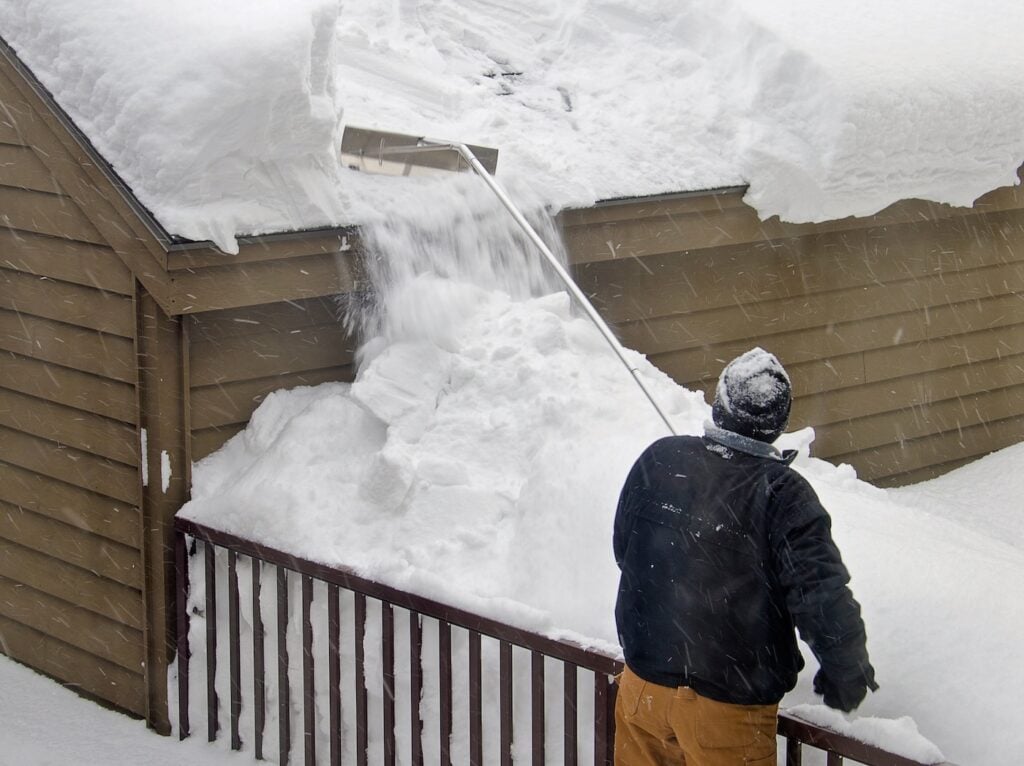
Always keep your feet planted firmly on the ground. Never climb a ladder to extend your reach—it’s one of the most common causes of winter falls.
Step 2: Start at the Eaves
Pull small sections of snow down toward the ground. Avoid scraping the shingles directly or applying excessive force.
Step 3: Use the Right Blade
Choose a rake with a plastic or rubber-coated edge. Metal blades can tear asphalt shingles or loosen granules over time.
Step 4: Watch for Power Lines
Always stay clear of electrical lines, tree branches, or objects overhead. Long aluminum handles conduct electricity and should never be used near power cables.
Step 5: Manage Snow Piles Below
As you rake, snow will collect around your foundation. Move these piles away from the house to prevent melting water from refreezing near basement walls or gutters.
Alternatives to Using a Roof Rake
A roof rake isn’t your only defense against winter damage. Combining multiple strategies provides better long-term protection.
- Add attic insulation: Prevents uneven melting and ice buildup.
- Improve ventilation: Keeps attic air cold, reducing roof surface temperature differences.
- Install snow guards: Controls how snow slides off steep metal roofs safely.
- Schedule winter inspections: Professionals can check your roof deck and drainage before problems appear.
These upgrades help reduce how often you need to rely on a rake for snow removal and keep your roof performing better throughout the season.
FAQs About Roof Rakes for Snow
Do I need a roof rake if I have good insulation?
Yes. Insulation prevents heat loss but doesn’t stop snow buildup. A roof rake still helps manage snow load during long storms.
Can I use a metal rake on shingles?
No. Metal rakes can scrape granules off asphalt shingles and shorten their lifespan. Always use plastic or soft-edged rakes.
How often should I rake my roof?
After every few inches of snowfall—especially if snow melts and refreezes overnight. Consistency prevents heavy layers from forming.
Is a roof rake safe for metal roofs?
Yes, but only if you use one designed for metal surfaces. Rubber-coated blades work best to avoid scratching or denting panels.

What if I can’t reach the top of my roof?
Only clear what you can safely access from the ground. For higher sections or steep pitches, schedule professional removal instead.
Protect Your Home with Embry’s Roofing
A roof rake for snow is a practical tool when used correctly, helping homeowners stay safe while preventing winter roof damage. However, it’s not a replacement for regular maintenance or professional inspections.
Embry’s Roofing provides expert roof inspections, general maintenance, and storm damage repair services for homes and businesses across Evansville, IN, and nearby areas. Our team ensures your roof stays strong, watertight, and ready for every season. Contact Embry’s Roofing today to schedule your free inspection and protect your home from winter wear and future storm damage.
CHECK OUT THE LATEST
FROM OUR BLOG