
Commercial Single-Ply Roofing Systems: An Overview for Business Owners
If you’ve started researching options for a flat or low-slope commercial roof, you’ve likely come across the term single-ply more than once. Commercial single-ply roofing systems have become the standard choice for a huge share of new commercial construction, largely because they balance cost, durability, and installation speed better than older multi-layer alternatives. Working with a commercial roofing team that installs these systems regularly makes it much easier to choose the right membrane for your building. This guide breaks down what single-ply roofing actually is, the main types available, and how they compare to other commercial roofing options.
Here’s what this guide covers:
- Why single-ply roofing has become the go-to choice for commercial buildings
- The 3 main types of single-ply membranes and how they differ
- How single-ply systems are actually installed
- How single-ply compares to traditional multi-ply roofing systems
Why Single-Ply Roofing Matters for Business Owners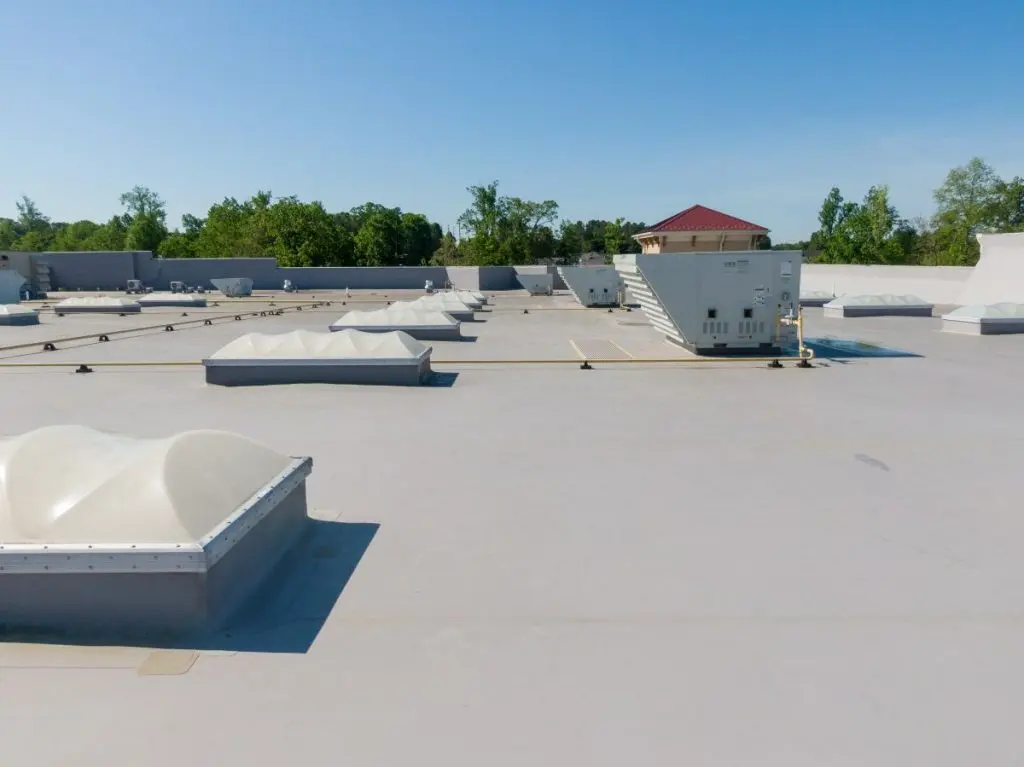
Single-ply roofing refers to a roofing membrane installed in a single layer, as opposed to older built-up systems that require multiple layers of material applied on site. That difference in construction translates into real, practical advantages for the businesses that own these roofs, from lower installation costs to reduced structural demands on the building itself. It also simplifies future repairs, since technicians are working with one membrane layer rather than diagnosing which of several layers has actually failed.
- Faster Installation. A single-layer membrane installs significantly faster than multi-layer systems, reducing labor costs and minimizing disruption to business operations during the project.
- Lower Overall Weight. Single-ply systems are considerably lighter than built-up roofing, which can be an important consideration for buildings with specific structural load limits.
- Strong Energy Efficiency. Many single-ply membranes are available in reflective white or light colors, reducing cooling costs during warmer months.
- Long Service Life. Properly installed and maintained, single-ply membranes commonly last 20 to 30 years, comparable to or exceeding many multi-ply alternatives.
- Simplified Maintenance. With fewer layers and often fewer seams than older systems, single-ply roofs are generally easier to inspect and maintain over their lifespan.
Business owners in Vincennes and surrounding areas increasingly choose single-ply systems for new construction and re-roofing projects alike, largely because the combination of speed, weight savings, and energy performance fits the practical needs of most commercial buildings, from small retail storefronts to large industrial facilities.
3 Main Types of Commercial Single-Ply Membranes
Single-ply roofing isn’t a single product. It’s a category that includes three primary membrane types, each with a different chemical composition and performance profile. Understanding the differences between them helps clarify why one membrane might be the right fit for your building while another wouldn’t be.
1. TPO (Thermoplastic Polyolefin)
TPO roofing has become the most widely installed single-ply membrane on new commercial construction, largely due to its combination of affordability, energy efficiency, and ease of installation. Its popularity has grown steadily over the past two decades as manufacturers have improved formulations to address early concerns about seam durability and long-term flexibility.
- Seams are heat-welded, creating a strong, continuous bond that resists wind uplift when installed correctly
- Its reflective white surface helps reduce rooftop temperatures and cooling costs in warmer climates
2. EPDM (Ethylene Propylene Diene Monomer)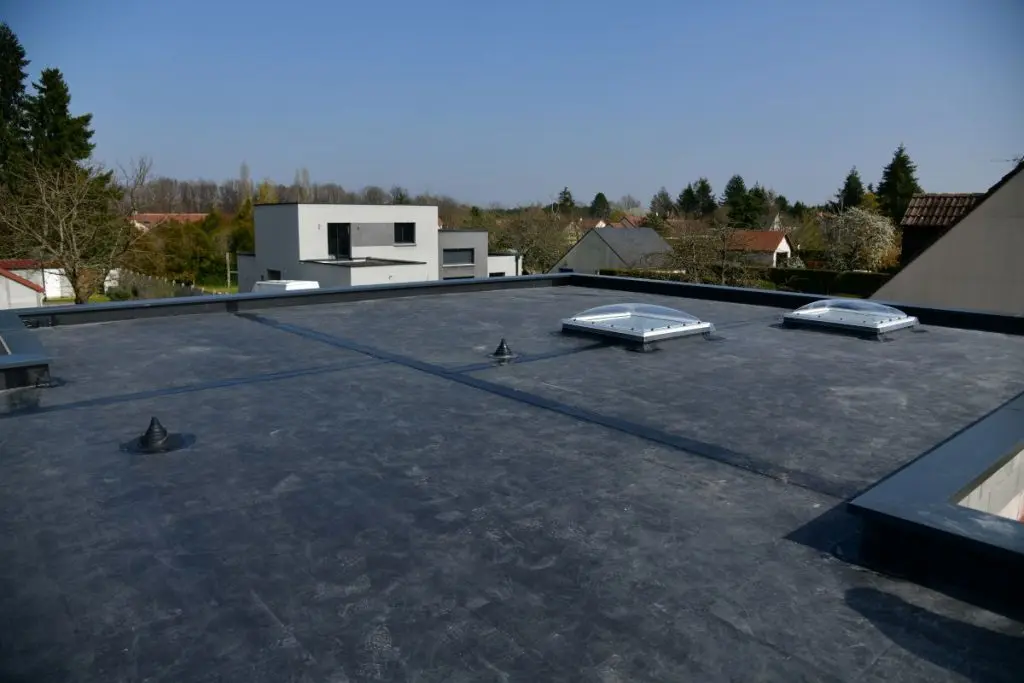
EPDM roofing uses a synthetic rubber membrane with one of the longest installation track records in the commercial roofing industry, having been used on commercial buildings since the 1960s. That decades-long history gives building owners a level of long-term performance data that newer membrane types simply haven’t accumulated yet.
- Its flexibility makes it particularly well-suited to buildings in climates with significant temperature swings, since it resists cracking during expansion and contraction
- EPDM is typically black, which means it absorbs more heat than TPO or PVC unless a white membrane variant or reflective coating is used
3. PVC (Polyvinyl Chloride)
PVC membranes cost more upfront than TPO or EPDM but offer superior resistance to chemicals, grease, and other contaminants. This resistance comes from the membrane’s inherent chemical composition rather than a surface treatment, which means the protection doesn’t wear off the way a coating might over time.
- This makes PVC a common choice for restaurants, industrial facilities, and any building where rooftop exposure to oils or chemicals is a realistic concern
- Like TPO, PVC seams are heat-welded, providing strong, durable seams across the roof’s field
How Single-Ply Membranes Are Installed
The membrane type is only half the equation. How a single-ply system is attached to the roof deck also affects its performance, cost, and suitability for a given building. Choosing the wrong attachment method for a given climate or building type can undermine the performance of even a high-quality membrane, which is why this decision deserves as much attention as the membrane selection itself.
Mechanically Attached Systems
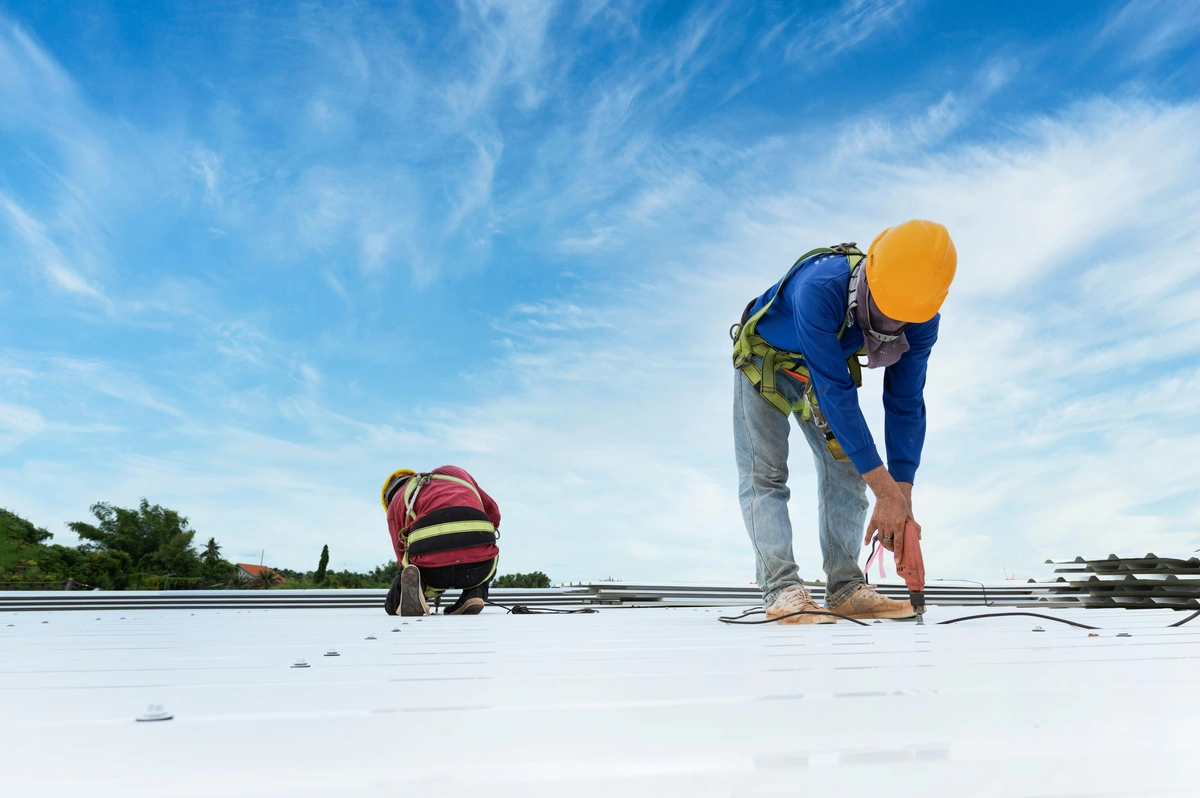
In a mechanically attached system, the membrane is secured to the roof deck using screws and plates spaced according to the manufacturer’s wind uplift requirements, with seams then welded or sealed together. This remains one of the most common attachment methods across Vincennes and surrounding areas, largely because it balances cost and performance well for a wide range of building types.
- This method tends to be the most cost-effective installation approach for many commercial buildings
- Fastening patterns must be engineered to the local wind zone, which is why manufacturer specifications matter more here than with some other attachment methods
Fully Adhered Systems
A fully adhered system bonds the membrane directly to the roof insulation or substrate using an adhesive, rather than mechanical fasteners. This approach requires more precise surface preparation than a mechanically attached system, since the adhesive bond depends heavily on a clean, properly prepared substrate.
- This approach eliminates visible fasteners and can offer a cleaner, smoother finished appearance
- Fully adhered systems often perform well in high wind zones, since the entire membrane surface shares the load rather than concentrating stress at fastener points
Ballasted Systems
Ballasted systems use loose-laid membrane held in place by a layer of ballast, typically river rock or concrete pavers, rather than fasteners or adhesive. Because the membrane isn’t permanently attached to the deck, this method also tends to simplify certain types of repairs, since sections of ballast can be temporarily moved aside without disturbing a bonded or fastened membrane.
- This method requires a structure capable of supporting the added weight of the ballast material
- Ballasted systems can be a cost-effective option for large, open roof areas where the additional structural capacity already exists
Single-Ply vs Multi-Ply Roofing Systems: What’s the Difference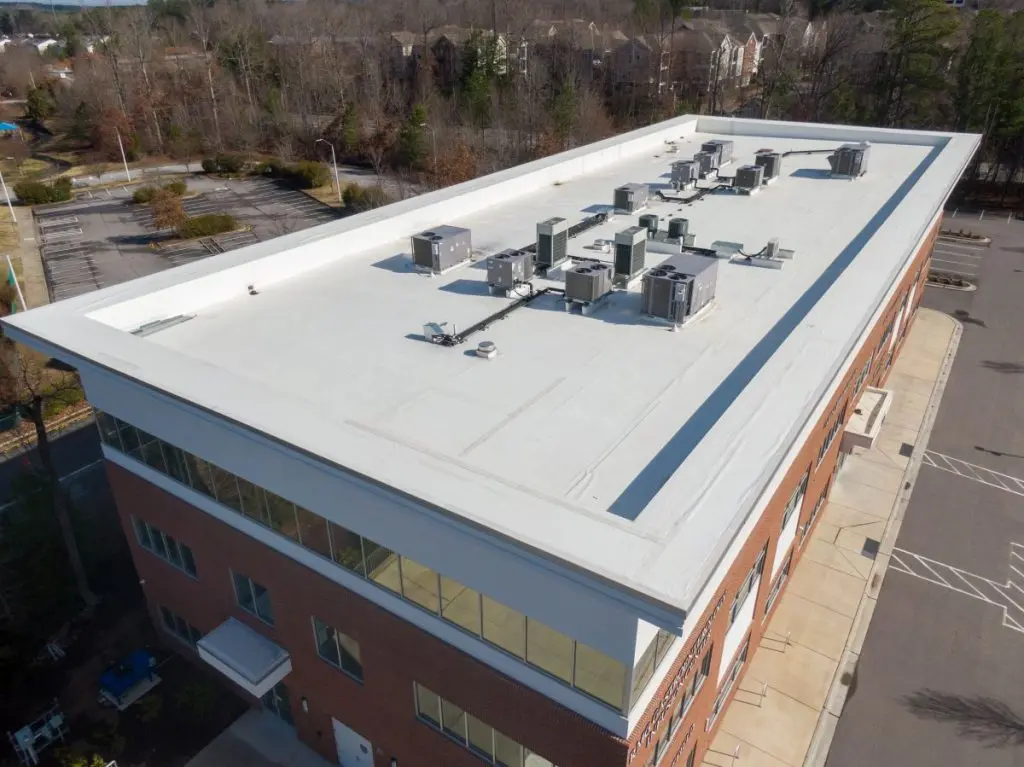
Understanding how single-ply compares to traditional multi-ply systems like built-up roofing and modified bitumen helps put the advantages of single-ply into context. Each category has genuine strengths, and the right choice often depends on factors specific to the building rather than a universal best answer.
| Factor | Single-Ply Systems (TPO, EPDM, PVC) | Multi-Ply Systems (BUR, Modified Bitumen) |
| Installation speed | Faster, fewer layers to apply | Slower, multiple layers applied in sequence |
| Weight | Lighter, less structural demand | Heavier, requires structural consideration |
| Seam count | Fewer seams with heat-welded systems | More seams and layer transitions |
| Typical lifespan | 20 to 30 years | 15 to 30 years, depending on system |
| Repair approach | Often simpler due to fewer layers | Can require addressing multiple layers |
| Upfront cost | Moderate, varies by membrane type | Often lower for built-up roofing specifically |
Neither category is universally better. Multi-ply systems remain a solid choice for certain applications, particularly re-roofing projects where matching an existing system simplifies the work, while single-ply systems tend to be the preferred choice for new construction and buildings prioritizing lighter weight, faster installation, or reflective energy performance. Business owners in Vincennes and surrounding areas evaluating a re-roof project often find that a professional inspection is the clearest way to determine which category actually fits their specific building and budget. The condition of the existing roof deck, the building’s structural capacity, and the timeline for completing the project all factor into that recommendation as much as personal preference does.
Choose the Right Single-Ply System for Your Building
Single-ply roofing has earned its place as the leading choice for commercial buildings by offering a genuine combination of speed, durability, and energy performance that older multi-layer systems struggle to match. Whether TPO, EPDM, or PVC makes the most sense for your property depends on your climate, budget, and specific building use, and getting that decision right from the start protects your investment for decades. The attachment method matters just as much as the membrane itself, since even the best material can underperform if it’s installed with the wrong fastening approach for your building’s wind zone and structural capacity.
At Embry’s Roofing, we install and maintain all three major single-ply membrane types, helping business owners across Vincennes, Evansville, Newburgh, and surrounding areas choose the system that actually fits their building and budget. If you’re ready to explore your options for a new or replacement commercial roof, contact us today to schedule an inspection.
CHECK OUT THE LATEST
FROM OUR BLOG