
Planning a Commercial Metal Roof Replacement? (7 Steps to Do It Right)
A commercial metal roof replacement is one of the largest capital investments a building owner or facilities manager will make. Done right, it protects the building for 40 to 70 years with minimal maintenance — far longer than traditional roofing materials like single-ply membrane or modified bitumen. Done wrong, it creates recurring problems that cost more to fix than the shortcuts originally saved. Whether you are managing a warehouse, manufacturing facility, or large commercial building in the Tri-State area, this guide walks you through exactly what a successful replacement project looks like from the first sign of trouble to the final inspection.
This blog covers:
- How to know when replacement is the right call over repair
- The 7 steps that separate a successful project from a problematic one
- What to look for in a commercial metal roofing contractor
- How system selection affects long-term performance and cost
- What Embry’s brings to every commercial metal roof project
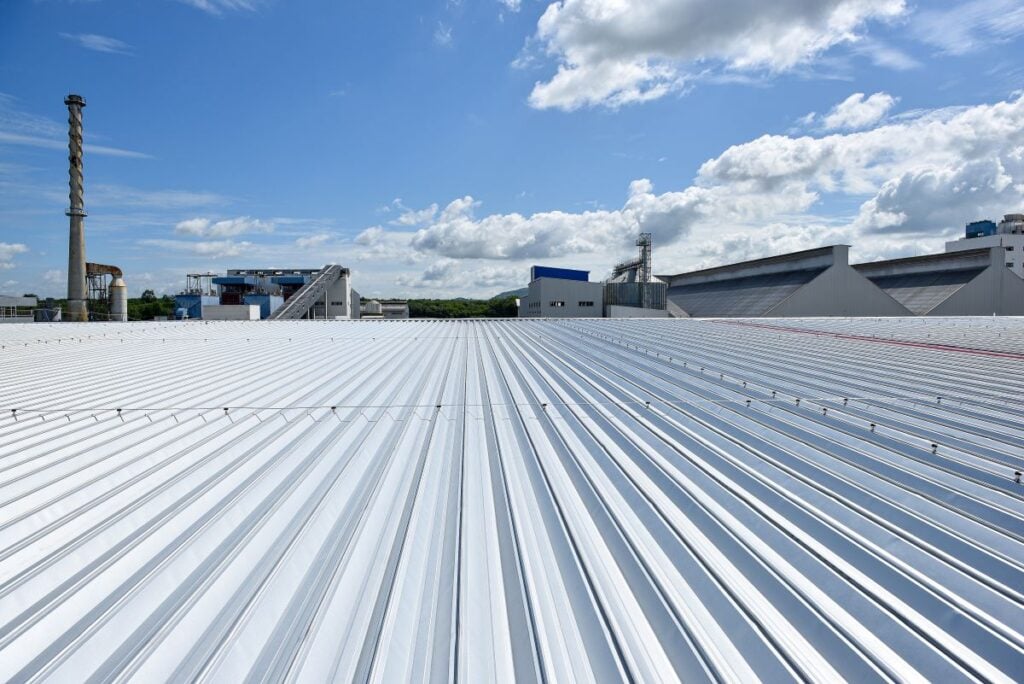
When Does a Commercial Metal Roof Need to Be Replaced?
Not every problem with a commercial metal roof requires full replacement. Isolated fastener failures, minor seam separations, and small flashing issues are often repairable if the underlying structure and substrate are sound. Replacement becomes the right call when roof leaks return repeatedly after repairs, when the cost of those costly repairs begins to outpace the value of the remaining roof life, when corrosion has spread across panels or structural components, when insulation saturation has occurred across significant portions of the roof, or when the metal roofing systems in place have reached or exceeded their expected service life.
According to Roofing Contractor magazine, reroofing accounts for well over 80% of the annual U.S. roofing market volume, which reflects just how many commercial buildings are operating on aging systems that need attention. For building owners in Terre Haute, IN and across the Tri-State area, deferred action on a failing metal roof adds insulation damage, structural exposure, and interior water damage risk with every season that passes. We’re proud to serve home and business owners in Terre Haute, IN, and nearby communities with commercial metal roof inspections, system replacements, and more.
7 Steps to a Successful Commercial Metal Roof Replacement
A commercial metal roof replacement is not a single event. The metal roof installation process begins weeks or months before the first panel comes off and extends through warranty registration after installation is complete. Building owners who understand each step are better positioned to evaluate contractors, anticipate timelines, and protect their investment.
1. Start With a Professional Roof Inspection and Assessment
Every successful replacement project begins with an accurate understanding of what you are working with. A professional inspection evaluates the condition of the existing metal panels, fasteners, insulation, and structural framing. It identifies areas of moisture intrusion, corrosion, structural deflection, and any other conditions that must be addressed before or during the replacement project.
- Infrared scanning: Thermal imaging can map moisture within the insulation layer that is invisible to the naked eye, informing the scope of insulation replacement needed.
- Core sampling: Physical samples of the roof assembly confirm insulation condition and substrate integrity at representative locations across the roof.
- Structural review: Purlin spacing, framing condition, and load capacity are confirmed against the requirements of the replacement system being considered.
- HAAG certification: Working with a HAAG certified inspector ensures the assessment meets the highest industry standard for accuracy and documentation.
2. Define the Project Scope: Tear-Off vs. Recover
One of the most consequential early decisions is whether a complete tear off of the existing system is required or whether a new roof can be installed over it. A complete tear off is required when insulation is saturated, when structural repairs are needed, or when the added weight of a recover would exceed the building’s structural capacity. Recover installations, which install a new metal panel system over the existing roof using subframing or recovery clips, are appropriate when the existing structure is sound and dry, and can reduce project costs and operational disruption significantly.
3. Select the Right Replacement System
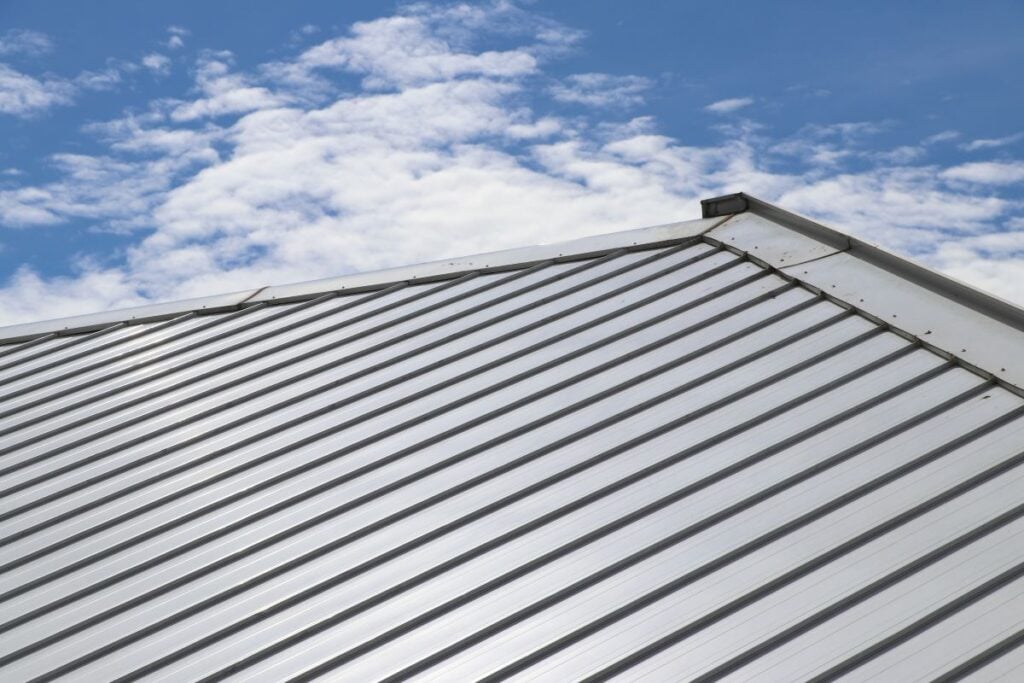
System selection is where the long-term performance of your replacement project is determined. Different metal roof types are available for commercial applications, from standing seam panels and metal shingles to through-fastened structural systems, and the right choice depends on your building’s slope, span, and budget. For most large commercial metal buildings, the primary choice among commercial metal roofing systems is between standing seam panels with concealed fasteners and through-fastened systems with visible fasteners. Standing seam panels use concealed clips that allow thermal movement without stressing the panel or fastener, delivering superior long-term weather performance. Through-fastened systems are less expensive upfront but require more maintenance over time as rubber washers and visible fasteners wear.
- Panel gauge: 24- to 26-gauge Galvalume steel roofing is the standard for commercial applications, with heavier gauges appropriate for longer spans or higher load requirements.
- Coating system: Factory-applied Kynar 500 or equivalent fluoropolymer coatings provide the best long-term color retention and corrosion protection.
- Insulation upgrade: Replacing aging or saturated insulation during a reroof is one of the highest-return energy efficiency upgrades available on a commercial building, directly reducing energy costs for decades after the project is complete.
- Manufacturer selection: Embry’s works with trusted commercial metal manufacturers including Metal Sales, Metal Era, Duralast, and Exceptional Metals, ensuring every project is specified with products backed by strong manufacturer warranties.
4. Verify Contractor Credentials and Experience
A commercial metal roof replacement is not the place to test a contractor’s learning curve. The system you specify will only perform as intended if it is installed exactly to manufacturer requirements, and that requires a crew with specific, demonstrated experience with the panel system being installed.
Key credentials to verify include manufacturer certification for the specific system being installed, HAAG certified inspection capability for pre-installation assessment, a track record of completed commercial metal roofing projects of comparable scope, and clear documentation of workmanship warranty coverage. Embry’s 5-year workmanship warranty on every commercial project and over 45 years of Tri-State roofing experience put these boxes firmly in check.
5. Coordinate the Project Around Your Operations
A commercial metal roof replacement on an occupied facility requires careful coordination to minimize business disruption. Large buildings are typically phased, with installation progressing in sections to limit the area of open roof at any time. Weather windows must be planned around, and interior protection for equipment and inventory must be confirmed before work begins.
- Phased installation: Dividing the project into sections allows the building to remain operational throughout.
- Interior protection: Dust barriers and equipment covers prevent contamination and damage during work.
- Site safety: Commercial roofing projects require robust fall protection and perimeter safety systems that protect both the crew and anyone working below.
6. Execute Installation to Manufacturer Specifications
The weathertight performance of a commercial metal roof depends on installation precision. Every panel must be aligned correctly, every seam must be crimped or locked to the exact profile specified, and every penetration, flashing, and trim detail must be installed with manufacturer-approved closures and sealants.
Common installation failures on commercial metal roofs originate in the details: inadequate seam crimping, improper flashing at HVAC curbs, incorrect fastener patterns at high-uplift zones, and misaligned panels that create stress at seam locations. Proper installation by an experienced contractor who has installed the specific system before and follows manufacturer specifications without shortcuts is the single most important factor in long-term performance.
7. Complete Warranty Registration and Final Documentation
A commercial metal roof replacement is not complete until all warranty documentation is in place. Manufacturer warranties covering materials and, on qualifying installations, labor and materials, must be registered with the manufacturer before the project closeout. Your contractor’s workmanship warranty should be documented in writing with clear coverage terms.
Final documentation should also include a post-installation inspection report, photographic records of the completed installation, and a recommended maintenance schedule. These records protect your investment, support future insurance claims, and ensure that any warranty claim can be processed without dispute.
Commercial Metal Roof Replacement at a Glance
| Project Phase | Key Decision | What to Confirm |
| Inspection and assessment | Repair vs. replace | Insulation condition, structural integrity, system age |
| Scope definition | Tear-off vs. recover | Moisture levels, structural capacity, local code |
| System selection | Panel type and gauge | Thermal movement, load requirements, warranty coverage |
| Contractor selection | Experience and credentials | Manufacturer cert, HAAG inspection, workmanship warranty |
| Project coordination | Phasing and scheduling | Operational continuity, weather windows, site safety |
| Installation | Manufacturer compliance | Seam quality, flashing details, fastener patterns |
| Closeout | Warranty registration | Documentation, maintenance schedule, inspection records |
Common FAQs About Commercial Metal Roof Replacement
Building owners and facilities managers planning a commercial metal roof replacement tend to have the same set of practical questions. Here are the ones we hear most often, with direct answers based on decades of Tri-State commercial roofing experience.
How long does a commercial metal roof replacement take?
Project duration depends on building size, roofline complexity, whether tear-off is required, and weather. A straightforward standing seam replacement on a mid-size commercial building typically runs one to three weeks. Larger industrial facilities or projects with structural repair take longer. Embry’s provides a detailed project schedule before work begins.
Can a new metal roof be installed over an existing one?
Yes, in many cases. Recover installations that place a new standing seam system over existing through-fastened panels are a well-established approach. The key qualifiers are dry insulation, adequate structural load capacity, and local code compliance. A professional inspection determines whether your building qualifies.
How much does a commercial metal roof replacement cost?
Costs vary based on building size, panel system, tear-off scope, and insulation upgrades. Standing seam systems cost more per square foot than through-fastened alternatives but deliver lower total cost of ownership over their service life. Embry’s provides free commercial inspections and estimates so you understand real costs before committing.
What warranty should I expect on a commercial metal roof replacement?
Expect at minimum a manufacturer product warranty and a contractor workmanship warranty. On qualifying installations from Embry’s preferred manufacturers, full system warranties covering materials and labor are available. Embry’s backs every commercial project with a 5-year workmanship warranty.
How do I get started?
Schedule a professional inspection with a contractor who has specific experience in commercial metal roofing. Embry’s provides free commercial roof inspections and estimates across the Tri-State area with no obligation.
Get Your Replacement Done Right With Embry’s Roofing
A commercial metal roof replacement handled correctly is a 40 to 70 year investment in your building’s protection and operational continuity. Handled carelessly, it is a recurring source of leaks, warranty disputes, and repair costs that far outweigh any initial savings.
Family-run since 1979 and backed by over 45 years of commercial roofing experience, Embry’s Roofing serves building owners and facilities managers across Terre Haute, Evansville, Louisville, Paducah, and the greater Tri-State area. Our HAAG certified inspectors, GAF Elite Master Contractor credentials, and deep familiarity with Metal Sales, Metal Era, Duralast, and Exceptional Metals products mean your replacement is specified and installed to perform for decades. Contact Embry’s today for a free commercial metal roof inspection and find out exactly what your project requires.
CHECK OUT THE LATEST
FROM OUR BLOG