
Signs Your Low Slope Roofing System Needs to Be Replaced in 2026
Most commercial building owners do not think about their roof until something goes wrong. By then, a minor problem has often become a major one. Low slope roofing systems have unique failure patterns that differ from steep-slope residential roofing, and knowing what to watch for can save you from a costly emergency repair or a full interior water damage event. If your building has flat roofs or a low-slope design and it has been more than a decade since the last replacement or thorough inspection, this guide is for you.
This blog covers:
- How low slope roofing systems work and why they fail differently
- The most common signs that replacement is overdue
- The main system types and how to compare them
- What a replacement project looks like from start to finish
- How to get started with a professional assessment
How Low Slope Roofing Systems Work
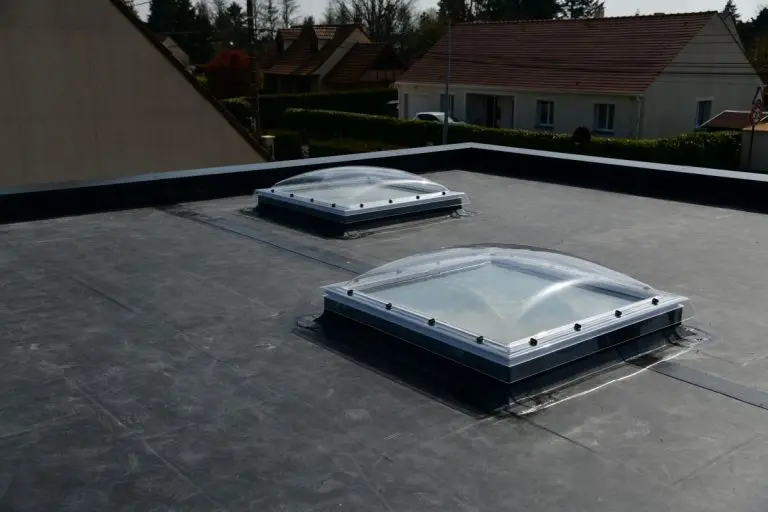
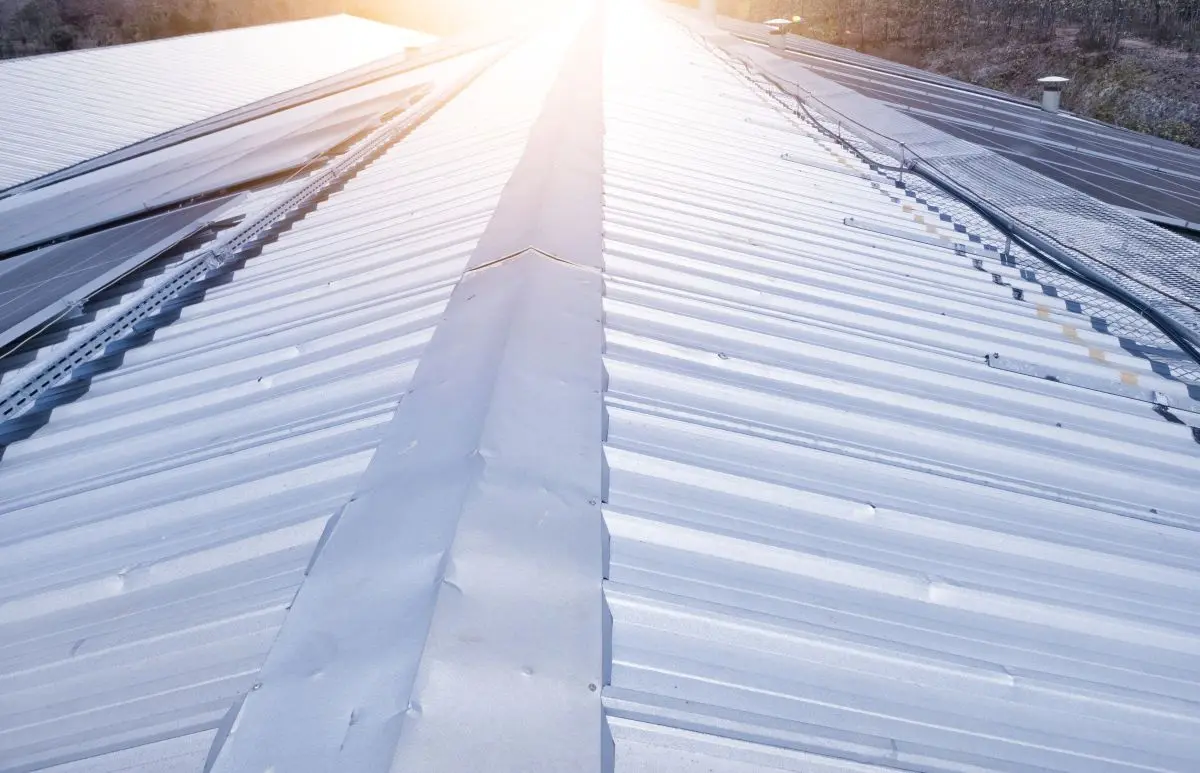
A low slope roof is defined as any roof with a pitch of 3:12 or less, meaning it rises three inches or less for every twelve inches of horizontal run. Most commercial and industrial buildings fall into this category. Unlike steep-slope roofs that shed water quickly through gravity, low slope systems rely on drainage infrastructure, including internal drains, scuppers, and gutters, to move water off the roof before it can pond or find its way into the building.
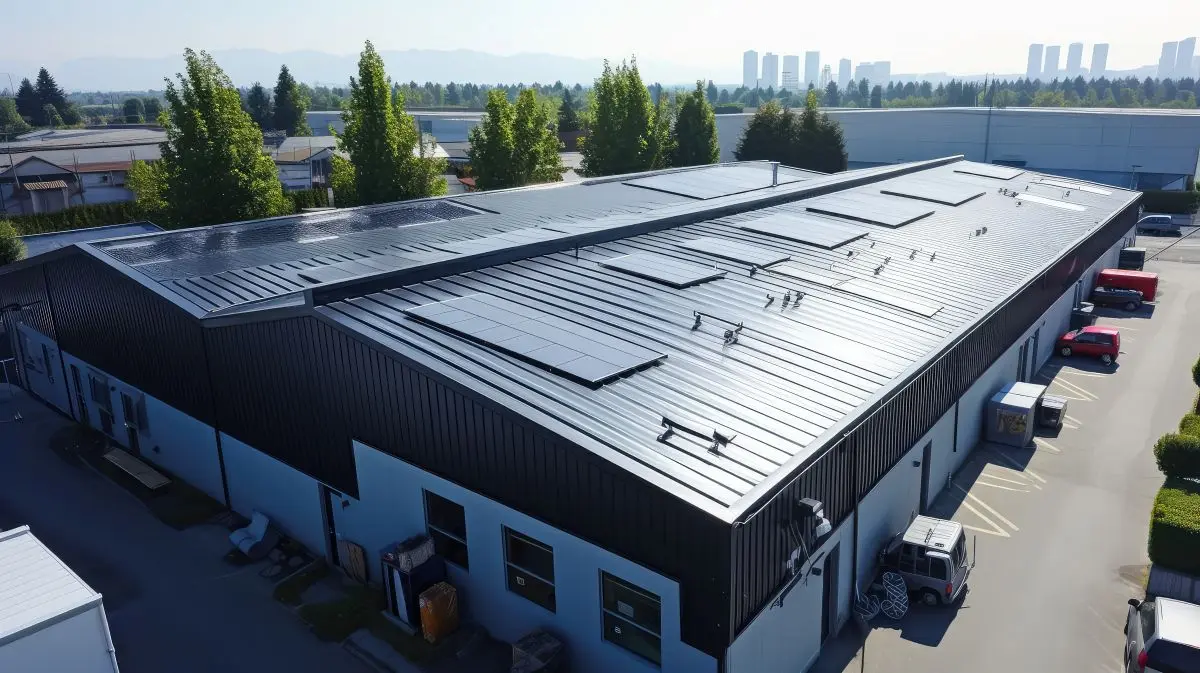
The roof covering on most low slope buildings consists of EPDM membranes, TPO, PVC, or modified bitumen, all designed to form a continuous waterproof layer across the entire roof surface. When those membranes are intact, properly lapped, and fully adhered, they perform well for years. When they are not, water finds every gap, seam failure, and low spot with remarkable efficiency. We’re proud to serve home and business owners in Marion, IL, and nearby communities with low slope roofing inspections, system replacements, and more, and aging membrane systems are among the most common commercial roofing issues we assess across the Tri-State area.
8 Signs Your Low Slope Roofing System Needs Replacing
According to the National Roofing Contractors Association, building owners should schedule roof system inspections at least twice per year, in spring and fall. For many commercial buildings, those inspections never happen, and by the time visible damage appears, the underlying system has often been failing silently for years. These are the signs that indicate replacement rather than repair is the right path forward.
1. Persistent or Recurring Leaks
A single isolated leak repaired once is a maintenance issue. Leaks that come back in the same location, appear in new locations after each rain, or seem to migrate across the building are a sign that the membrane has reached the point where patching is no longer cost-effective. When the system develops recurring failures faster than repairs can keep pace, replacement restores the baseline performance that repairs cannot.
2. Widespread Ponding Water
Low slope roofs will always have some degree of ponding after heavy rain, but water that remains standing for more than 48 hours indicates a drainage problem that is stressing the membrane. Chronic ponding accelerates membrane deterioration, adds significant structural load to the roof deck, and creates ideal conditions for algae and root growth that further compromise the system.
- Drain blockages: Clogged internal drains and scuppers cause ponding that looks like a drainage problem but is actually a maintenance issue. Clear them before concluding the roof needs replacement.
- Structural deflection: If the roof deck itself has sagged or deflected over time, no amount of patching will eliminate the low spots that collect water. The underlying structure must be addressed as part of any replacement.
- Membrane fatigue: Repeated cycles of ponding and drying accelerate membrane cracking and delamination, particularly in EPDM and modified bitumen systems.
3. Visible Membrane Cracking, Blistering, or Splitting
The membrane surface of a low slope roof tells its age clearly if you know what to look for. Surface cracking in an EPDM or modified bitumen system indicates that the material has lost its flexibility and weather resistance, and is no longer able to accommodate thermal movement without breaking. Blistering, where air or moisture becomes trapped beneath the membrane, creates raised areas that are prone to rupture and water intrusion.
4. Seam and Flashing Failures
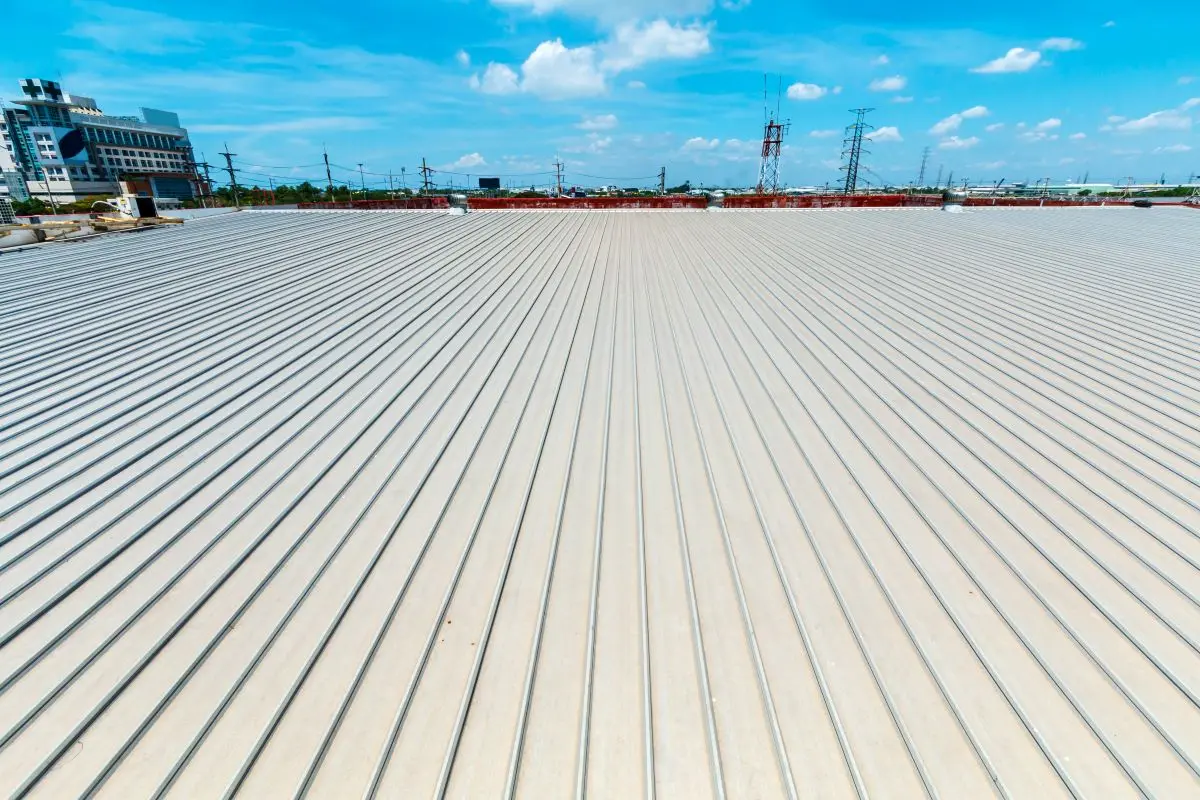
Seams and flashings are the most vulnerable points of any low slope roofing system. They are where two sections of membrane meet, where the roof transitions to a wall, curb, or penetration, and where installation quality and long-term material performance intersect. Lifted, separated, or compromised seams allow water to enter the system in ways that are difficult to diagnose from below until significant damage has accumulated.
- Lap seam separation: On single-ply roofing systems like TPO and PVC, seams that are heat-welded or adhesively bonded can separate as the material ages and thermal cycling stresses the joint.
- Flashing deterioration: Pitch pockets, pipe flashings, and perimeter edge metal all degrade over time. Failed flashings around HVAC curbs, skylights, and penetrations are among the most common entry points for water on commercial roofs.
- Counter flashing issues: Where the roof membrane meets a parapet wall or vertical surface, failed counter flashing allows water to run behind the membrane and into the building without any visible sign on the roof surface above.
5. Insulation Saturation
Water that enters a low slope roofing system migrates into the insulation below, where it is invisible from above and difficult to detect without infrared scanning or core sampling. Saturated insulation loses its thermal value, adds significant weight to the roof structure, and creates ongoing moisture exposure to the deck and structure below. If your building has experienced chronic leaks over several years, insulation saturation has likely already occurred across portions of the roof even if the surface currently appears intact.
6. Roof Age at or Beyond System Life Expectancy
Low slope membrane systems have defined service life ranges based on roofing material type. EPDM typically delivers 20 to 30 years, TPO 15 to 30 years, and modified bitumen and built-up systems around 20 years or more with proper maintenance. A roof past its expected life is not necessarily failing today, but repair costs accumulate faster, the risk of a major leak event increases, and a new warranted system delivers more value than the remaining years of the existing one.
7. Interior Water Damage or Staining
Ceiling tiles, wall staining, rust on structural members, and mold growth in the building interior are downstream indicators that the roof has been allowing water intrusion for some time. By the time interior damage is visible, the moisture has often traveled a significant distance from its entry point, making source identification difficult and the scope of hidden damage larger than the visible signs suggest.
8. Failed or Expired Warranty Coverage
A low slope roofing system operating without active manufacturer warranty coverage has no backstop if the system fails prematurely. Commercial roof warranties typically cover material defects and, on full-system warranties, workmanship for defined periods. When that coverage has expired or been voided by improper repairs or unauthorized modifications, replacement with a new warranted system restores that protection. Embry’s installs commercial systems from manufacturers including Mule-Hide and Gen Flex, backed by our 5-year workmanship warranty on every commercial project.
Low Slope System Types at a Glance
| System Type | Lifespan | Best Known For | Relative Cost |
| EPDM (rubber membrane) | 20 to 30+ years | Durability, flexibility, low maintenance | Lower to moderate |
| TPO (thermoplastic) | 15 to 30 years | Energy efficiency, heat-welded seams | Moderate |
| PVC membrane | 20 to 30 years | Chemical resistance, durability | Moderate to higher |
| Modified bitumen | 20+ years | Impact resistance, multi-ply strength | Moderate |
| Built-up roofing (BUR) | 20 to 30 years | Proven track record, redundant layers | Moderate |
Common FAQs About Low Slope Roof Replacement
Facility owners and building managers who are approaching a replacement decision tend to have the same set of questions. Here are direct answers to the ones we hear most often.
How do I know if I need repair or full replacement?
Isolated failures with a system that is still within its service life and structurally sound are generally candidates for flat roof repair. Widespread membrane deterioration, significant insulation saturation, recurring leaks across multiple locations, or a system past its design life all point toward replacement being the more cost-effective long-term choice. A professional inspection with core sampling and infrared scanning provides the data to make that call with confidence.
How long does a commercial low slope roof replacement take?
Project duration depends on building size, system type, tear-off scope, and weather. A straightforward single-ply replacement on a mid-size commercial building typically takes several days to a couple of weeks. Embry’s coordinates scheduling around your operational requirements to minimize disruption.
Can a new low slope roof be installed over the existing one?
In many cases, yes. Recover installations add a new membrane over the existing roof, avoiding tear-off costs and reducing disruption. This option requires that the existing system has no significant insulation saturation, that the roof deck is structurally sound, and that local building codes permit the additional layer.
What should I look for in a low slope roofing contractor?
Experience with the specific system types you are considering, manufacturer certifications, and a track record on commercial projects of similar scope are the starting points. HAAG certified inspection capability matters for damage assessment, and clear warranty documentation on both materials and workmanship is non-negotiable.
Does Embry’s offer financing for commercial roof replacements?
Contact our team directly to discuss the options available for your project. We also provide free commercial inspections and estimates so you understand the full scope and cost before making any commitment.
Make the Right Call With Embry’s Roofing
A low slope roof that is showing the signs above is not a problem that improves with time. Every season of deferred action adds insulation saturation, structural exposure, and interior damage risk to the equation. The right decision, made with accurate information from a qualified contractor, protects your building and your bottom line.
Family-run since 1979 and backed by over 45 years of commercial roofing experience, Embry’s Roofing serves facility owners and building managers across Marion, Mt. Vernon, Carmi, Evansville, Bloomington, Paducah, and the greater Tri-State area. Our HAAG certified inspectors bring diagnostic expertise to every assessment, and our preferred manufacturer relationships with Mule-Hide and Gen Flex mean you get a warranted system installed by a team that knows it inside and out. Contact Embry’s today for a free low slope roofing inspection and estimate.
CHECK OUT THE LATEST
FROM OUR BLOG