
Best Commercial Roof Types for Flat Buildings (6 Options Compared)
Choosing the right roof for a flat commercial building is one of the most consequential decisions a building owner or facilities manager will make. The wrong system can mean recurring leaks, high maintenance costs, and a replacement cycle that comes far sooner than it should. The right one protects your building for decades with minimal disruption. Commercial roof types for flat and low-slope applications vary significantly in cost, performance, lifespan, and installation requirements, and understanding what separates them is the first step toward making a confident decision.
This blog covers:
- What to look for when comparing commercial flat roof systems
- 6 of the most common commercial roof types compared side by side
- Which systems work best for different building types and budgets
- Key questions to ask before committing to a system
- How to get a professional assessment from an experienced contractor
What to Look for When Comparing Commercial Flat Roofs
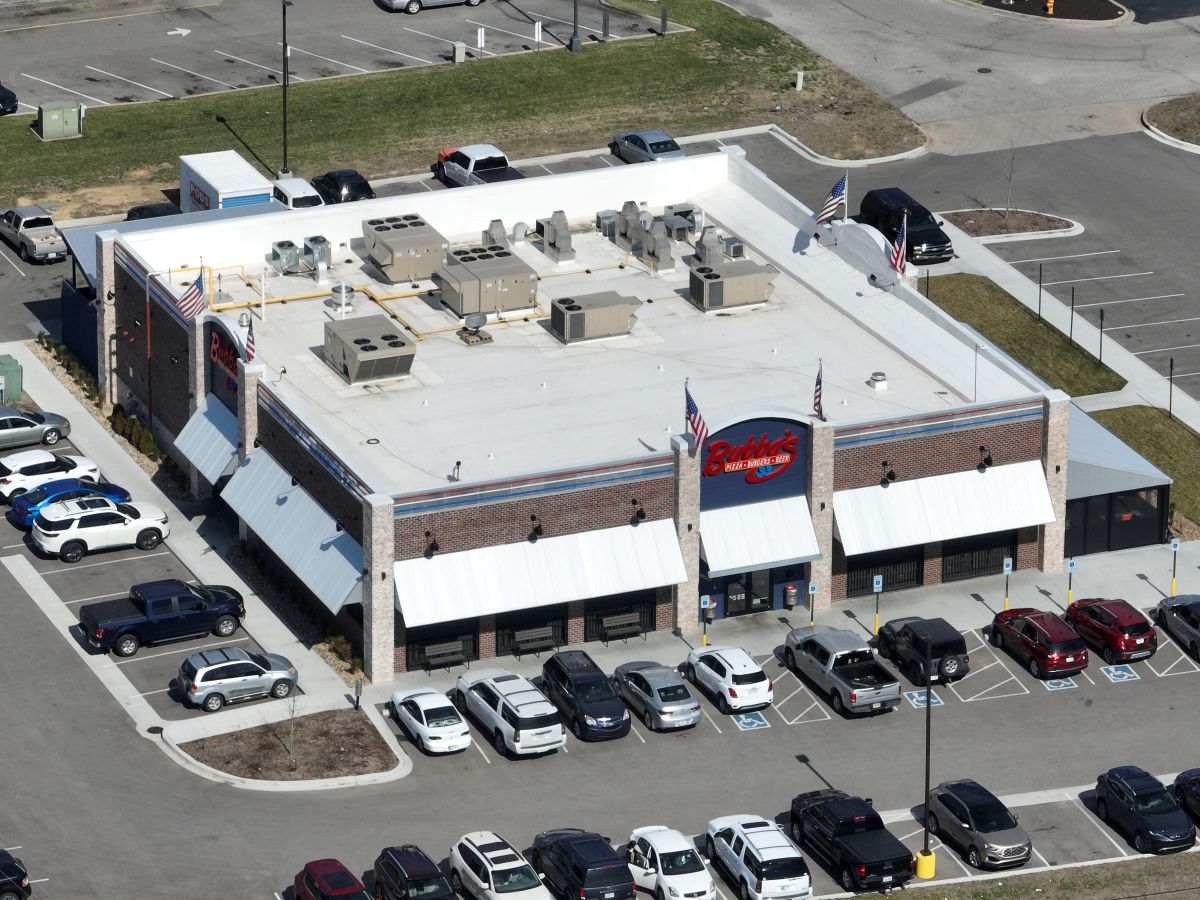
Before diving into specific systems, it helps to understand the factors that matter most when evaluating any commercial roofing option. Not every building has the same priorities, and the best system for a warehouse in Bowling Green, KY is not necessarily the best system for a downtown retail building or a food processing facility.
The most important factors to weigh when comparing commercial flat roof types include how long the roofing material is designed to last, what the upfront and long-term maintenance costs look like, how well the system handles the specific demands of your building’s interior environment, and what warranty coverage is available from the manufacturer and your contractor. It is also worth considering sustainability goals. Green roofing systems, including vegetative roof assemblies and highly reflective membrane surfaces, are increasingly specified on commercial buildings where environmental performance, stormwater management, or LEED certification targets are part of the project brief.
6 Types of Commercial Roofing Systems
According to Roofing Contractor magazine’s 2025 State of the Roofing Industry Report, TPO drives 49% of single-ply commercial contractor sales, making it the dominant flat roofing product in the commercial market today. But the right choice depends on your building, your budget, and your performance priorities. Here is how the six most common commercial flat roof systems compare.
1. TPO (Thermoplastic Polyolefin)
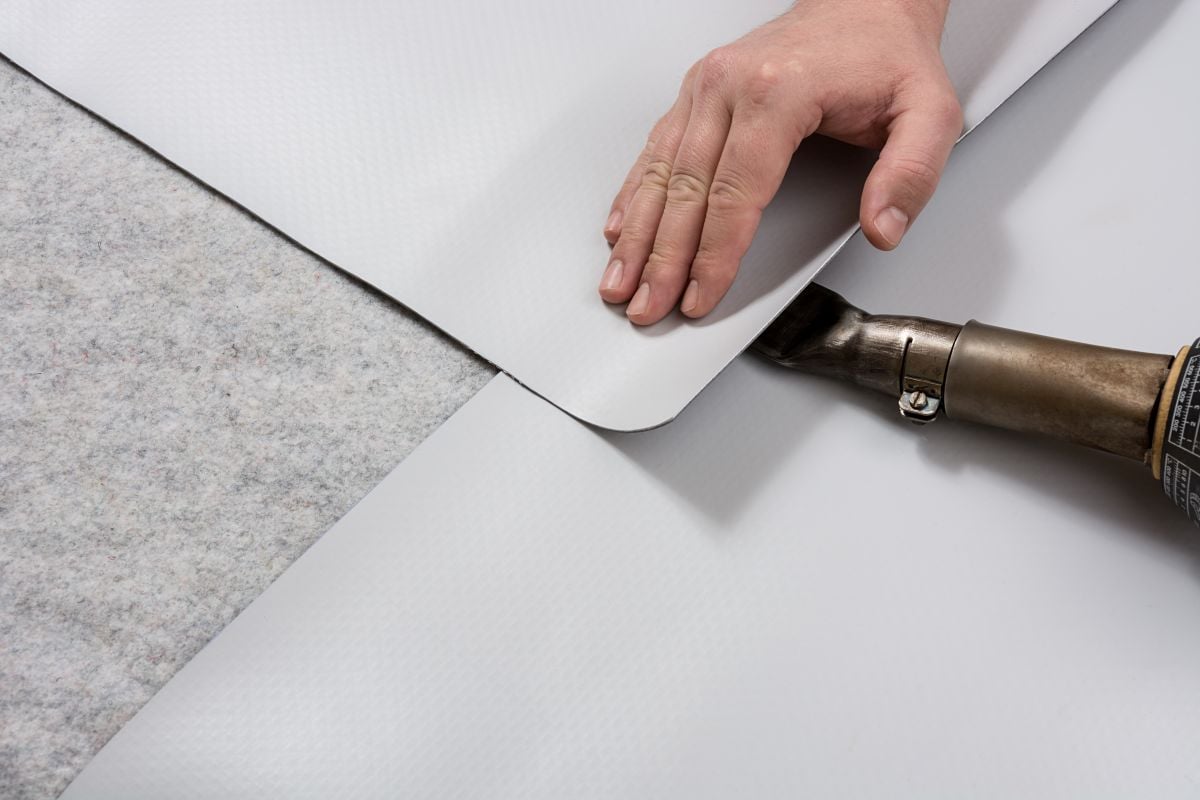
TPO has become the most widely specified commercial flat roof system for good reason. The single-ply membrane is heat-welded at the seams, delivering meaningful reductions in cooling costs on buildings with significant climate control demands.
- Lifespan: 15 to 30 years with proper installation and maintenance.
- Cost: Moderate, generally making it one of the more budget-friendly single-ply options.
- Best for: Office buildings, retail facilities, warehouses, and any commercial building where energy efficiency is a priority.
- Watch for: Formulation quality varies between manufacturers. Working with a contractor who specifies a proven product line matters more than it does on some other systems.
2. EPDM (Ethylene Propylene Diene Monomer)
EPDM is the most established single-ply flat roofing membrane, with a track record spanning decades on commercial and industrial buildings across the Tri-State area. The EPDM roofing membrane is highly flexible and handles the temperature swings that Indiana, Kentucky, and Illinois winters deliver better than many alternatives.
- Lifespan: 20 to 30+ years, with well-maintained systems regularly exceeding their rated life.
- Cost: Lower to moderate, making it one of the most cost-effective single-ply options.
- Best for: Warehouses, manufacturing facilities, and buildings where long-term durability and budget are the primary drivers.
- Watch for: Seam adhesion on fully adhered systems requires careful surface preparation. Ballasted installations add weight to the roof structure and are not appropriate for every building.
3. PVC (Polyvinyl Chloride)
PVC single-ply membranes share the heat-welded seam construction of TPO but bring additional chemical resistance that makes them the preferred choice for buildings where rooftop grease exposure or industrial exhausts are a factor.
- Lifespan: 20 to 30 years with proper maintenance.
- Cost: Moderate to higher, reflecting the material’s specialized performance properties.
- Best for: Restaurants, food processing facilities, industrial buildings with chemical exhaust, and any building where grease or chemical resistance is a priority.
- Watch for: PVC can become brittle over time in cold climates as plasticizers migrate out of the membrane. Quality matters significantly here, and premium PVC products perform considerably better than entry-level options.
4. Modified Bitumen
Modified bitumen roofing systems are multi-layer asphalt-based membranes reinforced with polyester or fiberglass and modified with SBS or APP polymers to improve flexibility and durability. Installation methods include heat, cold adhesive, or self-adhering depending on the product.
- Lifespan: 20+ years with proper maintenance.
- Cost: Moderate, with installation costs varying based on the number of plies and application method.
- Best for: Buildings requiring high impact resistance, multi-ply redundancy, or situations where a torch-applied or self-adhering system is preferred over single-ply.
- Watch for: Torch-applied modified bitumen requires careful fire safety management during installation. Cold-applied and self-adhering systems are available for situations where open flame is a concern.
5. Built-Up Roofing (BUR)
Built-up roofing is one of the oldest, most proven, and toughest roof types in commercial construction. Multiple alternating layers of bitumen and reinforcing fabric create a thick, redundant membrane surfaced with gravel, mineral cap sheet, or roof coatings.
- Lifespan: 20 to 30 years with proper maintenance and periodic reapplication of roof coatings at the surface.
- Cost: Moderate, with costs influenced heavily by the number of plies specified and the surface treatment selected.
- Best for: Buildings where a proven, multi-ply system is preferred, high-traffic rooftops, or projects where rooftop durability under foot traffic is a priority.
- Watch for: BUR systems are heavier than single-ply alternatives and add more dead load to the roof structure. Installation requires significant labor and generates more disruption than single-ply systems.
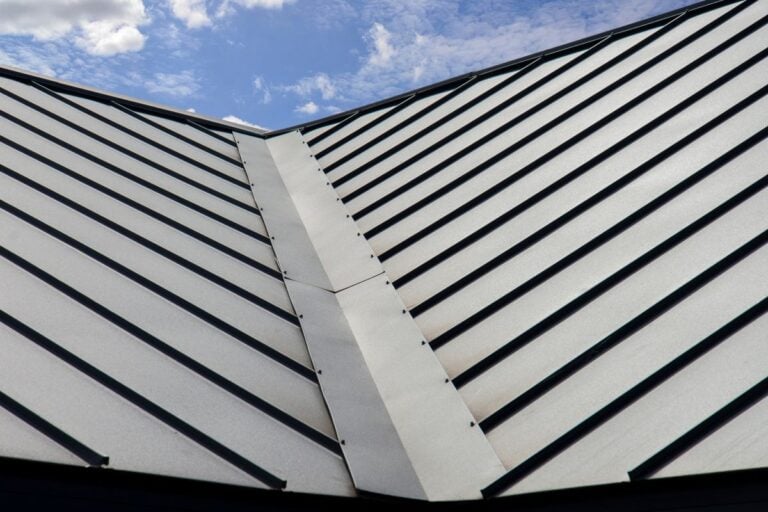
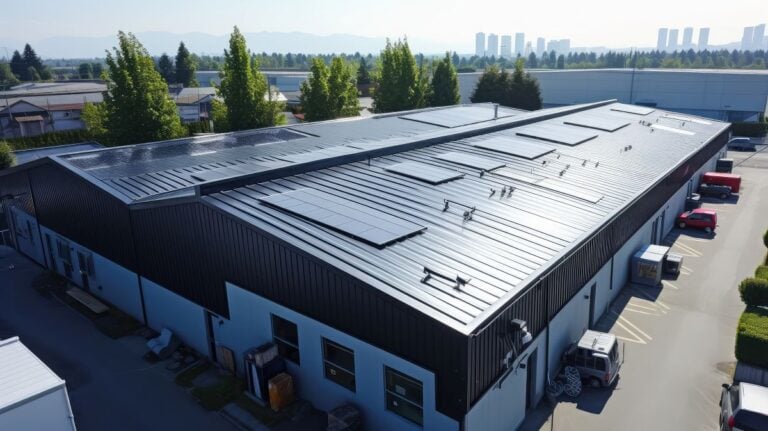
6. Commercial Metal Roofing
Metal roofing systems, including standing seam and structural trapezoidal panels, are commonly associated with steep slope roofs but perform equally well on commercial low-slope buildings, offering the longest service lives of any option on this list.
- Lifespan: 40 to 70 years with proper installation, far exceeding membrane alternatives.
- Cost: Higher upfront than membrane systems, offset significantly by a much longer replacement cycle and lower long-term maintenance costs.
- Best for: Warehouses, industrial facilities, new construction projects where the long-term cost of ownership matters more than the lowest upfront price.
- Watch for: An existing metal roof nearing end of life can often be recovered with a new standing seam system rather than fully torn off, reducing costs and disruption. Most systems also require a minimum slope of 1/4:12, so a structural assessment is needed for near-flat roofs.
Commercial Flat Roof Systems at a Glance
| System | Lifespan | Relative Cost | Best Application | Key Strength |
| TPO | 15 to 30 years | Moderate | General commercial | Energy efficiency, heat-welded seams |
| EPDM | 20 to 30+ years | Lower to moderate | Warehouses, industrial | Durability, flexibility, track record |
| PVC | 20 to 30 years | Moderate to higher | Restaurants, chemical exposure | Chemical and grease resistance |
| Modified bitumen | 20+ years | Moderate | Multi-ply redundancy needed | Impact resistance, multi-layer strength |
| Built-up roofing | 20 to 30 years | Moderate | High-traffic rooftops | Proven system, redundant layers |
| Commercial metal | 40 to 70 years | Higher upfront | Warehouses, new construction | Longest lifespan, lowest long-term cost |
Energy Efficiency and Commercial Flat Roofs
Energy performance has become one of the most important selection criteria for commercial flat roof systems. The right roofing choice can meaningfully reduce a building’s annual operating costs, and for large commercial footprints, the savings compound quickly over the life of the system.
- Reflective membrane surfaces: White and light-colored TPO and PVC membranes reflect solar radiation rather than absorbing it, reducing roof surface temperatures and the heat transferred into conditioned spaces below.
- Cool roof coatings: Reflective coatings applied over EPDM or modified bitumen systems can significantly improve solar reflectance on existing roofs without full replacement, extending system life and improving energy performance at lower cost.
- Metal roofing with cool finishes: Factory-applied reflective finishes on standing seam and structural metal panels qualify many installations for cool roof designations, delivering energy savings alongside the system’s exceptional lifespan.
- Green roofing systems: Vegetative roof assemblies provide natural insulation, absorb stormwater, and reduce the urban heat island effect. They are increasingly specified on commercial buildings where sustainability certifications, stormwater credits, or long-term environmental impact targets are part of the project goals.
- Insulation upgrades: Replacing saturated or aged insulation during a roof replacement significantly improves thermal performance regardless of the membrane system chosen, and is often the highest-ROI energy improvement available during a re-roofing project.
- DOE compliance: Reflective roof products that meet ENERGY STAR or Cool Roof Rating Council standards can qualify commercial buildings for energy-related tax incentives and help satisfy local building code energy performance requirements.
Common FAQs About Commercial Roof Types for Flat Buildings
Building owners comparing flat roof systems for the first time tend to have the same set of questions. Here are direct answers to the ones we hear most often.
Which commercial flat roof type is the most popular?
TPO has been the most widely installed single-ply commercial flat roof system for several years running, driven by its combination of energy performance, competitive cost, and heat-welded seam reliability. That said, EPDM remains the stronger choice for many industrial and warehouse applications, and metal roofing is growing rapidly for new commercial construction where long-term value is the priority.
How do I know which system is right for my building?
The right system depends on your building’s slope, structural capacity, interior environment, budget, and how long you plan to own the property. A professional roofing assessment that includes a review of your existing roof condition, structural drawings, and project goals is the only reliable way to narrow down the options for your specific situation.
How long does a commercial flat roof replacement take?
Most single-ply membrane replacements on mid-size commercial buildings take several days to a couple of weeks depending on building size, tear-off scope, and weather. Metal roofing projects on larger industrial buildings take longer. Embry’s works around your operational schedule to minimize disruption wherever possible.
Can I recover my existing flat roof rather than fully replacing it?
In many cases, yes. A recover installation that places a new membrane over the existing system can be a cost-effective option when the existing insulation is dry, the deck is structurally sound, and local code permits the additional layer. A thorough inspection determines whether your building qualifies.
Does Embry’s install all of these commercial roof systems?
Embry’s installs a full range of commercial flat roof systems including EPDM, TPO, PVC, modified bitumen, and metal roofing, with preferred manufacturer relationships with Mule-Hide and Gen Flex for membrane systems. Every commercial project is backed by our 5-year workmanship warranty. Contact us for a free inspection and estimate.
Choose the Right System With Embry’s Roofing
The difference between a commercial flat roof that performs for 30 years and one that requires repeated repairs and early replacement comes down to two things: the right system for your building and the right crew to install it. Both matter equally, and cutting corners on either one costs more in the long run than the upfront savings suggest. We’re proud to serve home and business owners in Bowling Green, KY, and nearby communities with commercial roofing assessments, system installations, and more, and helping building owners cut through the noise on flat roof options is one of our most common conversations.
Family-run since 1979 and backed by over 45 years of commercial roofing experience, Embry’s Roofing serves building owners and facilities managers across Bowling Green, Evansville, Marion, Paducah, and the greater Tri-State area. Our HAAG certified inspectors and GAF Elite Master Contractor credentials reflect the level of expertise we bring to every project. Contact Embry’s today for a free commercial roofing inspection and find out which flat roof system is the right fit for your building.
CHECK OUT THE LATEST
FROM OUR BLOG