
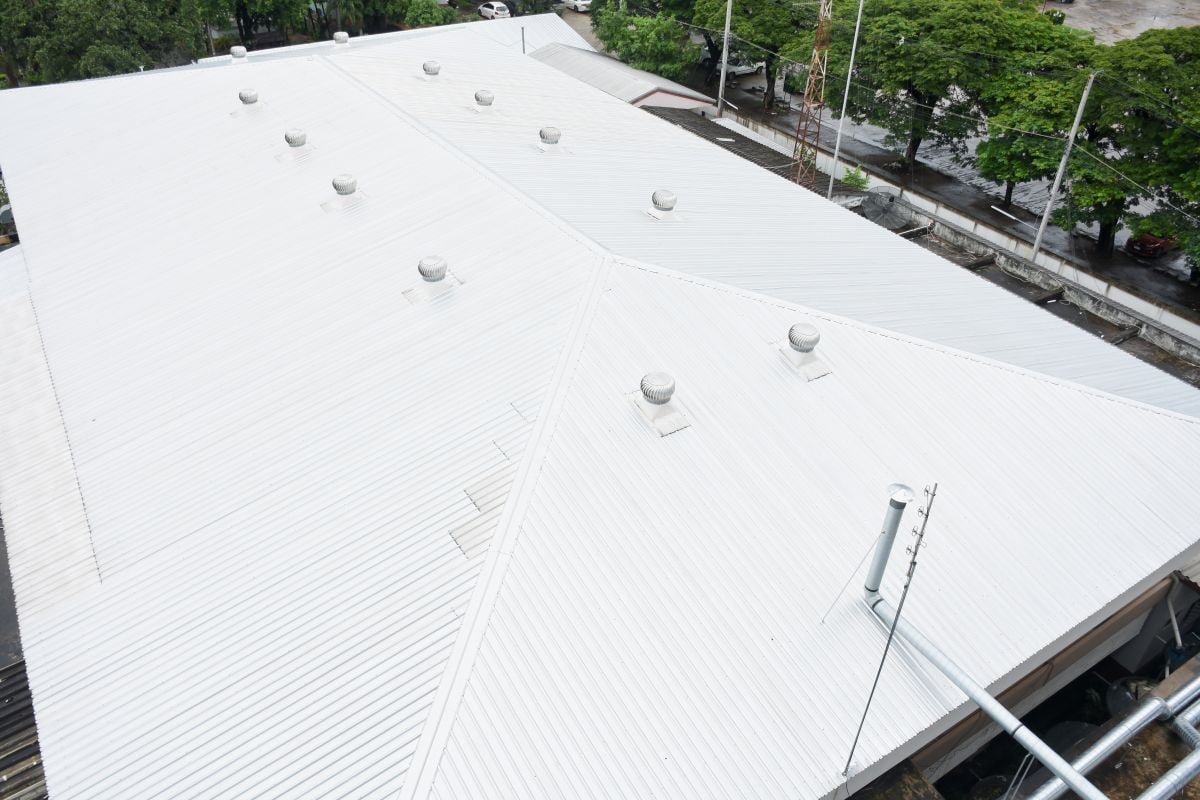
Industrial Metal Roofing Guide (Systems, Specs & What to Expect)
If you manage or own a warehouse, manufacturing plant, distribution center, or any large-scale commercial facility, your roof is one of the most consequential decisions you will make for that building. Industrial metal roofing has been the dominant choice for these applications for decades, and for good reason. Durability, structural performance, low maintenance, and long-term cost efficiency all point in the same direction. This guide covers everything facility owners, building managers, and general contractors need to know before specifying or replacing an industrial metal roof, including the types of metal roofing available, what the installation process involves, and the environmental impact of choosing metal over alternative systems.
This guide covers:
- What sets industrial metal roofing apart from standard commercial systems
- The main system types and how to choose between them
- Key specs to evaluate before committing to a system
- What the installation process looks like
- Common FAQs from facility owners and building managers
What Makes Industrial Metal Roofing Different?
Industrial roofing applications place demands on a roof system that typical commercial buildings and residential projects do not. Large footprints mean more square footage to manage, more drainage to coordinate, and greater exposure to wind uplift across expansive roof planes. Manufacturing and processing facilities can also generate heat, humidity, and chemical vapors that degrade lesser roofing materials from the inside out. And operational continuity matters: a leaking roof in a production facility is not just a maintenance issue, it is a business disruption and a liability.
Commercial metal roofing systems are engineered to meet these demands. They span long distances between structural supports, resist corrosion from interior and exterior sources, carry significant snow and wind loads, and deliver service lives of 40 to 50 years or more with proper installation. We’re proud to serve home and business owners in Bloomington, IN, and nearby communities with industrial roofing inspections, system specifications, and more. For Tri-State facility owners, Indiana winters, spring storm activity, and warm humid summers make a robust roof system essential to protecting your investment.
Industrial Metal Roofing System Types
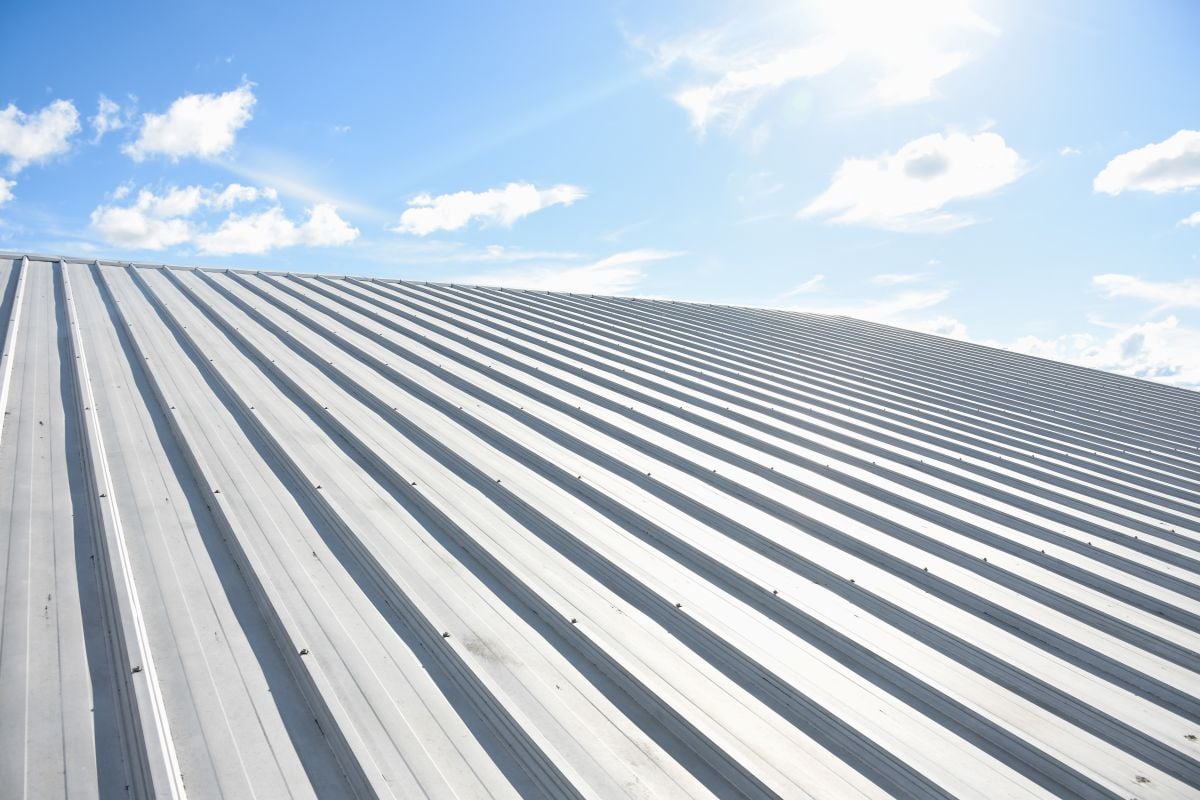
Not all metal roofing materials perform the same way in industrial environments, and understanding the different metal roof types available is the first step toward making the right decision. The right choice depends on your building’s structural design, roof slope, span requirements, interior conditions, and budget.
Through-Fastened Exposed Fastener Systems
Through-fastened systems attach panels directly to purlins with exposed screws sealed by rubber washers. They are the most widely installed system in light industrial and agricultural construction due to their lower upfront cost.
- Cost: Lower upfront than concealed fastener systems, making them a common choice for budget-driven projects.
- Tradeoff: Exposed fasteners are wear points. Washers compress and crack over time, and screw holes can elongate with thermal movement, creating potential leak paths.
- Best for: Storage facilities and agricultural buildings where budget is the primary driver and long-term leak performance is secondary.
Standing Seam Concealed Fastener Systems
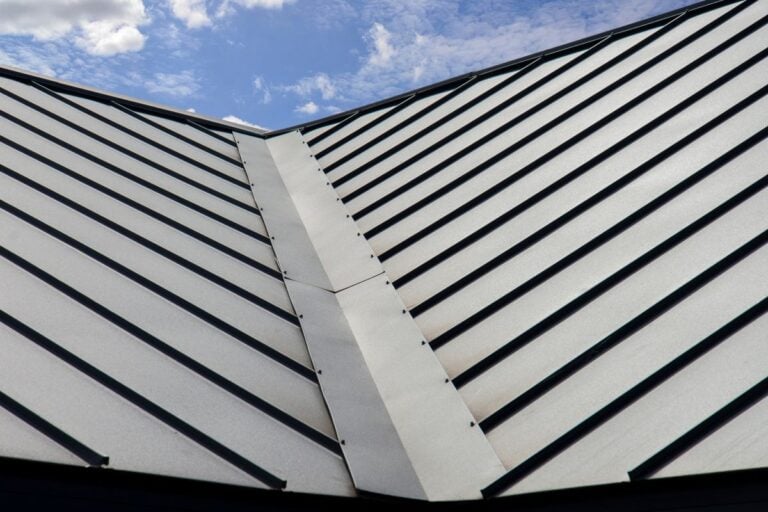
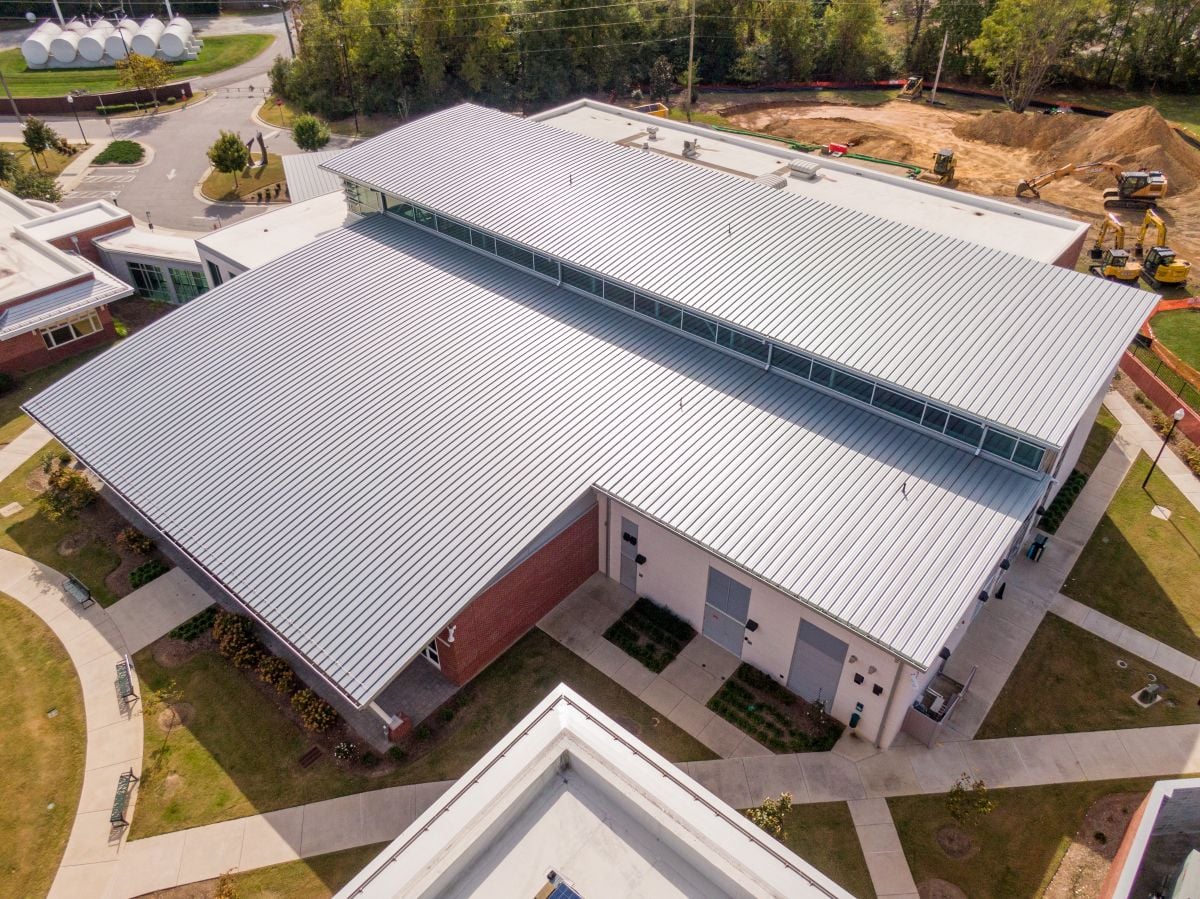
Standing seam systems use concealed clips that allow thermal movement without stressing the panel. The seam between panels rises above the panel face and is snap-locked or mechanically crimped to form a weathertight connection with no exposed penetrations.
- Cost: Higher upfront than through-fastened systems, offset by lower long-term maintenance and fewer leak events over the roof’s life.
- Performance: Thermal expansion is distributed across the full panel length, extending service life and maintaining watertight integrity across decades.
- Best for: Large-span industrial roofs, facilities with significant thermal cycling, and any project where long-term weathertight performance is the priority.
Structural Metal Roofing Panels
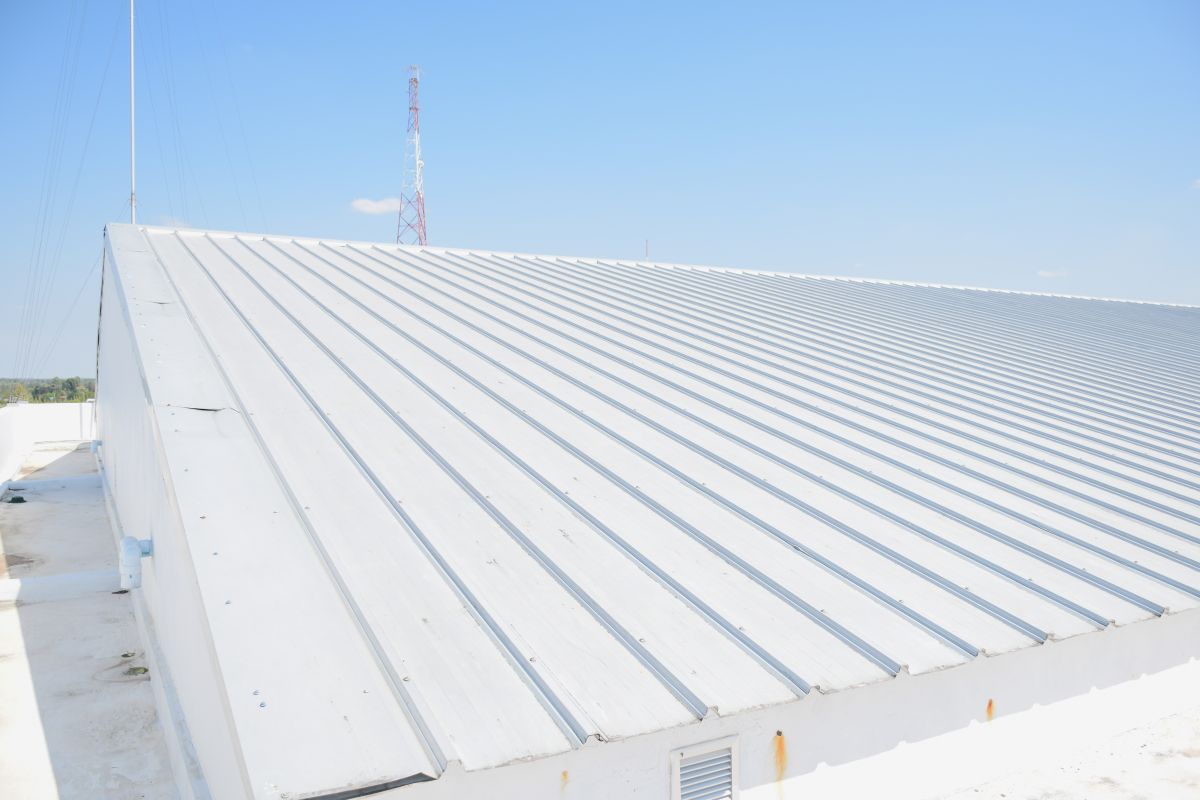
Structural metal panels, including trapezoidal and other high-rib profiles, span directly between purlins without requiring a roof deck beneath them. The deep rib geometry carries dead loads, live loads, and wind uplift across the spans typical of industrial construction.
- Cost: Comparable to standing seam on a per-square-foot basis, with potential savings on substructure below.
- Performance: Excellent load capacity and span performance, available with concealed or mechanically seamed fastening options.
- Best for: Warehouses, distribution centers, and manufacturing facilities where substructure cost reduction is a priority.
Metal Retrofit and Recover Systems
For industrial facilities with aging roofs but sound substructure, a metal retrofit system installed over the existing roof is a practical roofing solution that eliminates tear-off costs and reduces project disruption. Purpose-built framing clips create a new sloped surface over the existing roof, with standing seam or structural panels installed on top.
- Cost: Often cost-competitive with full tear-off and replacement when substructure is reusable.
- Performance: Delivers a new long-life metal roof system without operational disruption, and often improves drainage slope in the process.
- Best for: Occupied facilities where business continuity during the roofing project is a top priority.
5 Key Specs to Evaluate Before Choosing a System
Selecting the right industrial metal roofing system requires more than picking a panel profile. These five factors should be evaluated before a specification is finalized.
1. Roof Slope and Drainage Design
Slope determines which systems are appropriate for your building. Most concealed fastener structural panels are approved for minimum slopes as low as 1/4:12, covering the vast majority of industrial buildings. Drainage design, including scupper sizing, gutter capacity, and slope-to-drain configuration, should be reviewed alongside panel selection to ensure the system performs as intended.
2. Structural Span and Load Requirements
The distance between purlins determines what panel gauge and profile are required to carry design loads safely. Industrial buildings in Indiana and the Tri-State region must account for ground snow loads, live loads, and wind uplift pressures specific to their location and building code jurisdiction. Panel span tables from the manufacturer should be reviewed against actual structural drawings before specification.
3. Interior Environment and Corrosion Exposure
Industrial facilities vary widely in interior conditions. A dry warehouse presents different corrosion challenges than a food processing plant or chemical storage facility. Panel coating selection, substrate choice, and underlayment specification should all account for the specific interior environment the roof system will be exposed to from below. Galvalume-coated steel offers strong corrosion resistance and is the standard for most applications, but environments with elevated chemical exposure may warrant aluminum, zinc, copper, or other specialty substrates with enhanced long-term protection.
4. Energy Performance Requirements
According to the U.S. Department of Energy, cool metal roofs with reflective coatings can meaningfully reduce building cooling costs by reflecting solar radiation away from the roof surface. For large industrial facilities, energy efficiency and environmental impact are increasingly part of the roofing conversation alongside cost and performance. Panel finish color, coating type, and thermal emittance ratings should be reviewed in the context of your building’s energy profile before a final specification is selected.
5. Wind Uplift and Building Code Compliance
Industrial buildings present large surface areas to wind, and uplift forces at roof edges, corners, and ridges can be substantial. Panel systems must meet the wind uplift requirements of the applicable building code, confirmed through tested ratings such as UL 580 or FM approvals. Fastener patterns at high-uplift zones differ from field conditions and must be reflected explicitly in the specification.
Industrial Metal Roofing System Comparison
| System Type | Minimum Slope | Fastener Type | Best Application | Relative Upfront Cost |
| Through-fastened (exposed) | 1:12 typical | Exposed screws | Light industrial, agricultural | Lower |
| Standing seam (concealed) | 1/4:12 | Concealed clips | Large industrial, long-term performance | Moderate to higher |
| Structural trapezoidal | 1/4:12 | Concealed or exposed | Warehouse, distribution, manufacturing | Moderate |
| Retrofit over existing roof | Varies | Varies | Occupied facilities, sound substructure | Varies |
What to Expect From the Installation Process
Industrial metal roofing projects have their own rhythm that differs from standard commercial work. Before panels go on, the existing substructure must be inspected and confirmed to meet load requirements. For retrofit projects, the existing roof surface must be evaluated for moisture, delamination, and structural adequacy.
Panel installation on large industrial roofs proceeds in organized field sections, progressing systematically with trim, flashing, and ridge details following in sequence. On mechanically seamed systems, seaming equipment travels the length of each panel after placement. Penetrations for HVAC equipment, skylights, and pipe boots are cut and flashed to manufacturer specifications as they are encountered.
Safety planning is a non-negotiable part of any industrial roofing project. Embry’s places a strong emphasis on safety practices, safety training, and proper safety equipment on every job site, which is especially critical on large industrial roofs where fall hazards and high-traffic areas demand rigorous protocols.
Common FAQs About Industrial Metal Roofing
Here are the questions we hear most often from facility owners and building managers across the Tri-State area.
How long does an industrial metal roof last?
A properly installed industrial metal roof routinely delivers 40 to 50 years of service life or more. Through-fastened systems require more attention due to fastener wear, while concealed fastener standing seam systems consistently deliver the longest service lives with the least maintenance.
What is the best metal roofing system for a warehouse?
For most warehouse applications, a structural trapezoidal panel or standing seam system with a minimum 26-gauge Galvalume substrate is the standard starting point. Final selection depends on your building’s span requirements, slope, interior conditions, and budget, which is why a site-specific assessment matters.
Can an industrial metal roof be installed over an existing roof?
Yes, in many cases. A thorough inspection of the existing roof and framing is required before any recover system is specified, and local building codes govern how many roof layers are permitted.
How do I know if my industrial roof needs replacement or repair?
Signs that warrant a professional assessment include visible rust, recurring leak patterns, fastener failures, significant ponding water, or a roof approaching or past its expected service life. Embry’s HAAG certified inspectors can evaluate your current system and give a clear repair-versus-replacement recommendation.
How much does industrial metal roofing cost?
Costs vary significantly based on building size, panel system, substrate specifications, and project complexity. Embry’s provides free commercial roofing inspections and estimates so you can get real numbers before making any commitment.
Trust Embry’s Roofing for Your Industrial Project
The system you choose, the specification behind it, and the crew that installs it all determine whether your industrial roof performs for 40 years or becomes a recurring maintenance problem. Family-run since 1979 and backed by over 45 years of experience, Embry’s Roofing serves facility owners across Bloomington, Evansville, Paducah, Terre Haute, Vincennes, and the greater Tri-State area. Our HAAG certified inspectors, GAF Elite Master Contractor status, and trusted manufacturer relationships with Metal Sales, Metal Era, Duralast, and Exceptional Metals mean every project is specified and installed to perform. Contact Embry’s today for a free industrial roofing inspection and estimate.
CHECK OUT THE LATEST
FROM OUR BLOG