

Roof Repair Cost (2026 Price Guide By Repair Type)
The roof repair cost in 2026 breaks down into three tiers: minor repairs run $150 to $400, moderate repairs run $400 to $1,500, and major repairs or partial replacements run $1,500 to $5,000 or more. Severe storm damage requiring structural work or full replacement can exceed $10,000. Knowing which tier your damage falls into and whether your insurance covers it is the most important financial decision you will make after a storm. If you are dealing with storm damage and need to understand your repair scope, this guide gives you the numbers by repair type, material, and coverage scenario.
Here is what this guide covers:
- Roof repair cost by tier: minor, moderate, and major
- Cost breakdown table by repair type
- How storms drive different repair needs
- Insurance coverage: what is typically covered and what is not
- How to get an accurate estimate
Roof Repair Cost at a Glance: Minor, Moderate, and Major
Before breaking down specific repair types, here is how the overall cost tiers work for most residential roofing projects in the Tri-State area.

Minor Repairs ($150 to $400)
These cover isolated issues with a small number of shingles, a simple pipe boot replacement, or a minor flashing re-seal where the underlying metal is intact. Minor repairs are typically completed in a few hours and are less likely to meet most insurance deductible thresholds on their own.
Moderate Repairs ($400 to $1,500)
These cover more extensive shingle sections, full flashing replacement around a chimney or skylight, valley repair, or targeted decking work. This is the most common post-storm repair scope and the tier most likely to be covered by a standard homeowners insurance policy.
Major Repairs ($1,500 to $5,000+)
These involve structural decking damage, widespread shingle loss across multiple roof sections, or significant water infiltration that has compromised underlayment and insulation. When repair cost approaches or exceeds 50 percent of replacement cost, a full replacement often makes more financial sense. For broader cost context, see our guide on how to pay for a new roof.
Roof Repair Cost Breakdown by Repair Type
Each repair type captures its own cost range and serves a different part of the roof system. Use this table to estimate where your damage falls before getting a professional assessment.
| Repair Type | Typical Cost Range | What It Covers |
| Shingle replacement (minor) | $150 to $400 | 1 to 10 shingles, isolated storm damage |
| Shingle replacement (moderate) | $400 to $1,000 | Large section or full slope |
| Flashing repair (pipe boot, vent) | $150 to $350 | Single penetration re-seal or replacement |
| Chimney flashing repair | $350 to $1,500 | Step flashing, counter flashing, cricket |
| Valley repair | $500 to $1,500 | Open or closed valley re-lining |
| Decking/sheathing repair | $500 to $2,500 | Soft spots, rot, impact puncture |
| Flat roof patch (TPO/EPDM) | $300 to $1,500 | Membrane puncture or seam failure |
| Gutter repair or replacement | $150 to $700 | Hail-dented sections or full runs |
| Full roof replacement | $8,000 to $20,000+ | Complete system failure or end of life |
For hail-specific cost breakdowns by material type, see our hail damage repair cost guide.
How Storms Drive Different Repair Types
Understanding which storm event causes which repair type helps you prioritize post-storm inspection and strengthens insurance documentation.
High Winds and Missing Shingles
High winds during storms often cause shingles to loosen or fly off entirely. Missing shingles expose the underlayment and roof deck to water, and the repair scope depends on how many were displaced and whether the underlayment was compromised. A handful of missing shingles after a storm is a minor repair. Widespread loss across a full roof slope moves into moderate or major territory.
Hail Damage
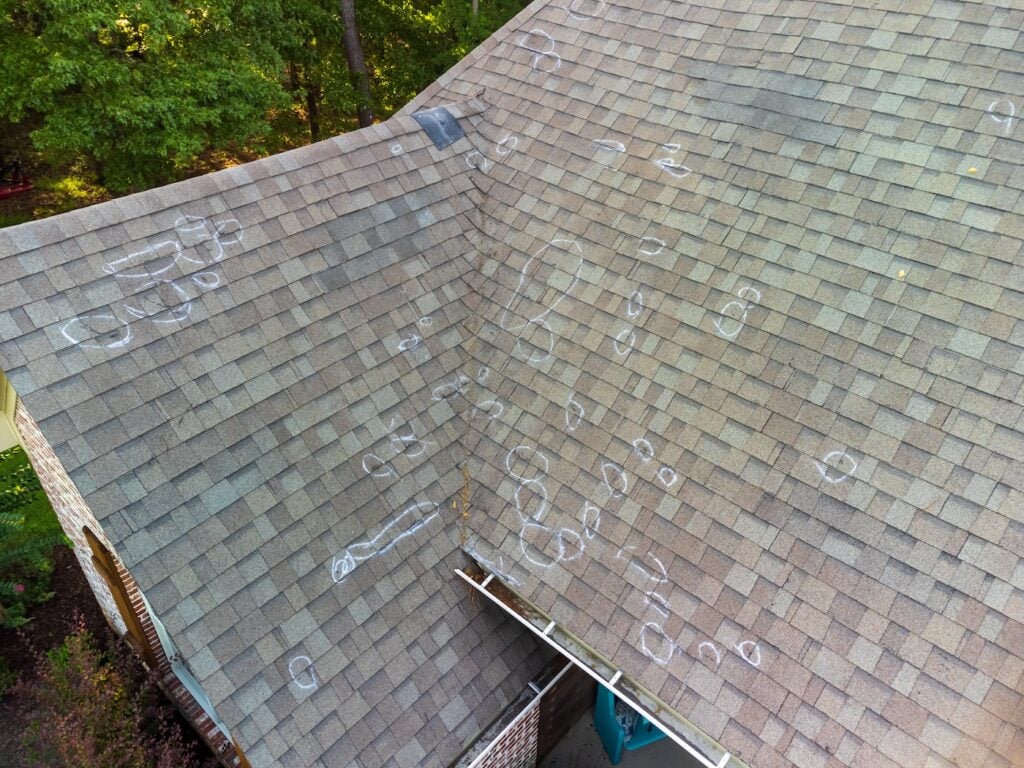
Hailstorms leave dents, pockmarks, and cracks in shingles that are not always visible from the ground. The damage is often functional rather than cosmetic, compromising the shingle’s waterproofing integrity, which is why professional inspection after any documented hail event matters even when the roof looks intact.
Heavy Rain and Roof Leaks
Heavy rain exposes pre-existing vulnerabilities. Flashings, valleys, and pipe boots that were marginal before a storm often fail under sustained water volume. These leaks are worth addressing quickly. For more on signs and sources of roof leaks, our diagnostic guide covers the most common presentations and what they usually mean.
Falling Debris
Tree branches and debris can puncture the roof deck itself, requiring decking repair beneath the shingle surface before any new shingles can be installed. This is one of the few scenarios where a minor-looking surface impact carries a much higher repair cost once the structural damage below is assessed.
5 Factors That Affect Roof Repair Cost
Several variables shift where your repair falls within any given cost range. Understanding them helps you evaluate contractor estimates and set realistic expectations.

1. Type and Extent of Damage
The more severe and widespread the damage, the higher the cost. A single cracked shingle and a full slope of hail-compromised shingles are technically the same repair type but very different in scope and price.
- Isolated damage: One to a few shingles, a single pipe boot, or a small flashing seal typically stays in the minor tier.
- Section damage: A full slope, a valley, or a chimney transition moves into moderate territory.
- Structural damage: Any compromise to the roof deck, rafters, or underlayment across multiple areas pushes costs into the major repair or replacement range.
2. Roofing Material
Asphalt shingles are the most affordable to repair. Metal, tile, and slate carry higher per-unit costs and require specialized labor. For attention from a professional roofing contractor on premium materials, experience with the specific product matters significantly.
- Asphalt shingles: Lowest repair cost, widely available, fast to install.
- Metal roofing: Higher labor cost due to panel matching and seaming requirements.
- Tile and slate: Premium materials requiring specialty contractors; repair costs can be two to three times higher than asphalt for the same square footage.
3. Labor Rates and Demand
Labor costs vary by region and spike after major storms when contractors are in high demand across a large geographic area. Scheduling a professional assessment promptly after a storm helps you avoid the post-storm surge.
- Regional rates: Labor in the Tri-State area reflects local market conditions and typically falls in the moderate range nationally.
- Post-storm demand: Major hail or wind events across a region drive contractor schedules out weeks, sometimes months.
- Complexity premium: Steep slopes, complex rooflines, and high-access situations add labor cost regardless of the repair type.
4. Permits and Code Requirements
Some repair types require permits, particularly structural decking work or full replacement. Permit costs vary by jurisdiction and can add $150 to $500 to a project’s total.
- Minor repairs: Typically do not require permits in most jurisdictions.
- Structural repairs: Decking replacement and full reroofing often require a permit and inspection.
- Local codes: Indiana, Kentucky, and Illinois each have jurisdiction-specific requirements, and your contractor should pull all required permits as part of the project.
5. Insurance Coverage
Whether your insurer covers the repair and whether they pay replacement cost value or actual cash value is often the most consequential factor in your final out-of-pocket cost. More on this in the section below.
- RCV policies: Cover full replacement cost minus deductible, which is the best outcome for the homeowner.
- ACV policies: Subtract depreciation from the payout, leaving a larger gap for older roofs.
- Deductibles: Storm-specific deductibles often run $1,000 to $2,500; confirm yours before deciding whether to file.

Insurance Coverage: What Roof Repairs Are Typically Covered
Most standard homeowners insurance policies cover storm-caused roof damage, but the specifics determine how much of the bill your insurer actually pays.
What Is Typically Covered
Storm-caused functional damage, including missing shingles from wind, hail impact that compromises waterproofing integrity, debris punctures, and flashing failures attributable to a storm event, is generally covered under standard homeowners policies. Your roof insurance claim will be evaluated against the storm event documentation, your policy type, and your roof’s age.
What Is Typically Excluded
Cosmetic-only damage, such as surface scuffing or minor denting that does not affect waterproofing, is frequently excluded under cosmetic damage riders. Pre-existing wear, neglect, and normal deterioration are not covered regardless of when a storm occurred. If your roof is significantly aged, your insurer may pay only actual cash value rather than replacement cost, which means depreciation is subtracted from the payout.
ACV vs. RCV: The Payout Difference
- Replacement cost value (RCV): Pays the full cost to restore the damaged area to pre-storm condition using comparable materials, minus your deductible.
- Actual cash value (ACV): Pays replacement cost minus depreciation based on roof age and condition. On a 15-year-old shingle roof, ACV payouts can be 30 to 50 percent lower than actual repair costs.
- Deductibles: Storm-specific deductibles in Indiana, Kentucky, and Illinois often run $1,000 to $2,500. Confirm your hail or wind deductible separately from your standard deductible before filing.
How to Document Damage for a Claim
Strong documentation at the time of damage is the most effective way to protect your claim. Photograph all visible damage with timestamps before any cleanup or temporary repairs. Pull a NOAA or local weather service record confirming hail size and storm timing at your location. Get a written inspection report from a HAAG certified contractor before the adjuster visits. This gives you an independent scope that holds up against the insurer’s evaluation. If the repair cost estimate materially exceeds your deductible and your policy pays RCV, filing a claim is generally worth it.
If out-of-pocket costs remain after a claim settlement, financing options are available to bridge the gap between insurance payout and actual repair cost.
Get an Accurate Estimate With Embry’s Roofing
Online cost guides give you a starting range, but the only way to know your actual repair cost is a professional inspection by someone who has seen the damage firsthand. Hail impacts, wind patterns, and roof age all interact in ways that shift repair scope significantly, and the difference between a $400 repair and a $4,000 one is not always obvious from the ground.
We’re proud to serve homeowners in Evansville, IN and surrounding communities, including Evansville, IN with free inspections, honest assessments, and repair estimates that reflect the actual scope of the damage. Family-run since 1979 and backed by over 45 years of experience, our HAAG certified inspectors give you a clear picture before any work begins. Contact Embry’s Roofing today for a free roof repair estimate and find out exactly where your project falls.
CHECK OUT THE LATEST
FROM OUR BLOG