

Commercial Roof Access Equipment: What Crews Use and Why It Matters
Before a single shingle, membrane, or panel is touched, a crew has to get safely onto your roof and get materials up there too. The commercial roof access equipment a contractor chooses affects safety, schedule, cost, and even the condition of your property when the job is finished. Working with an experienced commercial roofing team that plans access carefully keeps projects moving and protects everyone on site. This guide explains what equipment crews use and what owners should know.
Here’s what this guide covers:
- Why access equipment matters to your safety, schedule, and budget
- The 6 main types of equipment crews use to reach and work on commercial roofs
- What property owners should check before work begins
- How equipment choices change from one project type to another
Why Roof Access Equipment Matters to Property Owners
Access planning rarely gets attention in a proposal, yet it shapes almost every part of a roofing project. The right equipment makes the work safer and more efficient, while poor planning leads to delays, damage, and avoidable risk.
- Protects Workers and Reduces Your Liability. Proper access and fall protection reduce the chance of an injury on your property, which matters for both safety and legal exposure.
- Keeps the Project on Schedule. Efficient material handling and reliable access let crews spend more time installing and less time carrying supplies up and down.
- Protects Your Roof and Property. Using the right equipment prevents damage to the existing roof, landscaping, pavement, and building exteriors during the project.
- Supports Accurate Inspections. Safe, convenient access lets inspectors document the roof thoroughly, which leads to better repair and replacement recommendations.
- Improves Cost Transparency. When access equipment is planned in advance, rental and setup costs appear clearly in the bid rather than showing up as surprise charges later.
Property owners in Marion and surrounding areas often focus on materials and warranty terms when comparing bids, and understanding how a contractor plans to access the roof is a simple way to judge how organized and safety-minded that contractor really is.
5 Types of Commercial Roof Access Equipment Crews Use
Every building is different, so crews rely on a range of equipment depending on roof height, layout, and the work being performed. These six categories cover most of what you will see on a commercial site, and many projects use several of them together. Knowing what each one does makes it easier to read a proposal and ask informed questions.
1. Extension Ladders and Fixed Access Ladders
Ladders remain the most common way to reach a low-rise commercial roof, particularly for inspections and smaller repairs. They are simple and inexpensive, but they are also a leading source of workplace falls when used carelessly.
- Extension ladders must be secured and extend several feet above the roofline so workers can transition safely
- Fixed exterior ladders, when present, should be inspected for rust, loose bolts, and damaged rungs before anyone uses them
2. Roof Hatches and Interior Access
Many commercial buildings include a roof hatch or a permanent interior ladder that provides a controlled way onto the roof. When a building has one, it is usually the safest and least disruptive option for routine inspections and maintenance visits.
- Hatches should open fully, lock in the open position, and include a guard or railing to prevent falls through the opening
- Interior access keeps equipment off the parking lot and building exterior, though it requires coordination with tenants
3. Scaffolding
Scaffolding creates a stable platform along building edges, which is especially useful for work on parapets, fascia, and wall transitions. It gives crews a larger, steadier work area than a ladder, which improves both safety and quality of workmanship.
- Systems must be erected by trained personnel, set on level and stable ground, and inspected before each use
- Scaffolding can limit access for tenants and customers, so placement and timing should be discussed in advance
4. Aerial Lifts and Boom Lifts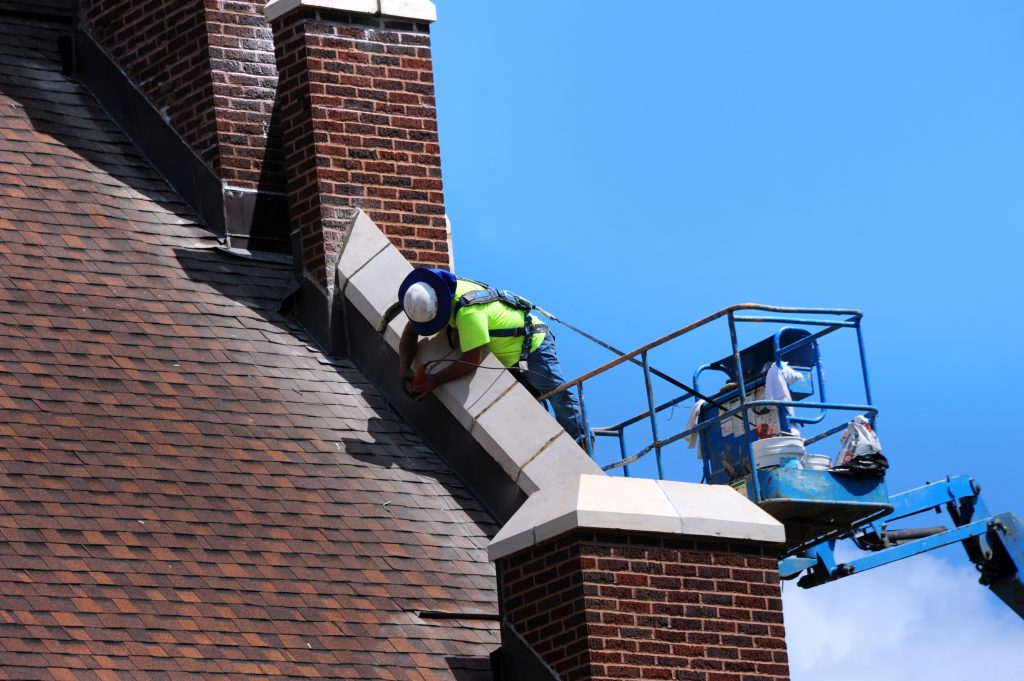
Aerial lifts raise workers and materials to the roofline without relying on ladders, and they are common on taller buildings or where the roof edge is hard to reach. They also allow crews to inspect and repair edge details from outside the building without stepping onto the roof.
- Lifts require firm ground and enough clearance, and they can damage pavement or landscaping if placed carelessly
- Operators should be trained and certified, and the machine should be inspected before each shift
5. Cranes and Material Hoists
Roofing materials are heavy, and moving rolls of membrane, insulation boards, or metal panels onto a roof by hand is slow and risky. A single roll of commercial membrane can weigh well over a hundred pounds, which is why mechanical lifting is standard practice on larger projects.
- Cranes and hoists lift large quantities of materials at once, which reduces labor time and physical strain on workers
- Staging areas and lift paths need to be planned so nothing is lifted over occupied space or active entrances
What Property Owners Should Check Before Work Begins
A little preparation before the crew arrives prevents most access-related problems. The following checklist helps owners and property managers stay ahead of the issues that tend to cause delays, and most of the items can be settled in a single pre-construction conversation.
- Site Access and Clearance. Confirm that trucks, lifts, and cranes can reach the building without damaging fences, utilities, or landscaping.
- Existing Roof Access Points. Ask whether the hatch, ladder, or stair access is in good condition, and whether it will be used during the project.
- Staging and Storage Areas. Identify where materials and equipment will be stored so parking and customer access are affected as little as possible.
- Tenant and Customer Communication. Notify tenants of noise, equipment placement, and any temporary restrictions so there are no surprises during business hours.
- Insurance and Certifications. Request proof of insurance and confirm that operators of lifts and cranes are properly trained and certified.
- Protection of Surfaces. Ask how the contractor will protect pavement, walkways, and landscaping from heavy equipment.
Property owners in Marion and surrounding areas who walk through this list with their contractor before the first day tend to see fewer interruptions and fewer disputes over damage or access during the project.
Matching Equipment to the Project
Access needs differ widely from one project to the next. A quick roof inspection might require only a ladder, while a full replacement on a large building may involve multiple pieces of equipment working together.
| Project Type | Typical Equipment | Key Consideration |
| Roof inspection | Ladder or existing roof hatch, basic fall protection | Safe, convenient access for documentation |
| Minor repair | Ladder, small hoist, guardrails or warning lines | Minimal disruption to building operations |
| Re-roof of a low-rise building | Hoist or small crane, scaffolding at edges, fall protection | Efficient material handling and edge safety |
| Large flat roof replacement | Crane, lifts, perimeter guardrails | Staging space and coordination with tenants |
| Multi-story building | Aerial lift, crane, scaffolding, anchored fall arrest | Height, street access, and public safety |
| Rooftop equipment replacement | Crane and rigging, lifts | Weight limits and structural capacity |
Property owners in Marion and surrounding areas with older buildings should pay special attention to roof access points, since hatches and ladders installed decades ago may no longer meet current safety expectations. The table is a general guide, and the right plan for your building depends on its height, layout, and surroundings. A good contractor will walk the site, explain what equipment is needed, and include it clearly in the proposal so you understand exactly what you are paying for and why.
Plan Your Roofing Project With Safe, Smart Access
The equipment crews use to reach your roof may not be the most visible part of a project, but it reveals a lot about how a contractor operates. Careful planning protects workers, your building, and your budget, and it helps the project finish on time with fewer surprises. Asking about access during the bidding stage is one of the easiest ways to tell a prepared contractor from one who is improvising.
At Embry’s Roofing, we plan access, staging, and fall protection for every commercial project and explain the plan to property owners across Marion and surrounding areas before work begins. If you’re preparing for a roof inspection, repair, or replacement, contact us today to schedule a site visit and talk through the safest, most efficient approach for your building.
CHECK OUT THE LATEST
FROM OUR BLOG