

Commercial Roof Ponding Water: Causes, Risks, and Fixes
A shallow puddle on a flat roof may look harmless, yet standing water quietly shortens a roof’s life and adds weight the building was never meant to carry continuously. Commercial roof ponding water is one of the most common problems on low-slope buildings, and it rarely fixes itself. Working with an experienced roofing specialist helps you identify why water is collecting and choose a repair that solves the cause, not just the symptom. This guide explains the causes, the risks, and the fixes that work.
Here’s what this guide covers:
- Why ponding water is more than a cosmetic problem
- The 6 most common causes of ponding on commercial roofs
- How to spot and track ponding during a roof walkthrough
- Which fixes work best and how they compare
Why Ponding Water Is More Than a Cosmetic Problem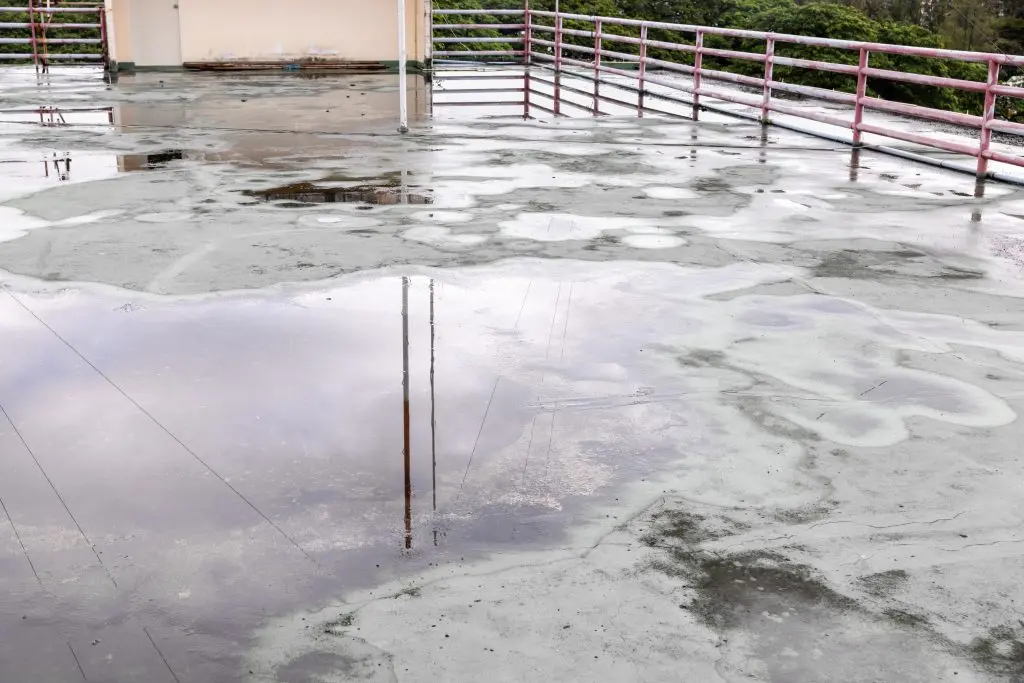
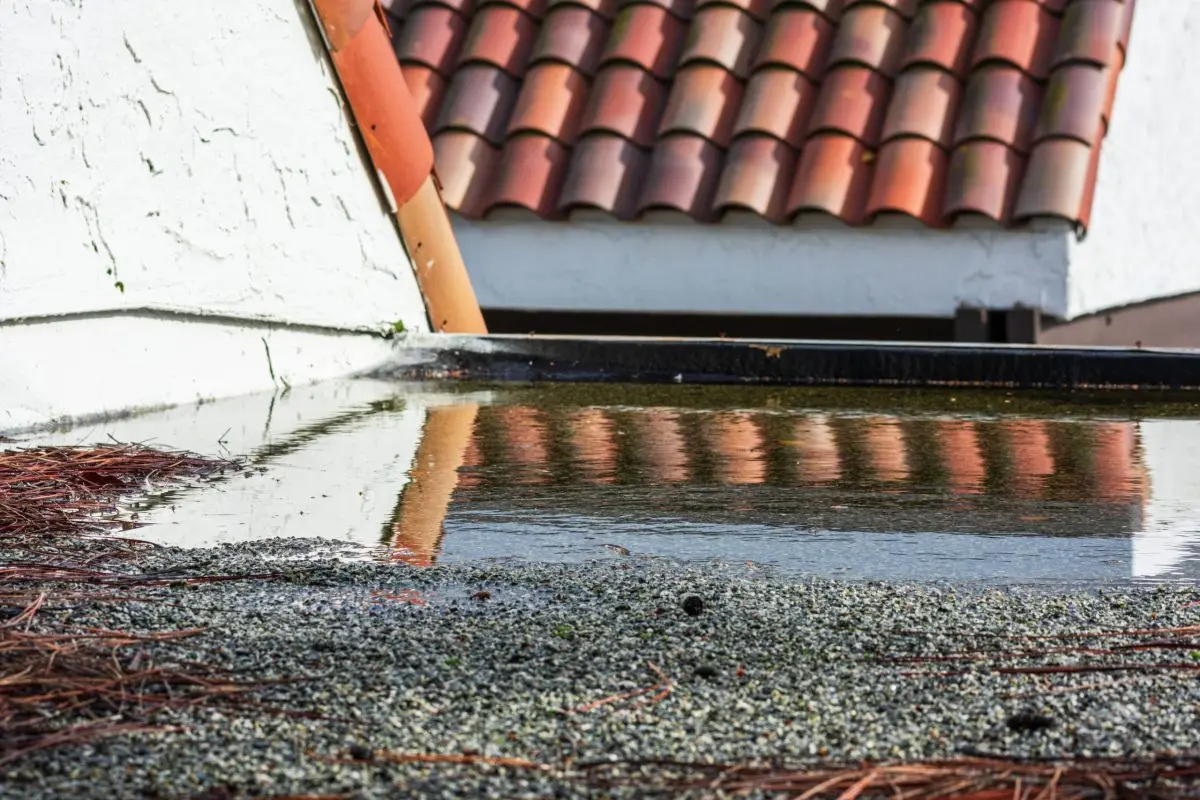
Roofs are designed to shed water, so standing water signals that something in the system isn’t working as intended. Left alone, the problem tends to grow, because every pond makes the next one more likely. As a general guideline, water that remains on a roof more than 48 hours after rainfall is considered ponding and deserves attention.
- Adds Constant Weight to the Structure. One inch of water over a square foot weighs about five pounds, so a large pond across a roof can add substantial load that the structure carries day after day.
- Accelerates Membrane Wear. Prolonged exposure to water, dirt, and UV reflecting off the surface breaks down roofing materials faster than normal weathering does.
- Increases the Risk of Leaks. Seams, flashing, and small defects are far more likely to leak when they sit under standing water rather than shedding it.
- Can Affect Warranty Coverage. Some manufacturers limit or exclude coverage for damage related to ponding, so ignoring it may leave you paying for repairs that would otherwise be covered.
- Encourages Growth of Algae and Vegetation. Persistent moisture supports algae, moss, and even small plants, which hold more water and further damage the surface.
Building owners in Bloomington and surrounding areas often notice ponding only after a heavy storm, but the damage is usually cumulative, which makes early attention worthwhile. Catching it during routine inspections, rather than after a leak appears, gives you time to plan repairs on your own schedule and budget.
6 Common Causes of Ponding Water on Commercial Roofs
Ponding almost always has an identifiable cause. Finding the real reason is the key to choosing a fix that lasts, since treating the wrong cause only delays the problem. In many cases, more than one of the causes below is at work at the same time.
1. Inadequate Slope
Many flat roofs are built with only a slight slope, and if that slope is too shallow or uneven, water simply has nowhere to go. Even a roof designed to drain properly can develop low spots as materials settle or as the building shifts over the years.
- Low spots can form where insulation or decking was installed unevenly
- Additions and renovations sometimes create sections that no longer drain toward the original outlets
2. Clogged or Undersized Drains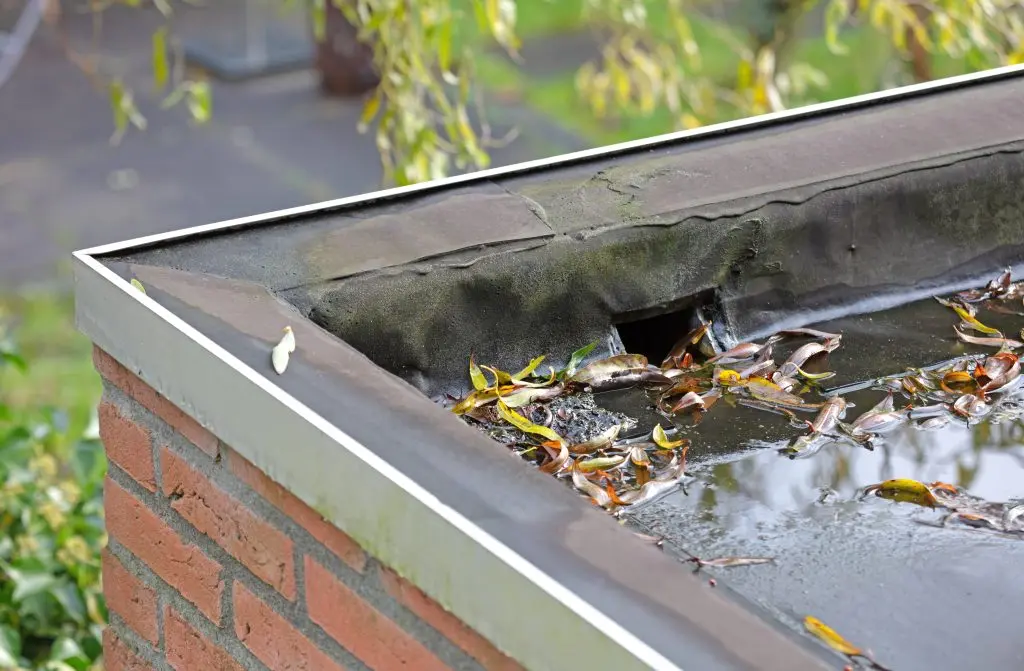
Drains, scuppers, and gutters carry water off the roof, so any blockage or capacity shortfall causes water to back up. This is often the easiest cause to correct, which is why drains are always the first thing to check.
- Leaves, debris, and windblown trash are the most common causes of clogged drains, and nearby trees make the problem much worse
- Some roofs simply don’t have enough drains for the roof area they serve, especially after expansions
3. Deck Deflection or Sagging
Over time, a structural deck can deflect under load, creating a shallow bowl where water collects. Once water begins to collect, its weight can increase the deflection, creating a cycle that gets worse with each storm.
- Deflection may result from long-term loading, moisture damage to the deck, or insufficient original framing
- This cause is more serious than a drainage issue, so it should be evaluated by someone qualified to assess the structure
4. Installation Errors
Even a well-designed roof can pond if the installation creates tiny dams or depressions. These problems usually appear soon after installation, so ponding on a new roof is worth reporting to the contractor right away.
- Overlapping membrane layers, poorly placed insulation boards, and raised seams can obstruct water flow
- Mistakes at drains, such as a membrane that sits above the drain bowl, trap water around the outlet
5. Rooftop Equipment and Obstructions
HVAC units, curbs, and other rooftop equipment can block the natural path water takes toward drains. Because equipment is often added or moved over the life of a building, drainage patterns can change without anyone noticing.
- Equipment that was added after the roof was installed often interrupts the original drainage pattern
- Platforms, pipe supports, and curbs can create dams if they are not designed with water flow in mind
6. Aging and Settlement
Roofing materials and insulation compress and shift as they age, and small changes in the surface can accumulate into noticeable low spots. This is a gradual process, which is why regular inspections are so valuable for older roofs.
- Soft or wet insulation compresses under foot traffic and equipment loads, which is why moisture surveys can be helpful on older roofs
- Older roofs that never ponded before may begin to hold water as the building settles
How to Spot and Track Ponding Water
Regular observation is the easiest way to catch ponding early. A quick walkthrough after rain tells you far more than a single glance on a dry day, and the habit costs almost nothing compared with the repairs it can prevent.
- Check 48 Hours After Rain. Look for water still sitting on the roof two days after a storm, which is the usual benchmark for ponding.
- Look for Stains and Dirt Rings. Even after water evaporates, dark rings and residue show exactly where ponds repeatedly form, which makes them useful clues on days when the roof is dry.
- Watch for Algae and Vegetation. Green or black growth on a flat roof is a reliable sign that moisture lingers in that area.
- Notice Soft or Spongy Areas. Roof sections that feel soft underfoot may indicate wet insulation or a damaged deck below.
- Check Interior Ceilings. Stains or damp spots below a suspected pond can mean water has already found a way into the building.
- Photograph and Map the Problem Areas. Taking dated photos from the same spots after each storm helps you and your contractor see whether the problem is growing, holding steady, or improving after a repair.
Building owners in Bloomington and surrounding areas who document ponding over several storms give their contractor much better information, which leads to more accurate diagnoses and more reliable fixes. A simple folder of dated photos is often all it takes, and it can also support warranty or insurance conversations later if damage occurs.
Fixes for Ponding Water Compared
The right solution depends on the cause. A clogged drain needs cleaning, while a sagging deck requires a very different approach, so matching the fix to the problem is critical. The table below compares the most common options so you can see how they differ in cost and complexity.
| Fix | Best For | Relative Cost | Key Consideration |
| Cleaning and clearing drains | Blockages and debris buildup | Low | Quick fix, but only helps if drains are the true cause |
| Adding drains or scuppers | Roofs with too few outlets | Moderate | Requires plumbing or structural coordination |
| Tapered insulation or crickets | Low spots and poor slope | Moderate to high | Redirects water toward existing drains |
| Repairing or replacing wet insulation | Soft, compressed areas | Moderate | Must address the moisture source first |
| Structural reinforcement | Deck deflection | High | Should be evaluated by a qualified professional |
| Full replacement with a better slope design | Widespread, recurring ponding | Highest | Solves the root problem on aging roofs |
Smaller issues can often be resolved with targeted work, but widespread ponding on an aging roof frequently signals that the roof design itself needs to change. Combining a drainage fix with planned maintenance usually delivers the best long-term value. Property owners in Bloomington and surrounding areas should ask contractors to explain why a particular fix addresses the cause, rather than simply patching the surface where water appears.
Keep Your Roof Draining Properly
Ponding water is a warning sign, not just a nuisance, and acting on it early is almost always less expensive than waiting. Addressing it early protects your membrane, your structure, and your warranty, and it prevents small drainage problems from turning into expensive repairs that disrupt your tenants and your budget.
At Embry’s Roofing, we take the time to diagnose why water is collecting and recommend practical solutions for building owners across Bloomington and surrounding areas, from drain maintenance to slope corrections and full replacement when needed. If you’ve noticed standing water on your roof, contact us today to schedule an inspection and get a clear plan for fixing it.
CHECK OUT THE LATEST
FROM OUR BLOG