
Commercial Roof Safety Requirements for Building Owners
A commercial roof is a work site as well as a building component, and every inspection, repair, or replacement puts people at height on your property. Understanding commercial roof safety requirements helps you protect workers, limit your liability, and choose contractors who take safety seriously. Partnering with an experienced roofing contractor that builds safety into every project gives you confidence that the work will be done correctly. This guide covers the requirements that matter most, plus what owners can do to support them.
Here’s what this guide covers:
- Why roof safety requirements matter to building owners
- 7 key safety requirements that apply to commercial roof work
- What owners should do before and during a project
- How common roof hazards are controlled
Why Roof Safety Requirements Matter to Building Owners
Roofing is one of the more hazardous trades, and falls from height remain a leading cause of serious injuries in construction. As the owner, you may not be on the roof, but the safety of the work still affects your property, your insurance, and your reputation.
- Protects People on Your Property. Clear safety standards reduce the chance of injuries to roofing crews, maintenance staff, and anyone else who needs rooftop access.
- Limits Your Liability Exposure. An accident on your building can lead to claims, investigations, and legal costs, and a documented safety program is one of the best forms of protection.
- Prevents Project Delays. Incidents and regulatory stops can shut down a job for days or weeks, which pushes back completion and increases cost.
- Supports Insurance Compliance. Many insurers expect contractors to follow recognized safety practices, and poor records can complicate coverage or claims.
- Signals a Quality Contractor. Companies that invest in safety training and equipment tend to apply the same discipline to workmanship, which is good news for your roof.
Building owners in Mt. Vernon and surrounding areas often assume safety is entirely the contractor’s concern, but owners who ask the right questions up front tend to see smoother projects and fewer surprises. The information below is general guidance, so confirm specific obligations with your contractor, insurer, and legal advisor.
7 Key Safety Requirements for Commercial Roof Work
These seven areas come up on nearly every commercial project. Requirements vary by situation and jurisdiction, but they reflect the principles that responsible contractors follow. Understanding them helps you judge whether a proposed safety plan is thorough or merely a box-checking exercise.
1. Fall Protection at Roof Edges
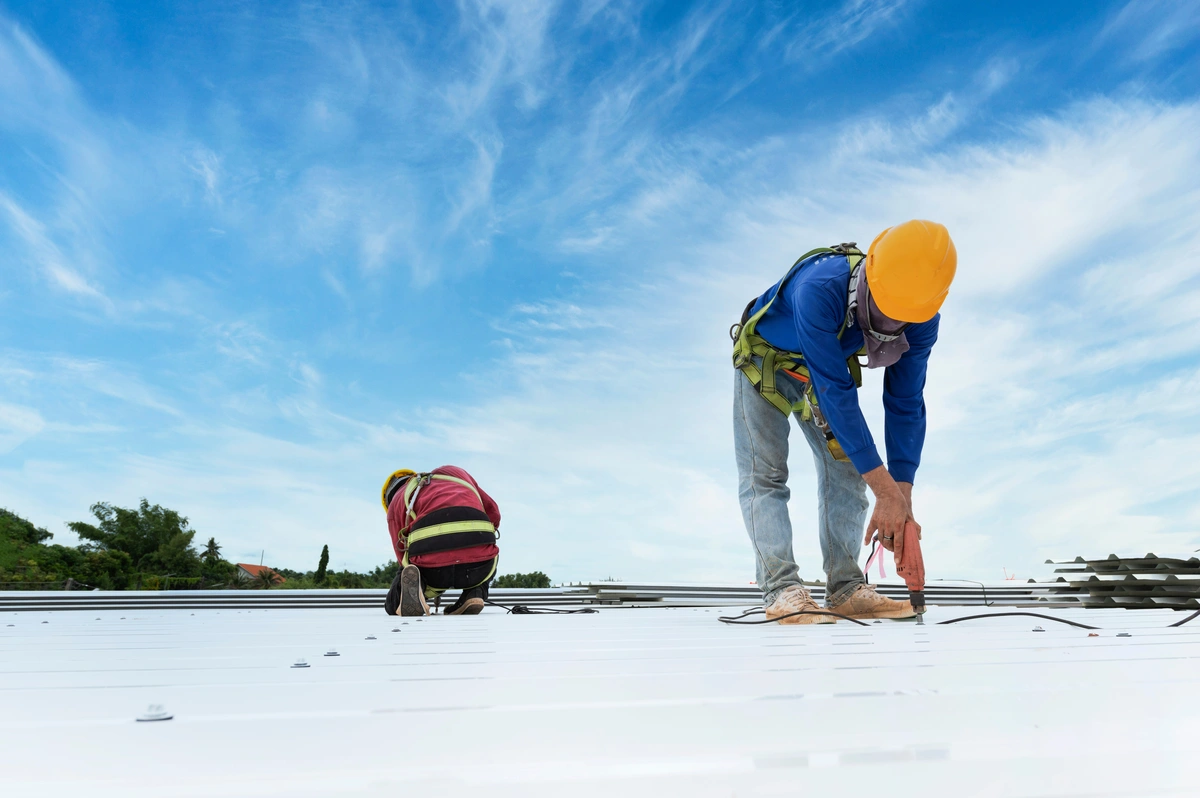
Unprotected roof edges are the most obvious hazard on a commercial roof, and federal rules generally require fall protection for construction work at heights of six feet or more. Because nearly every commercial roof is higher than that, edge protection is a standard part of virtually every project.
- Common methods include guardrail systems, safety nets, personal fall arrest systems, and, on some low-slope roofs, warning lines combined with safety monitoring
- The right method depends on roof size, slope, and the work being done, and it should be chosen before the crew steps onto the roof
2. Skylight and Roof Opening Protection
Skylights, hatches, and other roof openings are easy to overlook, and a person can fall through them without ever reaching an edge. Dust, paint, and weathering can make a fragile skylight look like solid surface, which is why clear marking matters.
- Openings should be covered with secure, clearly marked covers or surrounded by guardrails
- Older skylights may not support a person’s weight, so crews should treat every skylight as a fall hazard
3. Safe Ladder and Hatch Use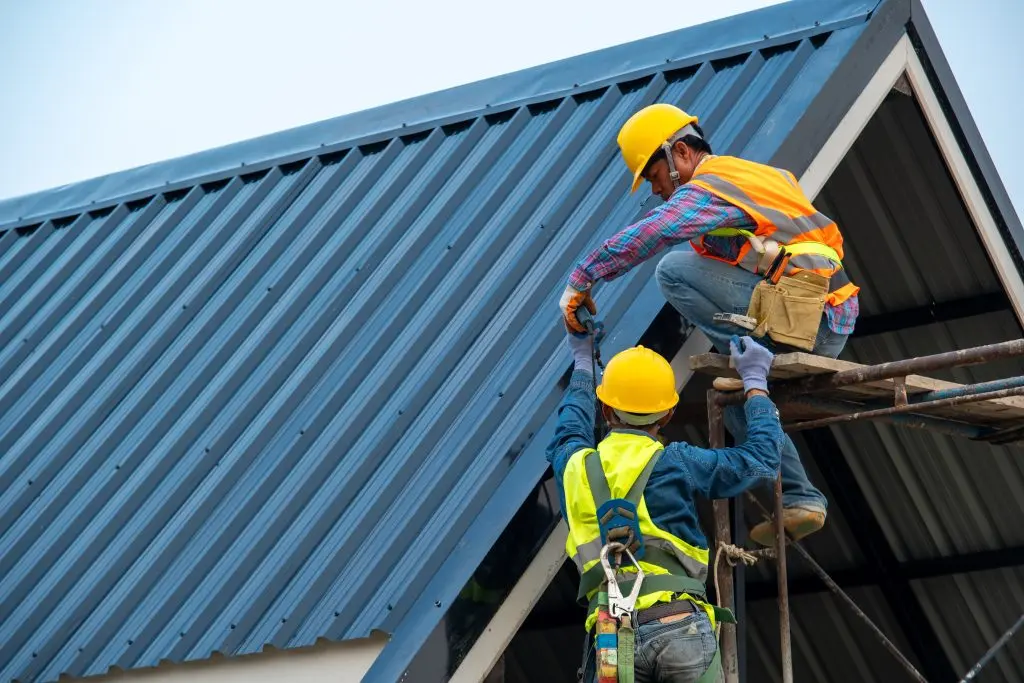
Getting onto the roof safely is part of the safety plan, since many falls happen during access rather than during the work itself.
- Ladders should be in good condition, placed on stable ground, secured, and extend above the landing surface so workers can step off safely
- Hatches should open fully and be guarded so no one steps into an open opening
4. Worker Training and Competent Person Oversight
Equipment only works when people know how to use it, which makes training and supervision a core requirement. A crew with the best gear but little training is still at risk, so owners should feel comfortable asking how workers are trained.
- Workers should be trained to recognize fall hazards and to use fall protection correctly
- A designated competent person should inspect the work area and equipment and have the authority to stop work if conditions are unsafe
5. Weather and Surface Hazards
Wet membranes, frost, loose gravel, and strong winds can turn a stable roof into a slippery one, and good safety planning accounts for them. Morning dew and overnight frost, in particular, can make surfaces unsafe long after the sun comes up.
- Work should pause or adjust when conditions make footing unreliable or when high winds threaten materials and workers
- Walkways, debris control, and good housekeeping reduce trips and slips
6. Electrical and Rooftop Equipment Hazards
Commercial roofs often hold HVAC units, conduit, and other equipment that creates additional risks for roofing crews.
- Crews should identify overhead power lines and rooftop electrical equipment before work begins
- Owners can help by sharing the location of equipment, shutoffs, and any known hazards on the roof
7. Hot Work and Fire Safety
Some roofing methods use heat, flammable adhesives, or torches, and fire prevention is part of the safety plan.
- Fire extinguishers, designated watch periods, and careful material storage reduce the chance of ignition
- Owners should ask whether the proposed installation method involves open flame or heat, and how the contractor will control that risk
What Building Owners Should Do Before and During a Project
Owners do not need to supervise the crew, but a few simple steps support a safe job and protect you if something goes wrong. Most of these steps take only a few minutes and can be handled during the pre-construction meeting.
- Verify Insurance and Licensing. Request current certificates of insurance, including workers’ compensation, and confirm the contractor is properly licensed for your area.
- Ask for a Written Safety Plan. A prepared plan describing fall protection, access, and emergency procedures shows the contractor has thought through the work.
- Share Building Hazard Information. Tell the contractor about rooftop equipment, weak or damaged areas, and any previous incidents so the plan reflects real conditions.
- Control Access Below the Work Area. Restrict foot traffic and parking below the roof so falling tools or materials cannot reach tenants or customers.
- Coordinate With Tenants. Give occupants notice of work schedules, noise, and any temporary closures so everyone knows what to expect.
- Keep Records. Retain proposals, safety documents, and inspection reports, since they can be valuable if questions come up later.
Owners in Mt. Vernon and surrounding areas who treat safety as part of contractor selection, rather than an afterthought, are usually the ones who end up with the smoothest, most predictable projects.
Common Roof Hazards and How They’re Controlled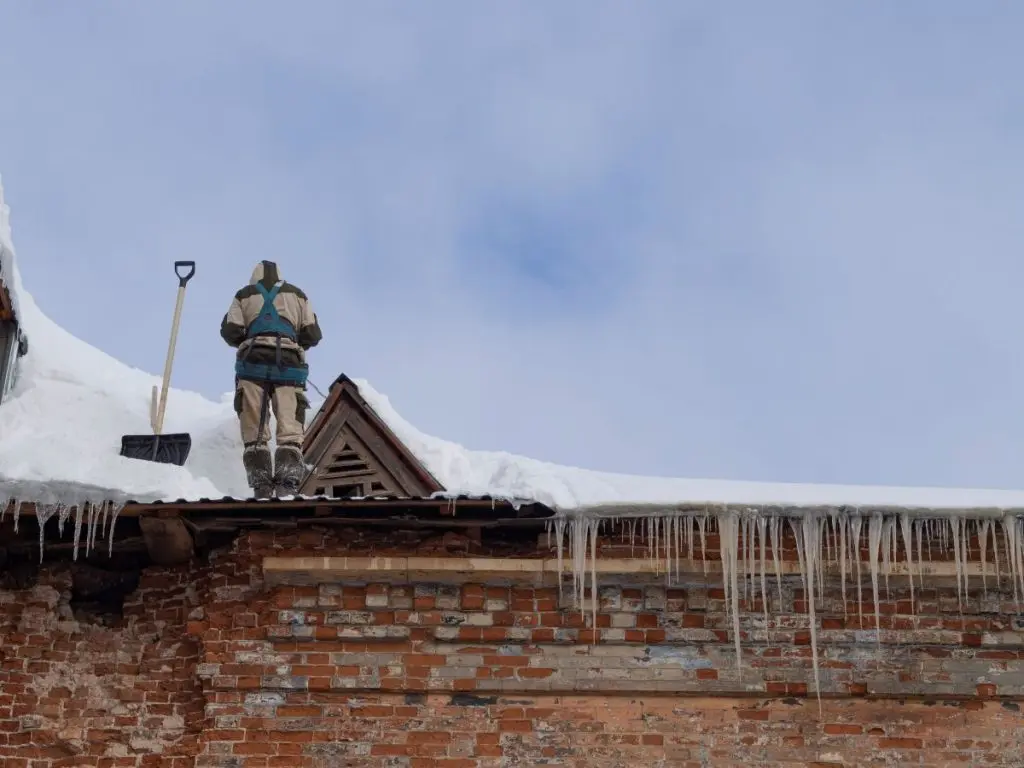
Every roof has its own risks, but a handful of hazards appear again and again. The table below pairs each hazard with typical controls and a practical step owners can take, so you can follow along during a pre-construction walkthrough.
| Hazard | Typical Control | What Owners Can Do |
| Unprotected roof edges | Guardrails, nets, or personal fall arrest systems | Ask which system will be used and why |
| Skylights and roof openings | Secure covers or guardrails | Point out all openings before work starts |
| Roof hatches and ladders | Guarded hatches, secured and inspected ladders | Maintain access points in good condition |
| Wet, icy, or debris-covered surfaces | Work stoppages, housekeeping, walkways | Support schedule flexibility for weather |
| Rooftop equipment and electrical | Hazard identification and clearance planning | Share equipment locations and shutoffs |
| Heat and open flame | Fire watch, extinguishers, safe storage | Ask whether hot work is part of the plan |
Safety is not a one-time item on a checklist. It is a continuous practice that begins in the bidding stage and continues through final cleanup. Property owners in Mt. Vernon and surrounding areas who maintain their own roof access points, keep rooftop equipment clearly labeled, and communicate openly with their contractor make it easier for every crew to work safely.
Choose a Roofing Partner That Puts Safety First
Strong safety practices protect the people doing the work, the people who use your building, and the value of your investment. A contractor who can explain their safety approach clearly and confidently is usually one who has done it many times before. Owners who understand the basics can ask better questions, spot red flags early, and select contractors who treat safety as a core part of the job.
At Embry’s Roofing, we plan fall protection, access, and site safety on every commercial project and share that plan with property owners across Mt. Vernon and surrounding areas before work begins. If you’re preparing for a roof inspection, repair, or replacement and want a contractor who takes safety seriously, contact us today to schedule a site visit.
CHECK OUT THE LATEST
FROM OUR BLOG