
Minimum Pitch for Metal Roof (What You Need to Know in 2026)
Minimum pitch for metal roof systems is one of the most important factors to understand before installing metal roofing panels on your home or commercial building. Roof slope affects drainage, panel selection, warranty eligibility, and long term performance. Installing the wrong roofing material on too low of a slope can lead to leaks and costly repairs.
If you are planning a roofing project in Bloomington, IN, knowing the proper minimum slope for metal systems helps ensure your roof performs as designed.
- Proper drainage: Allows water to shed efficiently
- Panel selection: Different metal roofing panels require different slopes
- Code compliance: Building standards regulate pitch minimums
- Warranty protection: Manufacturers require approved slopes
What Roof Pitch Actually Means
Roof pitch describes how steep a roof is, expressed as rise over run. A 4:12 pitch means the roof rises four inches for every twelve inches horizontally. Steep slope roofs shed water faster, while lower pitches move water more slowly across the surface.
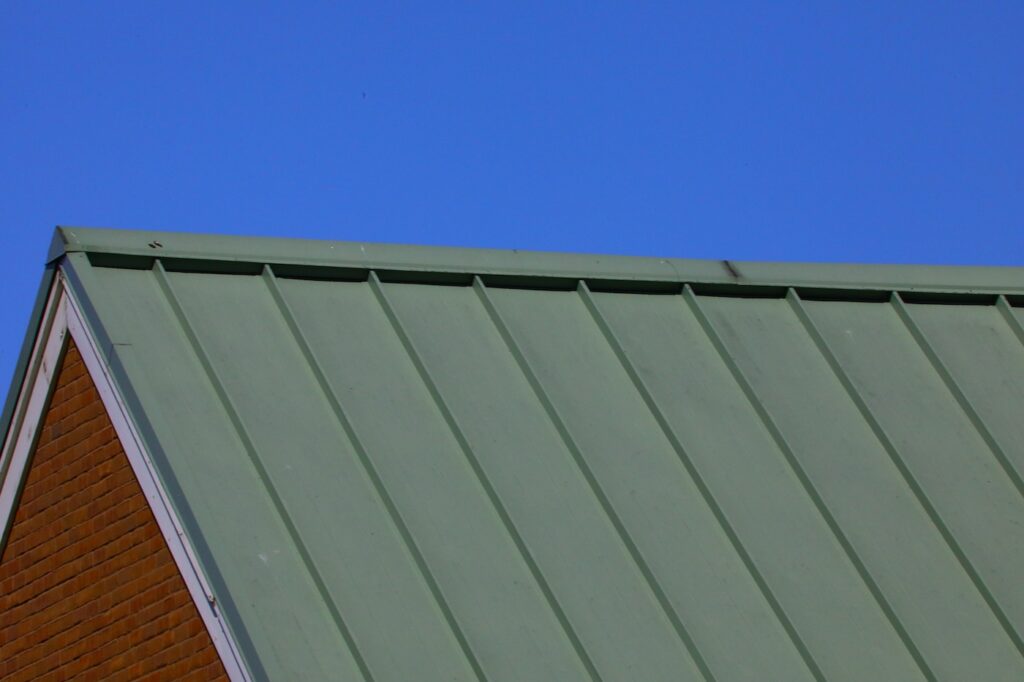
Metal roofing relies on gravity to move water away from seams and fasteners. When slope is too shallow, water can sit longer on the panels and along the roof deck, increasing the risk of infiltration during heavy rainfall. Even a small miscalculation in pitch can affect how flashing and underlayment perform over time.
Standard Minimum Pitch Requirements for Metal Roofs
Minimum slope depends on the type of roofing material and panel system installed. Not all metal roofing panels are engineered for low slope metal roof applications, which makes selecting the correct system critical. Choosing the right profile ensures proper drainage while maintaining compliance with local building codes.
Exposed Fastener Panels
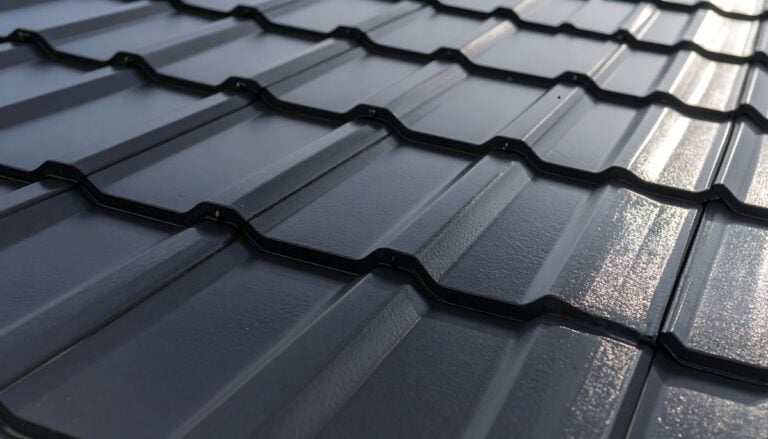
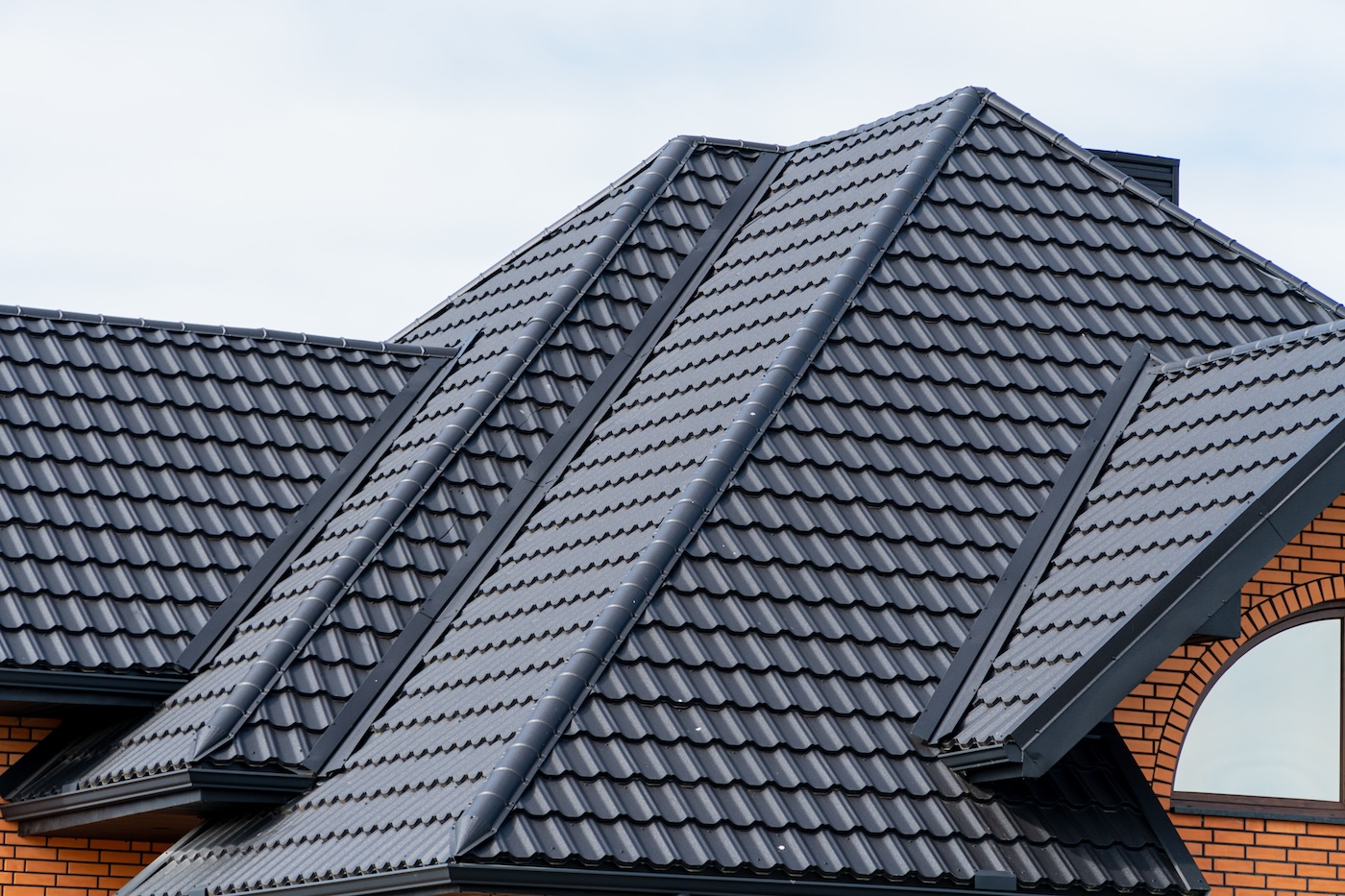
Exposed fastener systems are commonly used on barns, outbuildings, and some residential homes because they are budget friendly and straightforward to install. Since the fasteners penetrate directly through the metal roofing panels, these systems rely heavily on adequate slope to prevent water from backing up around screw penetrations. Most manufacturers require a minimum slope for metal exposed fastener systems of at least 3:12 to reduce leak potential.
- Minimum slope: Typically 3:12 or greater
- Fastener penetration: Higher leak risk on low slopes
- Common application: Agricultural and simple structures
Standing Seam Metal Roofs
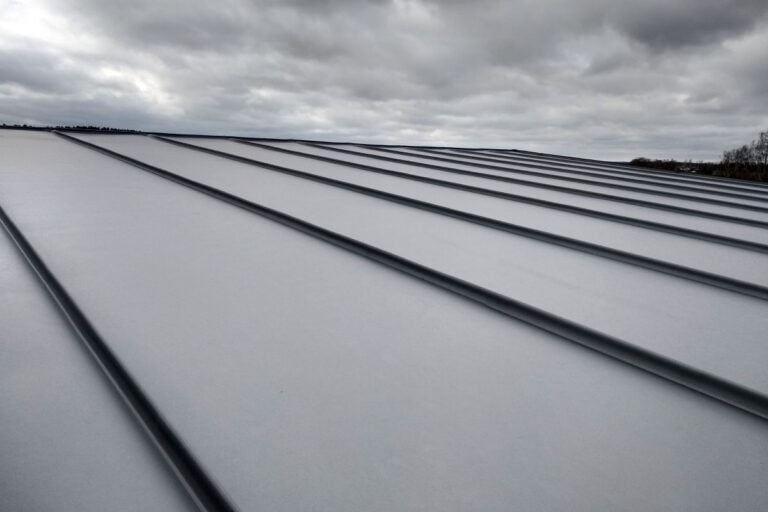
Standing seam metal roofs use concealed fasteners and raised interlocking seams to create a more watertight assembly. Because of this design, many standing seam metal roofs are approved for installation on slopes as low as 1:12 when installed according to manufacturer guidelines. This makes them a preferred option for residential and commercial buildings with lower pitch designs, especially when dealing with very low slopes that still require positive drainage.
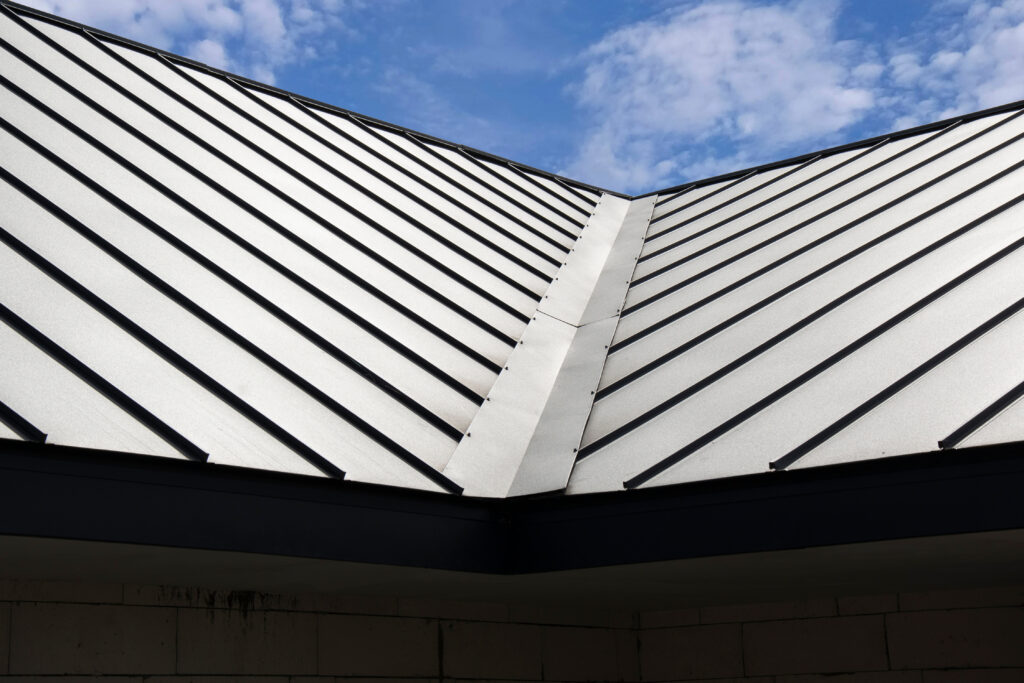
- Concealed fasteners: Fewer exposed penetration points
- Interlocking seams: Improved water resistance
- Low slope approval: Often rated for 1:12 pitch
According to the International Building Code, metal roof panels may be installed on slopes as low as 1:12 when designed and installed per manufacturer specifications. Always confirm your specific product requirements before installation.
Structural Metal Panels
Structural metal panels are commonly used in commercial roofing systems and large span buildings. These panels are engineered for strength and can sometimes be installed on lower slopes depending on the seam design and how they attach to the roof deck. Because commercial roofs often experience greater water exposure, precision installation is critical for long term performance.
- Engineered systems: Designed for structural support
- Commercial use: Common on warehouses and retail buildings
- Professional installation: Required for warranty compliance
6 Factors That Influence Minimum Pitch for Metal Roof
Slope requirements do not exist in isolation. Several additional factors impact whether a metal roof will perform properly on a lower pitch. Understanding these variables helps ensure the system you choose matches your structure and local weather conditions.
- Panel profile: Seam height and locking mechanisms directly affect water resistance and determine how low a slope can perform safely.
- Underlayment choice: High quality barriers provide secondary protection between the metal roofing panels and the roof deck.
- Climate conditions: Heavy rainfall and seasonal snow increase drainage demands on low slope metal roof systems.
- Roof length: Longer panel runs collect more water, placing greater stress on seams and flashing.
- Penetration count: Skylights, vents, and mechanical units increase vulnerability on very low slopes.
- Installation quality: Working with a qualified roofing contractor ensures the minimum slope for metal systems is measured correctly and installed to specification.
Homes in Bloomington, IN often experience heavy seasonal rain and occasional snow accumulation. These local conditions make correct slope selection especially important for long term reliability.
Common Myths About Metal Roof Pitch
Misunderstandings about slope frequently lead to improper installations. Clearing up these myths helps property owners avoid costly mistakes.
Myth: Metal roofs can go on completely flat surfaces
Truth: Metal roofing panels are not designed for completely flat roofs unless they are part of a specialized low slope metal roof assembly. Even standing seam metal roofs require at least a 1:12 pitch to properly shed water. Installing panels on a flat roof without proper slope increases the risk of ponding and seam failure.
Myth: All metal panels have the same minimum pitch
Truth: Each roofing material profile has its own approved minimum slope for metal installation. Exposed fastener panels typically require steeper slopes than standing seam metal roofs. Manufacturer specifications must always be followed to maintain warranty coverage.
Myth: Underlayment eliminates slope requirements
Truth: While underlayment adds protection between the metal roofing panels and the roof deck, it does not replace the need for proper slope. The panel system itself must be installed at the correct pitch to manage drainage effectively.
What Happens If the Pitch Is Too Low?
Installing metal roofing panels below their approved minimum slope increases the likelihood of problems. Water may move slowly across the surface, increasing seam pressure and stress on flashing areas. Over time, this can compromise the roof deck and interior structure.
Common issues include:
- Water backup: Standing water at panel seams
- Fastener leaks: Water entering around penetrations
- Reduced lifespan: Premature system failure
- Voided warranties: Manufacturer coverage denied
Correcting slope mistakes after installation is significantly more expensive than selecting the right system from the start.
We’re proud to serve home and business owners in Bloomington, IN, and nearby communities with minimum pitch for metal roof guidance and more.
Choosing the Right System for Your Roof Design
The best way to determine the appropriate minimum slope for metal roofing is to evaluate the structure, intended use, and panel type together. Steep slope roofs offer more flexibility in roofing material selection, while low slope metal roof applications require precise engineering and installation.
Working with a qualified roofing contractor ensures:
- Accurate pitch measurement: Prevents system mismatch
- Manufacturer compliance: Protects warranty coverage
- Proper detailing: Ensures flashing and seam integrity
Every metal roofing project should begin with a professional slope assessment.
Built for Precision With Embry’s Roofing
At Embry’s Roofing, we understand that pitch is not just a measurement. It is a structural requirement that directly impacts performance. Our team carefully evaluates slope, roof deck condition, panel type, and drainage design before installation begins to ensure long term success.
If you are considering metal roofing panels in Bloomington, contact Embry’s Roofing today for a free inspection or consultation. We will help you select the right roofing material for your slope and ensure your metal roof is installed correctly from the start.
CHECK OUT THE LATEST
FROM OUR BLOG