
Flat Roof Repair (8 Common Issues & Cost-Effective Fixes)
Flat roof repair starts with an accurate diagnosis, since blistering, ponding water, membrane tears, seam separation, and flashing failure each call for a different fix and a different budget. This guide walks through how to identify which of these five issues you’re dealing with, the difference between an emergency patch and a planned restoration repair, and the point at which continued repair stops making financial sense compared to full replacement.
Inside this guide:
- How to diagnose the 5 most common types of flat roof damage
- The difference between emergency patch repairs and planned restoration repairs
- When repair costs cross the threshold into replacement territory
Why Timely Flat Roof Repair Matters
Putting off a flat roof repair rarely makes the problem smaller. Water finds the path of least resistance, and a small, isolated issue today is often the widespread damage that pushes a roof into replacement territory a year or two from now.
- Prevents Structural Damage. Water that gets past a damaged membrane doesn’t stop at the roof deck. Left unaddressed, it can lead to rotted decking and structural repairs far more expensive than the roofing fix itself.
- Protects Interior Operations. A leak that reaches ceiling tiles, inventory, or equipment disrupts business operations, not just the roof.
- Preserves Roof Warranty Coverage. Most commercial roof warranties require documented, timely repairs. Deferred maintenance is one of the most common reasons insurers and manufacturers deny a claim.
- Controls Long-Term Repair Costs. Isolated damage caught early is one of the least expensive fixes on a commercial roof. The same damage left to spread turns into a far larger, more expensive repair project.
- Extends the Roof’s Usable Life. Consistent, prompt repair keeps a roof below the damage threshold where replacement becomes the more cost-effective option, stretching the return on the original roofing investment.
8 Common Flat Roof Problems: Diagnose Your Damage
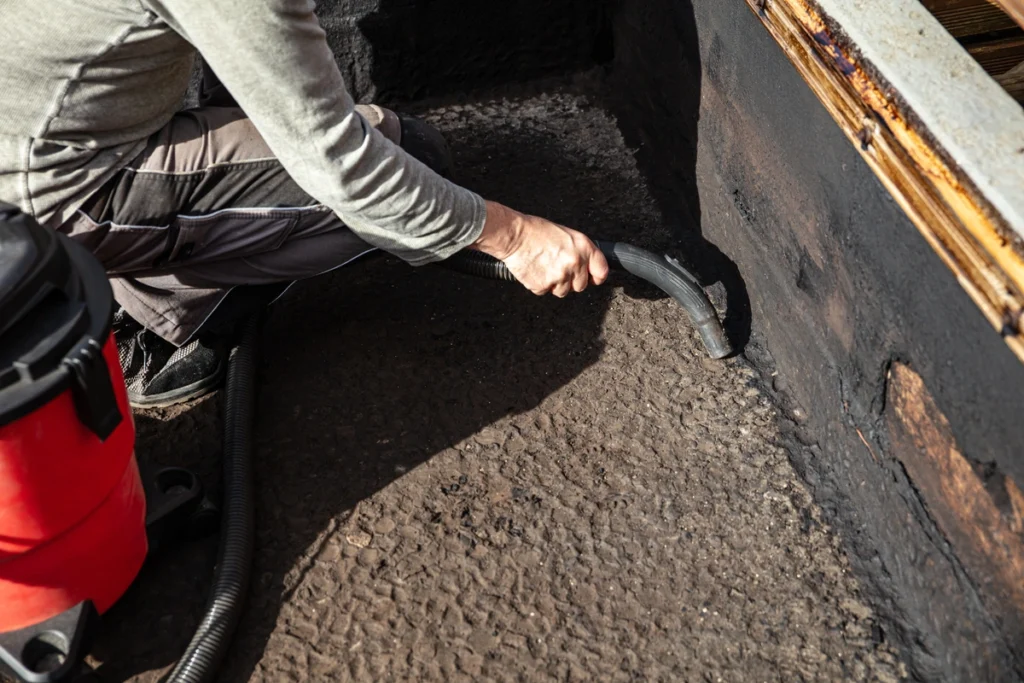
Identifying which type of damage you’re looking at is the first step, since the repair approach for a blister is nothing like the repair approach for a torn membrane.
1. Blistering
Blisters form when moisture or trapped air gets between roofing layers and expands under heat, creating raised bubbles in the membrane surface. Small, isolated blisters can often be monitored, while larger or multiplying blisters should be cut open, dried, and patched before they crack and let water in. Blistering tends to appear first in areas that get the most direct sun exposure, so a roof with heavy blistering concentrated on one section is often telling you something about that section specifically, not just the membrane as a whole.
2. Ponding Water
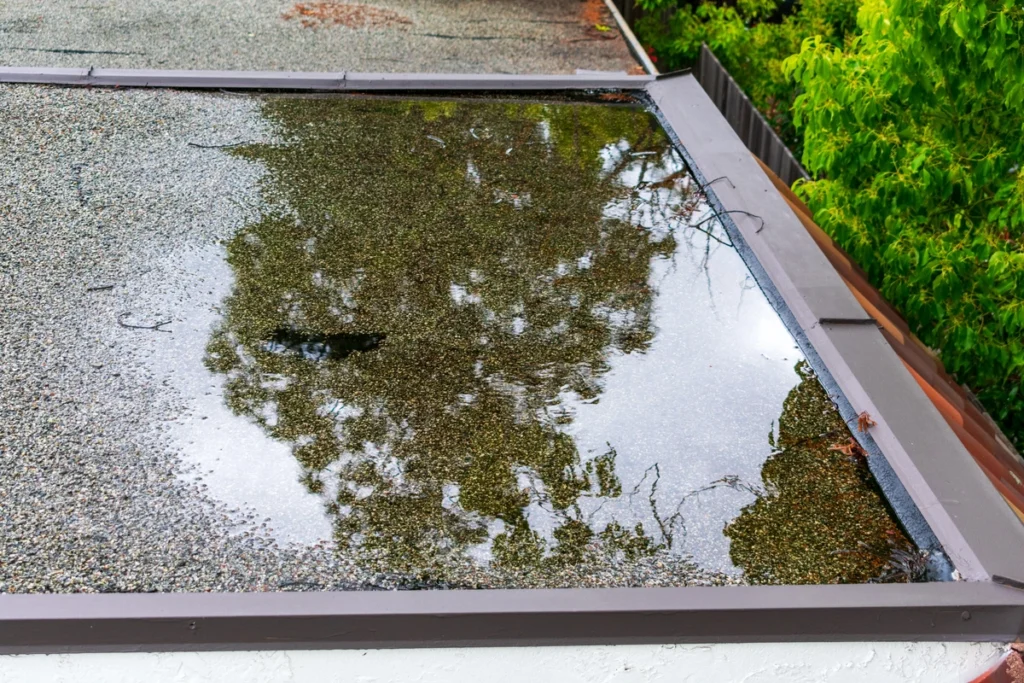
Ponding is standing water that remains on the roof more than 48 hours after rain, usually caused by poor slope, clogged drains, or a sagging deck. Left alone, ponding accelerates membrane breakdown at the pooled area. The fix ranges from clearing drains and improving flow to adding tapered insulation in persistent low spots. Our guide to flat roof drainage covers drainage-specific solutions in more depth.
3. Membrane Tears
Tears typically result from foot traffic, dropped tools, storm debris, or age-related brittleness. A small, isolated tear is a straightforward patch. Multiple tears across the roof, or tears near seams and penetrations, are a sign the membrane is aging out and patching may only be a short-term fix.
4. Seam Separation
Seams are the bonded or welded joints between membrane sheets, and they’re one of the first places a roof shows its age. Separation shows up as visible gaps, lifted edges along the seam line, or water staining directly beneath a seam on the interior ceiling. Isolated seam separation can be resealed or re-welded, but widespread seam failure across the roof usually signals the adhesive or welding has broadly failed and a larger restoration is warranted.
5. Flashing Failure
Flashing failure shows up as rust staining, cracked sealant, or lifted metal at roof edges, penetrations, parapets, and equipment curbs. Because flashing failures concentrate leaks at specific points rather than across the field of the roof, they’re often the most cost-effective repairs to make, provided they’re caught early. Our detailed breakdown of flat roof flashing covers each flashing type and how to spot deterioration before it leads to a leak.
6. Membrane Shrinkage
Shrinkage happens when a membrane, most often EPDM, contracts over time and pulls away from its original position at edges, seams, and curbs. It shows up as visible stress at fastening points, gaps opening at flashing terminations, or a membrane that appears pulled taut across the roof surface. Isolated shrinkage can sometimes be addressed by re-securing and reflashing affected edges, but widespread shrinkage across a roof is a sign the membrane is nearing the end of its serviceable life.
7. Alligatoring
Alligatoring refers to a cracked, scale-like surface pattern that develops on aging built-up and modified bitumen roofs as UV exposure and oxidation dry out the asphalt over time. Light surface alligatoring can often be addressed with a protective coating that seals the cracked surface before water works its way in. Deep or widespread alligatoring, where cracks penetrate through multiple layers, usually signals the material has aged past the point where a coating alone will hold.
8. Wind Uplift and Membrane Blow-Off
Wind uplift occurs when air pressure beneath the membrane exceeds the strength of the fasteners or adhesive holding it down, causing the membrane to lift, billow, or in severe cases tear loose entirely at the edges. It shows up most often after high-wind events and tends to start at corners and perimeter edges, where uplift forces concentrate. Isolated lifting can usually be re-adhered or re-fastened, but a membrane that has visibly billowed or partially detached across a section needs a full inspection of the fastening pattern before it’s resecured, since the underlying attachment may no longer meet code for the roof’s wind zone.
Emergency Patch Repairs
Emergency repairs exist to stop active water intrusion immediately, not to solve the underlying problem permanently. These are the calls that come in during or right after a storm, when water is actively entering the building.
- Goal: stop the leak now and protect the interior of the building from further damage
- Timeline: same-day or next-day response is standard for active leaks
- Scope: a temporary patch or seal over the damaged area, sized to hold until a permanent repair can be scheduled
- Limitation: an emergency patch is not a permanent fix. It buys time, and the underlying damage still needs a planned repair to avoid the same leak recurring
Emergency repairs are budgeted and treated differently than planned work for a reason. The priority is speed and damage control, not the most cost-efficient long-term fix. Trying to make an emergency patch do the job of a permanent repair, rather than following up with proper restoration work, is one of the most common ways a single leak turns into a recurring one.
Planned Restoration Repairs for Your Entire Roof
Planned restoration repairs are scheduled, budgeted work addressing damage that isn’t causing an active emergency but needs to be resolved before it becomes one. This is where the bulk of a property’s roofing maintenance budget should go.
- Goal: resolve the underlying damage permanently and extend the roof’s remaining service life
- Timeline: scheduled around weather windows and building operations rather than rushed
- Scope: full membrane section replacement, comprehensive reseaming, flashing rebuilds, or drainage corrections, depending on the diagnosis
- Advantage: planned work is typically less expensive per square foot than repeated emergency patches, and it can be bundled into a single mobilization rather than paying a service call each time
Property owners who only ever call for emergency repairs, and never budget for planned restoration, tend to spend more over time chasing the same underlying issues one leak at a time. A planned restoration approach also makes it easier to stay ahead of manufacturer warranty requirements, since many commercial roof warranties call for documented, professional repairs rather than reactive patchwork.
Flat Roof Replacement vs Repair: The Cost Threshold
The question most commercial property owners are really asking isn’t “how do I fix this leak,” it’s “at what point does it stop making sense to keep repairing this roof.” The general industry rule of thumb is that once damage affects roughly 25 to 30 percent of the total roof surface area, replacement becomes more cost-effective than continued repair.
Below that threshold, targeted repairs to blisters, tears, seams, or flashing typically cost less than a full replacement and can extend the roof’s service life for years. Above it, several factors compound to make repair the more expensive path over time:
- Repair costs stack up. Multiple simultaneous repair projects across a large damaged area often cost more in aggregate than a single replacement mobilization.
- Diminishing returns set in. A roof with widespread damage is usually failing broadly, not just at the repaired spots, which means new problems keep surfacing shortly after each repair is completed.
- Age compounds the calculation. A roof already at or near the end of its expected service life makes repair a shorter-term investment than the same repair on a newer roof.
- Frequency is a signal. If the same sections have already been repaired more than once, that’s often a sign the underlying membrane has degraded past the point where further patching is worthwhile.
A roof inspection that documents the percentage of affected surface area, not just a list of problem spots, gives property owners the clearest basis for this decision. As a rough benchmark, repairing an isolated section of membrane typically runs a small fraction of the cost of full replacement per square foot, which is exactly why the math flips once damage spreads across a large enough share of the roof. A contractor who walks the roof and measures affected area, rather than quoting from a quick visual pass, is giving you the information this decision actually depends on.
Flat Roof Maintenance to Reduce Repair Frequency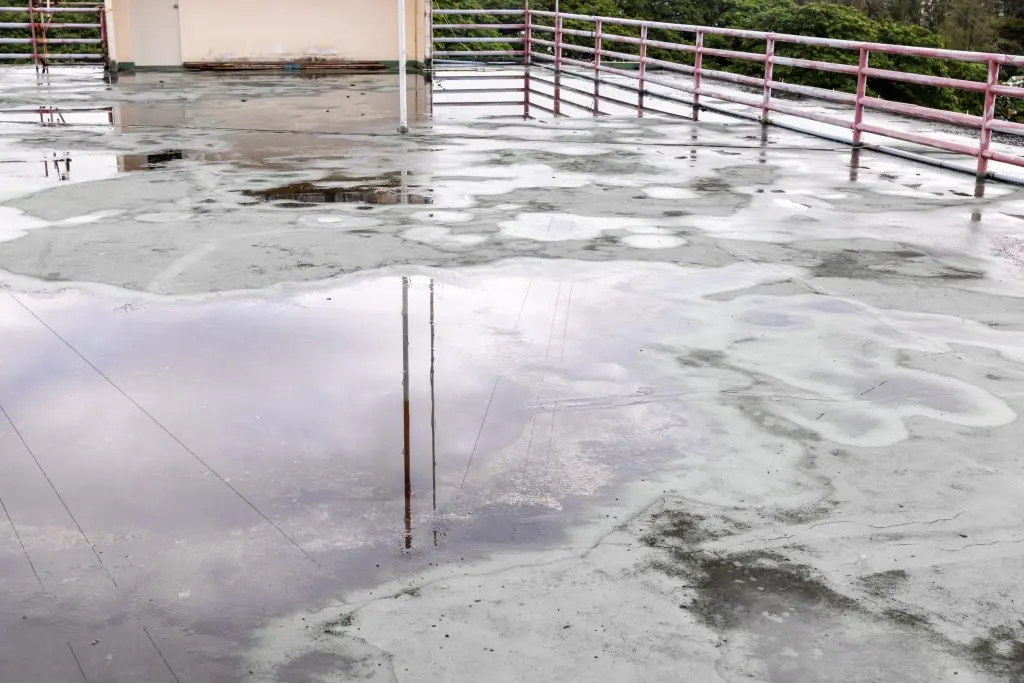
Consistent maintenance is what keeps a roof in the repair-friendly zone rather than crossing into replacement territory.
- Schedule inspections at least twice a year and after major storms to catch blistering, seam separation, and flashing issues while they’re still isolated
- Clear debris from drains and low spots regularly to prevent ponding water from accelerating membrane wear
- Address small repairs promptly rather than letting isolated damage spread across a larger area
- Keep a documented repair history, since a pattern of repeated repairs in the same area is one of the clearest signals it’s time to plan for replacement
FAQs
How do I know if my flat roof needs repair? Standing water, cracked membranes, interior leaks, and visible blistering are all signs your roof needs professional attention.
What flat roof materials are most durable? EPDM, TPO, and PVC are popular because they resist weathering and last longer with proper installation and maintenance.
Can a flat roof be repaired or does it need replacement? Minor localized damage can often be repaired, but damage affecting roughly 25 to 30 percent or more of the roof’s surface area usually makes replacement the more cost-effective option. A professional inspection will confirm which side of that line your roof falls on.
How often should commercial flat roofs be inspected? Most experts recommend at least twice a year, plus after heavy storms, to catch issues early and extend roof life.
Trust Embry’s Roofing for Expert Flat Roof Repairs
Whether you’re dealing with an active leak that needs an emergency patch or planning a restoration repair before it becomes one, an accurate diagnosis is what determines the right fix and the right budget. At Embry’s Roofing, we inspect, diagnose, and repair flat roofs across blistering, ponding, membrane damage, seam failure, and flashing issues, and we’ll tell you honestly when a roof has crossed the line into replacement territory. Contact Embry’s Roofing today to schedule an inspection.
CHECK OUT THE LATEST
FROM OUR BLOG