
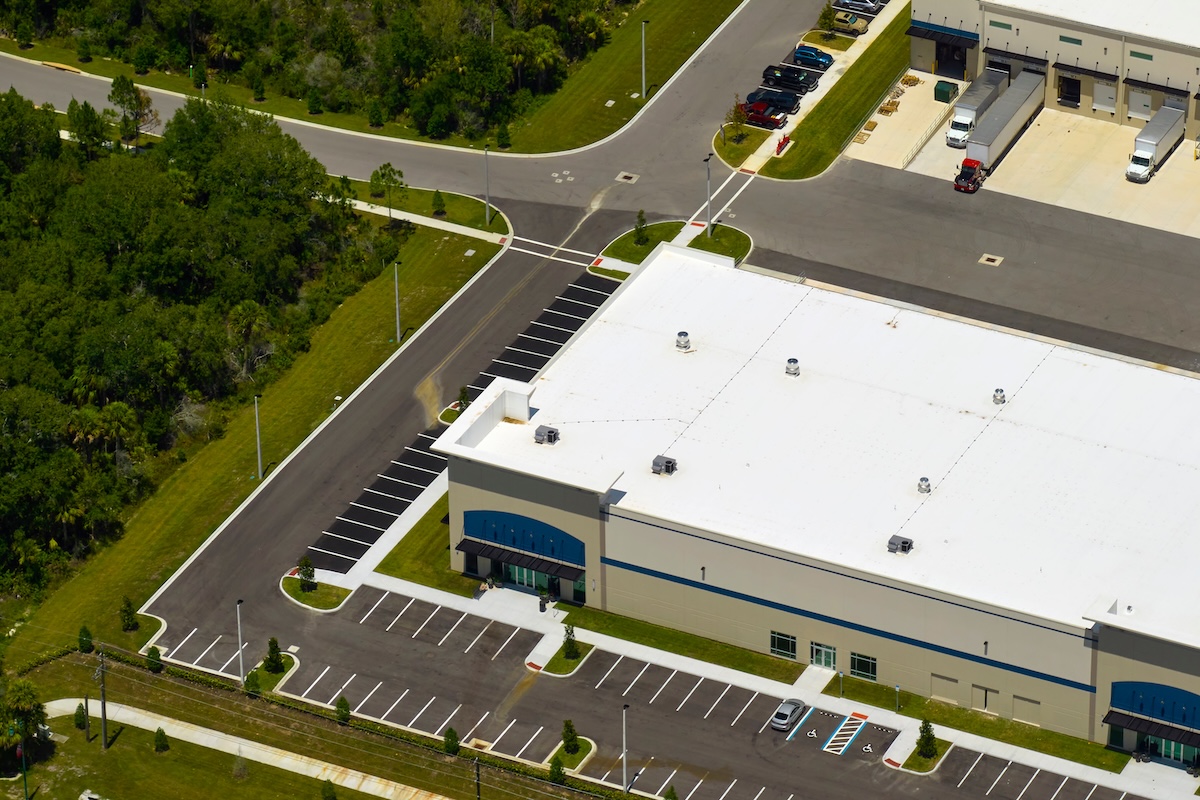
Warehouse Roofing (8 Durable Systems and Material Options)
Warehouse roofing is more than a structural necessity. It is a critical business investment that protects inventory, equipment, and daily operations while directly affecting energy costs, maintenance budgets, and long-term property value. Because warehouse roofs span massive surface areas and face continuous exposure to sun, wind, rain, and temperature extremes, the system you specify determines performance outcomes for the next 20 to 40 years. This guide is structured by decision stage so warehouse owners and facility managers can move from system selection through cost, energy performance, load considerations, and maintenance planning with a clear picture of each step.
This guide covers:
- Warehouse roof types: the 8 most common systems and when each is the right choice
- Cost considerations: installed cost ranges by material type
- Energy efficiency: cool roofing, insulation, and operating cost impact
- Load and span: how design accounts for HVAC, solar, and snow
- Maintenance: what a 20-year performance plan looks like
Warehouse Roof Types: 8 Durable Systems
Most warehouses use flat or low-slope roofing systems because they are cost-effective, easier to maintain on large structures, and allow efficient placement of HVAC units, drainage systems, and rooftop equipment. A smaller number of warehouse applications use pitched metal roofing when the structural design calls for it or when long-term performance is the overriding priority. Here are the eight systems most commonly specified on warehouse and industrial facilities in the Tri-State area.
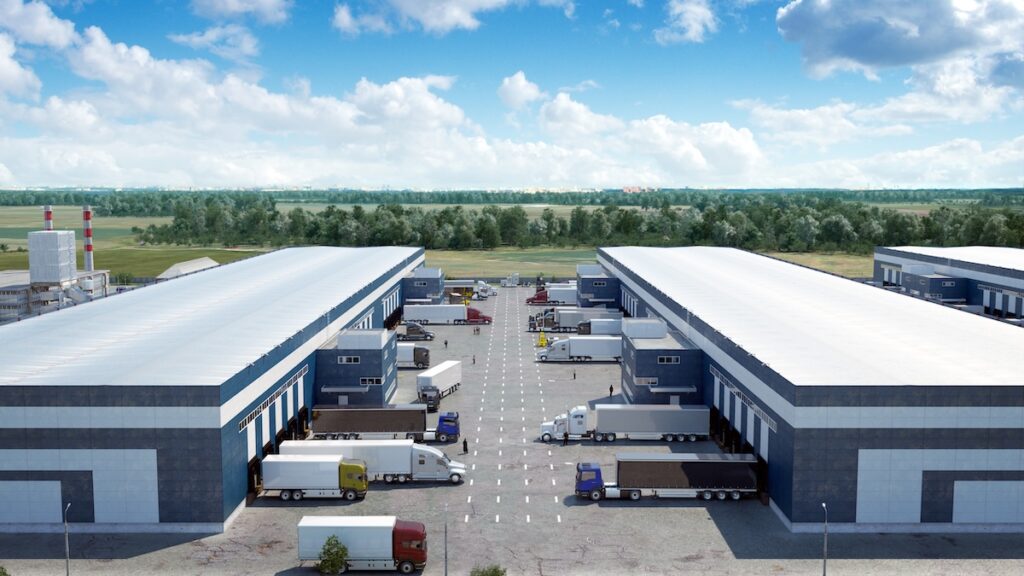
1. TPO (Thermoplastic Polyolefin)
TPO is the most widely installed single-ply membrane in commercial and warehouse roofing. Its white reflective surface reduces cooling loads on large building footprints, heat-welded seams create strong watertight bonds, and its installed cost is competitive with EPDM. For warehouses in climate zones 4 and 5, where summer cooling costs are significant, TPO’s reflective performance delivers measurable operating savings over the system’s life.
- Cost: $6 to $10 per square foot installed.
- Lifespan: 15 to 30 years with proper maintenance.
- Best for: General warehouse and distribution facilities prioritizing energy efficiency and budget.
2. EPDM (Ethylene Propylene Diene Monomer)
EPDM is the most established flat roofing membrane on the market, with a decades-long track record on commercial and industrial buildings. Its synthetic rubber composition provides excellent flexibility in cold temperatures, making it the stronger specification in northern climate zones where TPO’s reflective advantage is reduced and freeze-thaw cycling stresses seams.
- Cost: $5 to $9 per square foot installed.
- Lifespan: 20 to 35 years with proper maintenance.
- Best for: Cold-climate warehouses, budget-driven projects, and facilities where longevity is the primary driver.
3. PVC (Polyvinyl Chloride)
PVC membranes share TPO’s heat-welded seam construction but add chemical resistance that makes them the preferred specification for warehouses storing food products, industrial chemicals, or processing operations with rooftop grease exposure. The higher installed cost is offset by the system’s resistance to environments that would degrade EPDM or TPO faster.
- Cost: $8 to $12 per square foot installed.
- Lifespan: 20 to 30 years.
- Best for: Food processing, chemical storage, and industrial warehouses with aggressive interior environments.
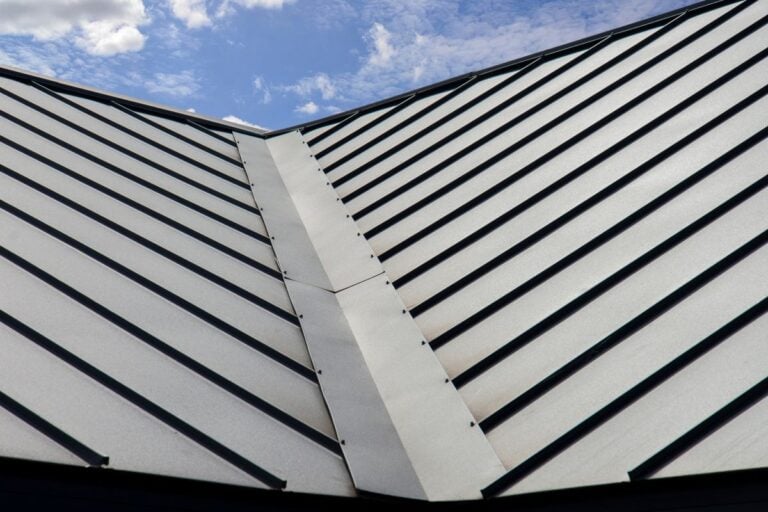
4. Standing Seam Metal Roofing
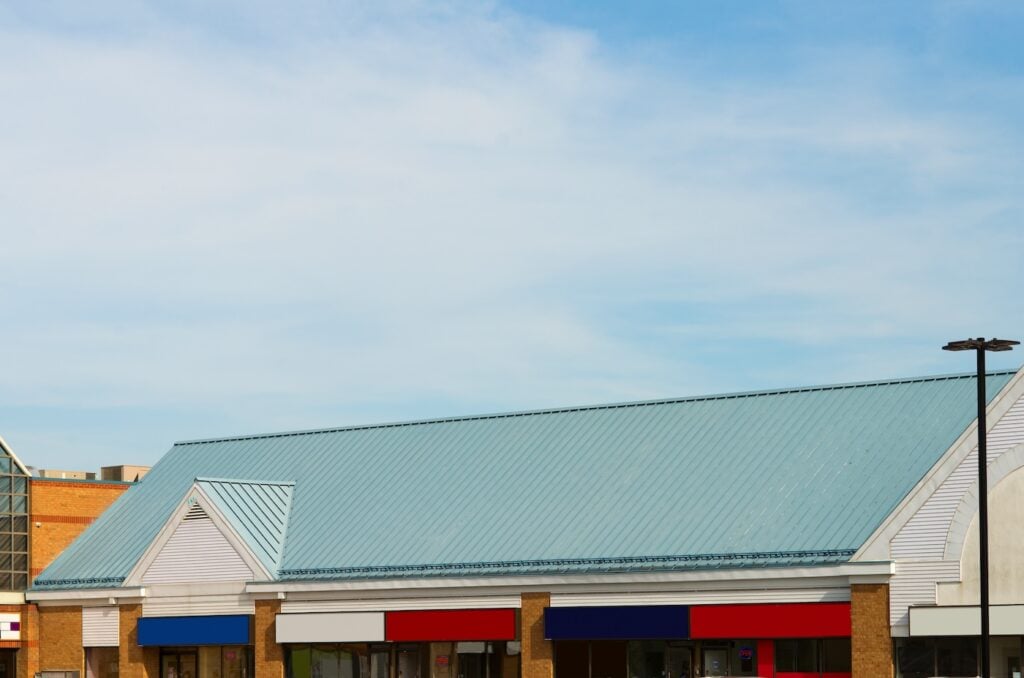
Standing seam metal roofing delivers the longest service life of any warehouse roofing option, with properly installed systems routinely performing for 40 to 70 years. Concealed clips allow the panels to float with thermal movement without stressing fasteners, and the system requires minimal maintenance over its life. For warehouse owners planning to hold the property long-term, metal’s higher upfront cost typically produces the lowest total cost of ownership.
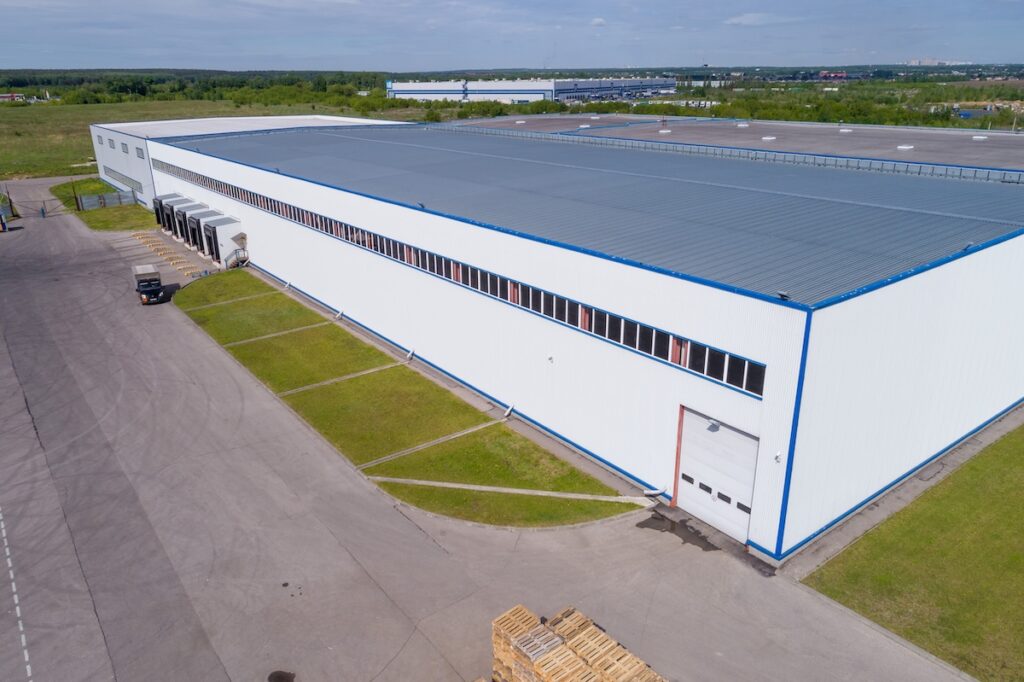
- Cost: $10 to $18 per square foot installed.
- Lifespan: 40 to 70 years.
- Best for: Warehouses and distribution centers where long-term ownership and lowest lifecycle cost are the primary criteria.
5. Through-Fastened Metal Panels
Through-fastened panels are the most widely installed roofing system on agricultural warehouses, storage facilities, and budget-constrained industrial buildings. They attach directly to purlins with exposed screws and rubber washers. Faster and less expensive to install than standing seam, they require more maintenance over time as rubber washers compress and fastener holes elongate.
- Cost: $6 to $12 per square foot installed.
- Lifespan: 20 to 30 years with maintenance.
- Best for: Agricultural storage, budget-driven warehouse projects, and new construction PEMB applications.
6. Modified Bitumen
Modified bitumen is a multi-layer asphalt-based system reinforced with polymer modifiers that improve flexibility and impact resistance. Its granule-surfaced cap sheet provides better foot traffic durability than single-ply systems, which makes it a practical choice for warehouses with regular rooftop access for equipment maintenance.
- Cost: $5 to $9 per square foot installed.
- Lifespan: 15 to 25 years.
- Best for: Warehouses with high rooftop foot traffic and facilities where multi-ply redundancy is preferred.
7. Built-Up Roofing (BUR)
Built-up roofing uses multiple alternating layers of bitumen and reinforcing fabric to create a thick, redundant membrane surfaced with gravel or mineral cap sheet. BUR systems have a proven long-term performance record on large commercial and industrial buildings and are particularly well-suited to high-UV environments.
- Cost: $6 to $10 per square foot installed.
- Lifespan: 20 to 35 years.
- Best for: Large warehouse footprints in high-UV climates, re-roofing projects where the existing system is bitumen-based.
8. Spray Polyurethane Foam (SPF)
Spray foam is applied as a liquid that expands and cures into a monolithic layer conforming to every penetration and surface irregularity. A protective elastomeric coating shields the foam from UV degradation. SPF provides excellent thermal performance and eliminates the seam-related leak paths that affect membrane systems, making it effective on warehouses with complex rooflines or numerous penetrations.
- Cost: $4 to $8 per square foot installed.
- Lifespan: 20 or more years with periodic recoating.
- Best for: Warehouses with complex geometry, multiple penetrations, or as a recover option over aging membrane systems.
Cost Considerations for Warehouse Roofing
Warehouse roofing cost is driven by four variables: material selection, roof size, whether tear-off is required, and insulation upgrade scope. For a full breakdown of cost ranges by material and project type, our warehouse roof cost guide covers the full range of inputs and what drives costs up or down on large-footprint projects.
As a general framework for budget planning:
- Membrane systems (TPO, EPDM, PVC, modified bitumen): $5 to $12 per square foot installed.
- Metal roofing (standing seam or through-fastened): $6 to $18 per square foot installed.
- Recover vs. tear-off: A recover installation that adds new membrane over a sound existing system saves 15 to 25 percent compared to full tear-off.
- Insulation upgrade: Adding insulation during a re-roof is the highest-return energy improvement available, but adds $1.50 to $4.00 per square foot to the project cost.
On a 50,000 square foot warehouse, the difference between a TPO recover at the low end of the cost range and a full standing seam replacement at the high end is roughly $150,000 to $700,000. The right choice depends on the remaining life of the existing system, the building’s hold period, and how the owner values long-term maintenance savings against upfront capital.
Energy Efficiency: Cool Roofing and Insulation
Warehouses are large thermal loads. On a 100,000 square foot building, the roof surface represents the single largest area of heat gain in summer and heat loss in winter. The right roofing specification can meaningfully reduce HVAC operating costs year over year.
Cool Roofing
Reflective membrane surfaces on TPO and PVC roofing reduce roof surface temperatures by 50 to 80 degrees Fahrenheit compared to dark surfaces, which translates directly into reduced cooling loads on the HVAC systems below. For warehouses in the Tri-State area that operate through hot Indiana, Kentucky, and Illinois summers, cool roof membranes can reduce annual cooling energy use by 10 to 25 percent depending on building construction and interior conditions. ENERGY STAR-rated and Cool Roof Rating Council-certified products qualify for energy-related tax incentives in some jurisdictions.
Insulation
Insulation is the most important energy performance variable in a warehouse roof assembly. The commercial roof insulation layer between the deck and the membrane determines the roof assembly’s thermal resistance (R-value) and directly affects both heating and cooling costs. Current ASHRAE 90.1 requirements for commercial roofs in climate zones 4 and 5 specify minimum continuous insulation R-values of R-20 to R-30. Many warehouse owners spec higher values when upgrading during a re-roof because the incremental cost of additional insulation is low relative to the long-term energy savings.
Re-roofing projects are the most cost-effective time to upgrade insulation because the existing membrane is already being removed. Replacing saturated or compressed insulation during a re-roof also restores the original design R-value, which may have degraded significantly if the insulation has absorbed moisture over years of service.
Load and Span: Designing for HVAC, Solar, and Snow
This is the technical section most warehouse roofing guides skip entirely, and it is the section facility managers most need when planning a roofing project alongside other building system upgrades.
HVAC Equipment Loads
HVAC units are among the heaviest concentrated loads a warehouse roof carries. Rooftop units on large warehouse facilities can weigh two to eight tons each, and their weight must be transferred through the roofing system into the structural deck and framing below. Before any roofing replacement, the contractor should confirm that existing HVAC curbs are properly blocked and flashed to transfer loads correctly and that the new roofing system is installed around curbs using manufacturer-specified methods. Adding new HVAC units after a re-roof requires pre-approval and flashing by a contractor certified in the installed system to avoid voiding the warranty.
Solar Panel Loads
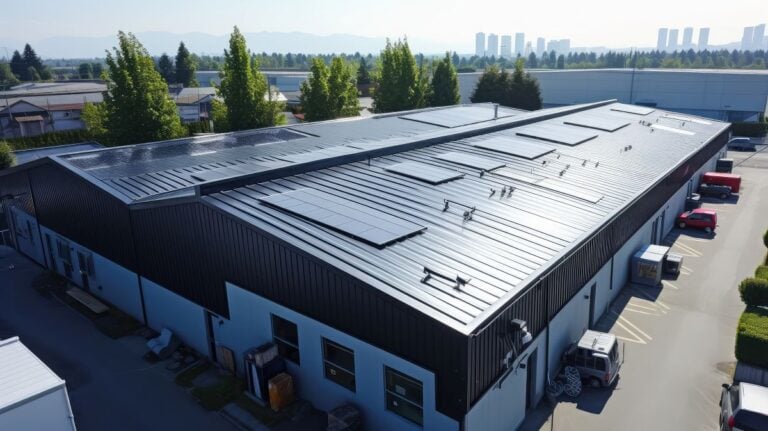
Warehouse rooftops are increasingly attractive for solar installations because of their large, unobstructed surface area and the alignment between peak solar production and peak warehouse cooling loads. However, solar panels add both dead load (the weight of the panels and racking) and point loads at racking anchor penetrations through the roof membrane. Before solar is added to any warehouse, a structural engineer must confirm that the deck and framing can carry the additional dead load, and all penetrations through the roofing system must be completed using manufacturer-approved methods. On a membrane system like TPO or EPDM, each racking penetration must be flashed and welded or bonded correctly to maintain warranty coverage. For industrial-scale solar on warehouse roofs, see our industrial roofing guide for additional structural and system compatibility considerations.
Snow Load
Indiana, Kentucky, and Illinois receive significant winter snowfall, and flat warehouse roofs are particularly vulnerable to snow accumulation because they do not shed snow the way sloped roofs do. Ground snow loads in the Tri-State area typically range from 15 to 25 pounds per square foot depending on location, and drift loads behind parapet walls or around rooftop equipment can exceed 40 pounds per square foot. The roof structure and deck must be designed to carry these loads. During a re-roofing project, if insulation is being added, the contractor should confirm that the added dead load of the new system does not approach or exceed the deck’s rated capacity, particularly on older structures. Monitoring snow accumulation after significant storms and removing snow if it approaches design load thresholds is part of a responsible warehouse facility maintenance plan.
Maintenance: A 20-Year Performance Plan
A warehouse roof that is maintained properly will routinely outlast one that is ignored. The difference between a 15-year and a 30-year service life on the same membrane system is almost entirely a function of maintenance discipline.
Biannual Inspections
Schedule professional inspections in spring and fall. Spring inspections identify winter damage and set the repair priority list for the productive installation season. Fall inspections verify drains, penetrations, and sealants before the wet and cold season arrives. Each inspection should produce a written report with photographs documenting every finding.
Post-Storm Assessments
After any significant hail, wind, or heavy rain event, have the roof walked by a qualified contractor regardless of whether interior damage is visible. Storm damage that goes undetected for a season can result in insulation saturation and decking damage that turns a $500 patch into a $50,000 section replacement.
Drain Maintenance
Assign maintenance staff to inspect and clear roof drains, scuppers, and gutters monthly, particularly during fall. Clogged drainage leads to ponding that accelerates membrane deterioration and adds structural stress to the deck.
Authorized Repairs Only
Any repair work must be performed by a contractor certified in the installed membrane system. Unauthorized repairs using incompatible materials can void manufacturer warranty coverage and create new leak points at the repair perimeter.
Spec Your Warehouse Roof Right With Embry’s Roofing
Professional installation by a contractor with specific warehouse roofing experience is the most important single factor in whether your roofing system delivers its rated service life. Warehouse roofs are large, complex systems, and the gap between a well-specified, properly installed system and a low-bid, shortcuts-taken one compounds over decades of service.
We’re proud to serve warehouse owners and facility managers across the Tri-State area including Owensboro, KY with free commercial inspections, accurate system recommendations, and installations backed by over 45 years of experience. Our HAAG certified inspectors and preferred manufacturer relationships with Mule-Hide, Gen Flex, and GAF mean every warehouse project is specified to perform. Contact Embry’s Roofing today for a free warehouse roof inspection and find out which system is right for your building.
CHECK OUT THE LATEST
FROM OUR BLOG