

Commercial Roof Repair (6 Solutions, Costs and When To Act)
Maintaining a robust roof is crucial for business continuity and safety. But not all commercial roof repair situations are the same. A facility manager dealing with an active leak during business hours needs a different answer than one planning a maintenance budget for next quarter. This guide serves both: it separates emergency repair from planned maintenance, breaks down the six most common repair types with cost ranges, gives you a clear repair-versus-replacement framework, and walks you through exactly what happens when you call Embry’s.
This guide covers:
- Emergency repair: active leaks and storm damage
- Planned maintenance repair: scheduled and preventive
- 6 commercial roof repair types with costs
- Repair vs. replacement decision criteria
- What happens after you call: the inspection and proposal process
Emergency Commercial Roof Repair: Active Leaks and Storm Damage
If your roof is actively leaking, water is entering an occupied building, or a storm event has visibly compromised your membrane, you are dealing with an emergency repair situation. The priority is stopping further damage to your building, inventory, equipment, and the people inside it, not planning a scheduled repair project.

Emergency commercial roof leak repair typically involves temporary tarping or patching to stop water intrusion while a full assessment is scheduled. Embry’s provides emergency tarping services and can mobilize quickly for urgent situations across the Tri-State area.
What to do immediately:
- Keep people away from areas directly below the leak and place buckets or containment to limit interior damage.
- If ceiling tiles are bulging, puncture them at a low point to allow water to drain in a controlled way rather than collecting weight until collapse.
- Document everything with photographs and timestamps before any cleanup, as this documentation supports insurance claims.
- Contact your insurance provider to start the claim process and note the date and time of your report.
- Call a commercial roofing contractor for emergency tarping and an inspection assessment.
For commercial roof hail damage specifically, our guide walks through documentation requirements, what adjusters look for, and how to protect your claim from the moment the storm passes. If you have an active leak or storm damage right now, contact Embry’s Roofing for emergency response. We serve commercial properties across the Tri-State area and can mobilize quickly.
Planned Maintenance Repair: Scheduled and Preventive
Most commercial roof repair situations are not emergencies. They are the result of routine inspection findings, aging seams, minor flashing deterioration, or proactive maintenance before a small issue becomes a large one. This is where the real cost savings live. A $300 flashing repair caught during a biannual inspection is far less consequential than the same failure discovered after six months of moisture infiltration into insulation and decking.
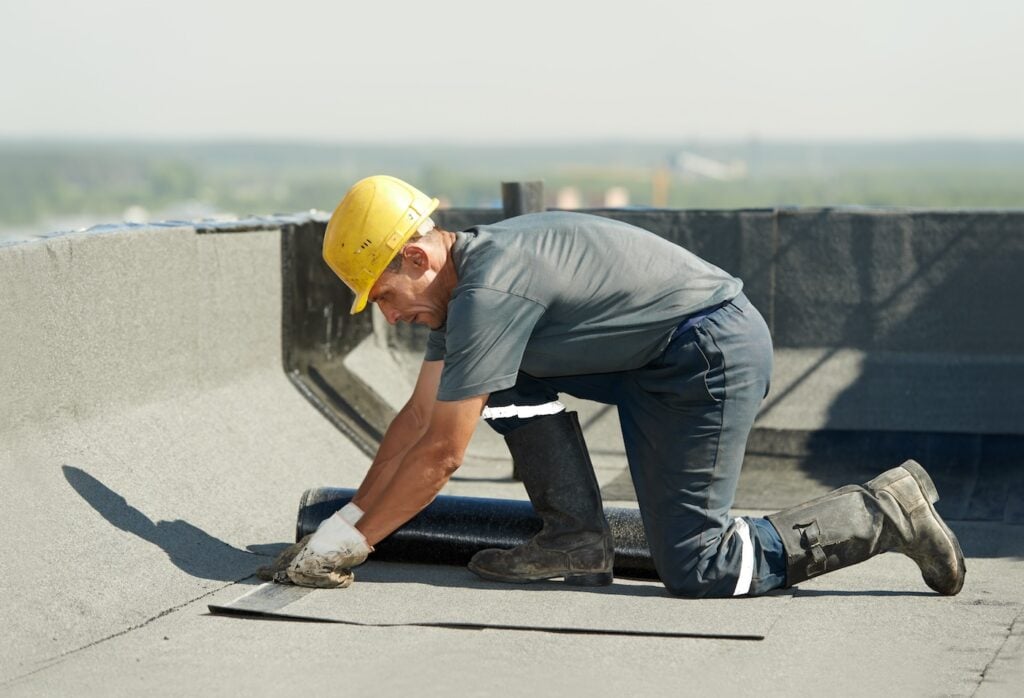
Planned maintenance repair is the appropriate response when your roof is within its expected service life, the damage is isolated rather than widespread, your insulation is confirmed dry, and the repair can be scheduled during favorable weather rather than forced by an emergency. The key indicator that a repair is appropriate rather than a replacement is that the cost of the repair is meaningfully lower than the remaining amortized value of the roof system. Your contractor should help you make this comparison explicitly before proceeding.
Professional roofing contractors can identify planned repair needs during biannual inspections in spring and fall, ideally before storm season. Scheduling repairs during this window reduces both urgency premiums and the risk of weather delays.
6 Commercial Roof Repair Types and Their Costs
Every commercial building in the Tri-State area benefits from understanding which repairs are common on their roof system. Here are the six most frequent repair types on flat and low-slope commercial roofs, with typical cost ranges for 2026.
1. Membrane Patch or Puncture Repair
Single-ply membranes including TPO, EPDM, and PVC can be punctured by hail, foot traffic, equipment, or debris. Small punctures are repaired by heat-welding a membrane patch over the damaged area on TPO and PVC, or using adhesive patch systems on EPDM. The repair is fast and durable when the surrounding membrane is in good condition.
- Typical cost: $150 to $600 per repair, depending on size and access conditions.
- When it applies: Isolated puncture with no moisture in the underlying insulation.
- Watch for: Multiple punctures across a large area may indicate a pattern of vulnerability that warrants a system upgrade rather than repeated patching.
2. Seam Repair or Re-Welding
Heat-welded seams on TPO and PVC systems can develop voids or separations over time, particularly at T-joints and termination points where multiple seam lines meet. Failed seams are a common source of leaks and are typically caught during inspection before visible interior damage occurs.
- Typical cost: $200 to $800 per seam repair, depending on length and location.
- When it applies: Seam voids or separations identified during inspection or following a leak event.
- Watch for: Widespread seam failures across a large area suggest the membrane is reaching end of life.
3. Flashing Repair or Replacement
Flashing at HVAC curbs, parapet walls, pipe boots, skylights, and wall terminations is the most common single source of commercial roof leaks. Metal flashing can lift, crack, or separate at the sealant line, and membrane flashing can tear or delaminate. Flashing failures are typically repairable without disturbing the field membrane.
- Typical cost: $200 to $1,500 per location, depending on the flashing type and condition.
- When it applies: Localized leak at a penetration or wall transition with intact surrounding membrane.
- Watch for: Corroded or displaced metal flashing at multiple locations may require systematic replacement rather than individual patch repairs.
4. Drain and Scupper Repair
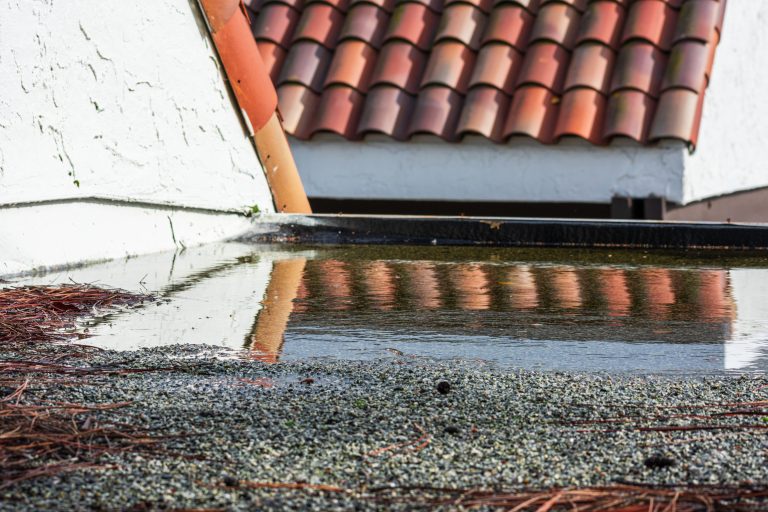
Clogged or damaged internal drains and scuppers create ponding water that accelerates membrane deterioration and adds structural load to the roof deck. Drain repair may involve clearing debris, replacing drain rings or clamping rings, or regrading the roof surface around chronic ponding locations.

- Typical cost: $150 to $500 per drain, plus additional cost for tapered insulation if regrading is needed.
- When it applies: Persistent ponding more than 48 hours after rain, slow drainage, or visible drain component damage.
- Watch for: Widespread ponding across a large roof area may indicate sloped surface deterioration that individual drain repair cannot address.
5. Decking Repair
When moisture has penetrated the membrane and insulation and reached the structural deck below, wood decking or steel deck repair is required before any surface repair or replacement can proceed. Decking repair is the most expensive common repair type and is a strong indicator that a broader replacement assessment is warranted.
- Typical cost: $500 to $3,000+ depending on the extent of rot or corrosion and access conditions.
- When it applies: Soft spots in the roof surface, sagging deck, or structural compromise identified during core sampling or inspection.
- Watch for: Significant decking damage across a roof is almost always accompanied by insulation saturation, and the combined repair scope frequently approaches replacement cost.
6. Coating Application or Restoration
For roofs that are structurally sound and weather-tight but aging in surface condition, a commercial roof coating can extend service life by 10 to 15 years at a fraction of replacement cost. Silicone, acrylic, and polyurethane coatings are applied over the existing membrane to seal minor surface cracking and add reflective performance. See our commercial roof restoration guide for a full breakdown of coating types and candidacy requirements.
- Typical cost: $2 to $5 per square foot installed, depending on coating type and roof size.
- When it applies: Aging membrane with no significant moisture infiltration and no seam or flashing failures that coatings alone cannot address.
- Watch for: Coatings are not appropriate for roofs with saturated insulation, widespread seam failures, or structural issues. A professional inspection must confirm candidacy before coating is specified.
Commercial Roof Repair Cost Summary
| Repair Type | Typical Cost Range | Key Condition |
| Membrane patch or puncture | $150 to $600 | Isolated, dry insulation |
| Seam repair or re-welding | $200 to $800 | Localized seam failure |
| Flashing repair or replacement | $200 to $1,500 | Penetration or wall transition |
| Drain and scupper repair | $150 to $500 | Ponding, slow drainage |
| Decking repair | $500 to $3,000+ | Structural compromise |
| Coating application | $2 to $5 per sq ft | Sound membrane, no moisture |
Repair vs. Replacement: The Decision Framework
This is the question commercial property managers most need a clear answer to before they contact a contractor. Here is the framework Embry’s uses to evaluate it on every commercial roof assessment.
Age of the Roof System
Most commercial membrane systems have rated service lives of 15 to 30 years. If your roof is within the first two-thirds of its rated life and the damage is isolated, repair is almost always the right call. If the roof is in the final third of its rated life and showing multiple failure points, the cost-benefit calculation typically favors replacement, particularly when repair costs represent more than 25 to 30 percent of replacement cost over a two to three year window.
Extent and Distribution of Damage
Isolated damage in one or two locations is a repair situation. Damage distributed across multiple roof sections or following a consistent pattern across seams, flashings, or membrane surface indicates systemic failure that repair cannot sustainably address. For a comparison of commercial roof types and their typical failure patterns, our commercial roofing hub covers every major system.
Insulation Condition
Saturated insulation is the clearest replacement indicator. Once insulation has absorbed moisture, it cannot be effectively dried in place. Removing and replacing saturated insulation is a significant cost that, combined with membrane replacement, often makes full system replacement more economical than a partial repair and re-insulation scope.
Remaining Warranty Coverage
A roof still under manufacturer warranty may have repair costs covered depending on the nature of the failure. If the roof is outside warranty coverage, a replacement with a new warranted system restores that protection and resets the coverage clock. Embry’s reviews existing warranty documentation during every commercial inspection.
Cost Comparison
A practical threshold: when the estimated repair cost over a two to three year period exceeds 40 percent of the replacement cost, replacement is typically the stronger long-term financial decision. This comparison should be presented explicitly in any professional repair proposal.
What Happens After You Call Embry’s
One of the most common reasons commercial property managers delay calling a roofing contractor is uncertainty about what the process looks like. Here is exactly what to expect.
Step 1: Inspection Scheduling
Embry’s schedules commercial roof inspections within 24 hours. For emergency situations, we prioritize same-day response for active leaks or storm damage across our service area.
Step 2: The Inspection Itself
Our HAAG certified commercial inspectors walk the full roof surface, assess the membrane condition, check all seams and flashings, evaluate drainage performance, identify any soft spots or structural concerns, and photograph all findings. On larger roofs or post-storm assessments, infrared scanning may be used to locate moisture within the insulation layer that is not visible from the surface.
Step 3: The Inspection Report
You receive a written report with photographs documenting every finding, a clear description of the damage, and a recommendation on repair versus replacement with supporting rationale.
Step 4: The Repair Proposal
The proposal details the specific scope of work, materials to be used, timeline, cost, and warranty coverage on both workmanship and materials. There are no vague line items. You know exactly what you are paying for before any work begins.
Step 5: Scheduling and Execution
Work is scheduled at a time that minimizes disruption to your business operations. Embry’s communicates throughout the project and notifies you of any scope changes before proceeding.

Protect Your Building With Embry’s Roofing
Whether you are dealing with an active leak that needs immediate attention or planning ahead with a scheduled inspection, Embry’s brings the same HAAG certified expertise, honest assessment, and documented repair process to every commercial project. We’re proud to serve business owners and facility managers across the Tri-State area including Bloomington, IN with safety and comfort as our standard. Family-run since 1979 and backed by over 45 years of commercial roofing experience, our team gives you a clear answer and a documented plan before any work begins. Contact Embry’s Roofing today for a free commercial roof inspection.
CHECK OUT THE LATEST
FROM OUR BLOG