

Hail Damage Repair Cost (Pricing & What To Expect in 2026)
Hail damage repair cost typically runs between $400 and $1,500 for minor to moderate repairs and $8,000 to $20,000 or more for full roof replacement, depending on your roof type and the severity of the damage. A quick patch on a few asphalt shingles can cost a few hundred dollars. A structural loss on a metal or tile roof can easily exceed replacement cost. If you are trying to figure out whether you are looking at a repair or a replacement — and what your insurance will cover — this guide gives you the numbers by roof type, damage severity, and coverage scenario.
This guide covers:
- Hail damage repair cost by roof type and damage level
- A cost table broken down by severity and material
- What insurance typically covers and what triggers a full replacement claim
- How to choose the right contractor after a storm
- How to prevent future hail damage
Hail Damage Repair Cost by Roof Type
The single biggest variable in hail repair pricing is your roofing material. Here is what homeowners across the Tri-State area typically pay for storm damage repairs by material type.
Asphalt Shingles
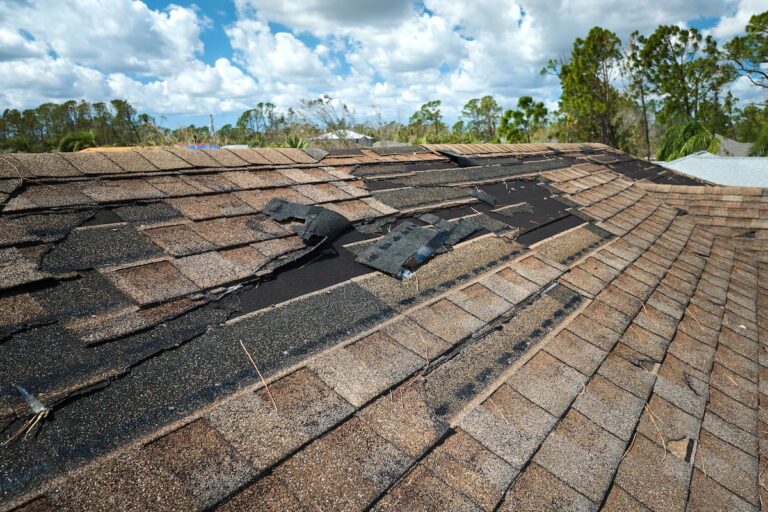
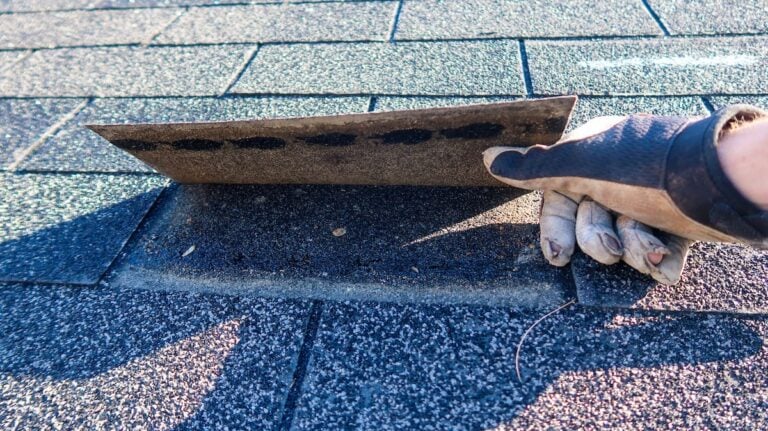
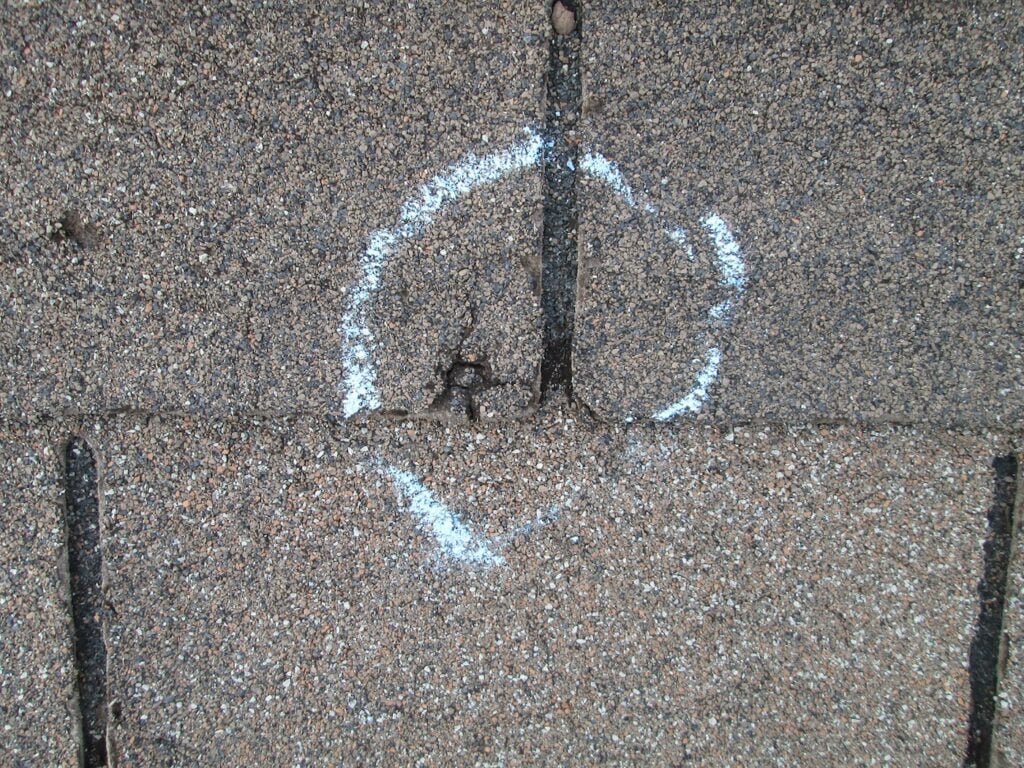
Asphalt shingles are the most common residential roofing material and the most cost-effective to repair. Minor hail damage repair that affects only a section of the roof typically runs $400 to $700 per square (100 square feet). Widespread granule loss or cracking that compromises the full roof surface generally points toward full replacement, which averages $8,000 to $15,000 for a typical Tri-State home. Learn more about what to expect from the storm damage roof repair process before you call your insurer.
Metal Roofs
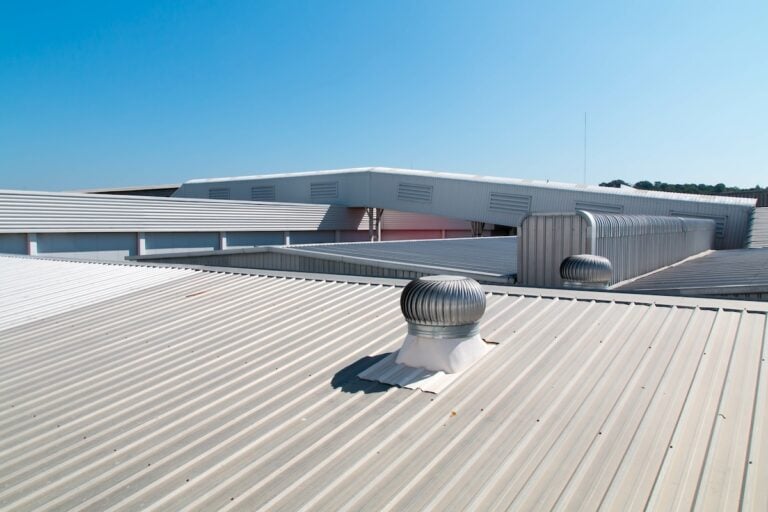
Metal roofing is durable but can sustain dents and coating damage from large hail. Localized dent repairs and recoating run $500 to $1,200 per square. Because metal panels are installed in full runs, partial replacement is sometimes more involved than on shingle roofs — see our guide to metal roof repair for a full breakdown of what these projects involve. Full reroof costs range from $15,000 to $30,000 or more depending on panel type.
TPO and Flat Roofing
For commercial flat roofs, hail damage typically shows up as membrane punctures, bruising, or seam separation rather than visible denting. Spot repairs on a flat roof hail damage event generally range from $500 to $2,000 depending on the affected area. Full membrane replacement on a commercial flat roof runs $5 to $12 per square foot depending on the system.
Tile Roofs
Tile is brittle under hail impact and individual tiles crack or shatter rather than dent. Repairs run $700 to $2,000 per square for labor and material, with costs rising steeply when matching discontinued tile profiles. Full tile replacement is among the most expensive residential roofing projects, frequently exceeding $20,000.
Slate Roofs
Slate carries the highest repair cost of any residential roofing material, ranging from $1,000 to $3,000 per square to repair. The labor required to safely work on slate and source matching material makes even minor hail events expensive, and full replacement can run $30,000 or more.
Hail Damage Cost by Severity and Material
The table below breaks down typical repair costs by damage severity across the most common residential and commercial roof types.
| Damage Severity | Asphalt Shingles | Metal Roof | TPO / Flat | Tile Roof |
| Cosmetic (dents, surface marks) | $400 to $700/sq | $500 to $800/sq | $300 to $700 | $700 to $1,200/sq |
| Functional (granule loss, leaks) | $700 to $1,500/sq | $800 to $1,200/sq | $700 to $2,000 | $1,200 to $2,000/sq |
| Structural (cracking, punctures, full loss) | Full replacement $8K to $15K | Full replacement $15K to $30K | Full replacement $5 to $12/sq ft | Full replacement $20K+ |
The Insurance Angle: What Gets Covered and What Triggers Replacement
Understanding how your insurance company approaches hail damage claims is as important as knowing the repair costs. Most standard homeowners insurance policies cover hail damage, but the payout depends heavily on your policy type, your roof’s age, and how the damage is classified.
Repair vs. Replacement: What Drives the Decision
Insurance adjusters draw a distinction between functional damage and cosmetic damage. Functional damage — cracked shingles, punctured membranes, broken tiles, compromised flashing — affects the roof’s ability to protect the home and is typically covered. Cosmetic damage — surface dents on metal panels, minor granule scuffing — may not be covered under all policies, particularly if a cosmetic damage exclusion is written into your plan.
A full replacement claim is typically triggered when the insurer determines that the damage is widespread enough that patchwork repairs would leave the roof functionally compromised or visually mismatched. This threshold varies by insurer and adjuster, which is why having a HAAG certified inspector document the damage independently before the adjuster arrives is one of the most effective ways to protect your claim. For a full walkthrough of the process, our guide to filing a roof insurance claim covers every step in detail.
ACV vs. RCV: The Payout Difference
- Replacement Cost Value (RCV): Pays the full cost to replace the damaged roof with comparable materials at today’s prices, minus your deductible. This is the best-case scenario for homeowners with newer roofs.
- Actual Cash Value (ACV): Pays replacement cost minus depreciation based on your roof’s age and condition. On a 15-year-old shingle roof, ACV payouts can be 30 to 50 percent lower than actual repair costs, leaving a significant gap.
- Recoverable depreciation: Some RCV policies withhold depreciation until repairs are completed and documented, then release it as a supplemental payment. Confirm with your insurer whether your policy includes this provision.
What Affects Your Out-of-Pocket Cost
- Deductible: Hail-specific deductibles in Indiana, Kentucky, and Illinois often run $1,000 to $2,500 or higher on policies written in storm-prone areas.
- Roof age: Most insurers reduce or limit payouts on roofs older than 15 to 20 years. Some require ACV on aging roofs regardless of what the rest of your policy states.
- Material match: If your current shingles or tiles are discontinued, the insurer may only pay for functional equivalent materials rather than an exact match, which can affect your out-of-pocket costs on partial repairs.
- Pre-existing conditions: Damage that predates the storm event is typically excluded. Maintaining prior inspection records helps establish a clear before-and-after baseline.
Other Hail Damage Costs to Factor In
Roof repairs are typically the largest cost after a hailstorm, but not the only one. Here is what else homeowners in the Tri-State area commonly need to budget for.
- Window repairs or replacement: Minor cracks run $100 to $300 per window. Full window replacement ranges from $300 to $1,000 per unit depending on size and type.
- Siding repairs: Vinyl siding repair typically costs $200 to $800. Aluminum runs $300 to $1,000. Wood siding repairs can reach $1,500 or more.
- Gutters: Hail frequently dents or dislodges gutters. Full gutter replacement averages $5 to $12 per linear foot.
- Temporary protection: Emergency tarping to prevent interior water damage typically runs $200 to $500 and is often reimbursable by your insurer. Keep all receipts.
5 Steps to Take After Hail Damage
Acting quickly after a hailstorm protects your property and strengthens your insurance claim. Homeowners across the Tri-State area — from Bloomington, IN to Louisville, KY — face the same decision after every major storm: act fast or risk compounding damage.
1. Inspect From the Ground
Do not climb onto a potentially compromised roof. Walk the perimeter and look for visible damage to shingles, gutters, flashing, and siding.
2. Document Everything
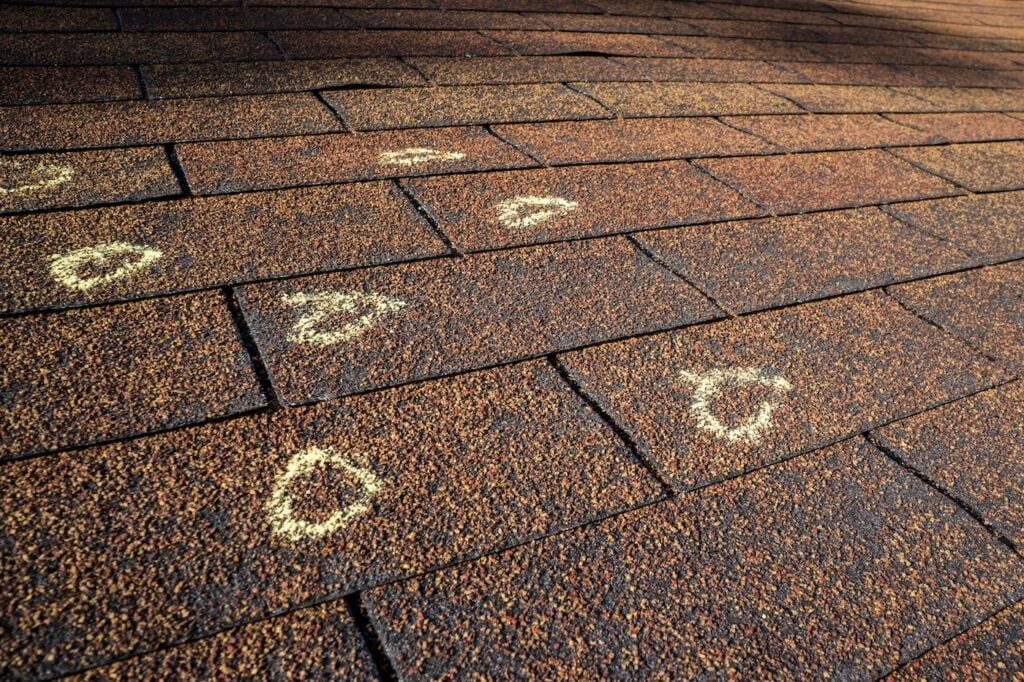
Photograph and video all visible damage from the ground and at the roofline if safely accessible. Include close-ups and wide shots. Time-stamped documentation is critical for your insurer.
3. Apply Temporary Protection
Cover any exposed or compromised areas with tarps to prevent water intrusion. Keep receipts for all materials purchased.
4. Contact Your Insurance Company
Report the damage promptly. Ask your insurer what documentation is required, what your deductible is for hail claims specifically, and whether your policy pays RCV or ACV.
5. Hire a Professional Roofing Contractor
Do not rely solely on the insurance adjuster’s assessment. A licensed roof repair contractor, particularly one with HAAG certification, can identify damage the adjuster may miss and provide documentation that supports the full scope of your claim.
Choosing the Right Contractor

Selecting a qualified contractor after a hailstorm is critical. Storm-chasing contractors — out-of-state crews who follow severe weather events — frequently offer fast quotes but disappear when warranty claims arise. Here is what to prioritize:
- Local presence: Choose a contractor based in the Tri-State area with a verifiable track record. Embry’s Roofing has been serving Newburgh, IN and surrounding communities since 1979, with over 45 years of experience in the region.
- Licensing and insurance: Verify the contractor is licensed, bonded, and carries liability coverage.
- HAAG certification: HAAG certified inspectors are trained to identify and document storm damage in a way that holds up to insurer scrutiny.
- Written warranty: Embry’s backs every residential project with a 5-year workmanship warranty in addition to manufacturer coverage.
- Multiple quotes: Get at least two to three estimates and be cautious of bids significantly below market rates.
Preventing Future Hail Damage
While hailstorms are unavoidable, the right materials and maintenance can meaningfully reduce your repair costs when the next one hits.
- Install impact-resistant shingles: Class 4 impact-resistant shingles can withstand hailstones up to two inches in diameter and may qualify you for an insurance discount. Commercial building owners should also review our flat roof repair guide for prevention strategies specific to low-slope systems.
- Trim overhanging trees: Remove branches that could become projectiles or concentrate hail impact on specific roof sections.
- Secure roof fixtures: Vents, flashings, and satellite dishes should be properly attached and sealed before storm season.
- Schedule annual inspections: Pre-storm documentation of your roof’s condition is one of the most valuable tools for protecting insurance claims after a hailstorm.
Get an Accurate Assessment With Embry’s Roofing
Online cost estimates are a starting point, but the only way to know what your specific repair will cost is a professional inspection by someone who has seen the damage firsthand. Hail impacts vary by storm intensity, hail size, and roof age, and the difference between a $700 repair and a $15,000 replacement often comes down to how thoroughly the damage is identified and documented.
Family-run since 1979 and backed by over 45 years of experience serving the Tri-State area, Embry’s Roofing provides thorough post-storm inspections, detailed repair estimates, and the contractor expertise your insurance claim requires. Contact Embry’s Roofing today for a free hail damage inspection and find out exactly what your repair or replacement will take.
CHECK OUT THE LATEST
FROM OUR BLOG